The air in Gabon doesn’t just sit around you; it embraces you. It is thick, warm, and heavy with the scent of damp earth, crushed leaves, and the salty tang of the nearby Atlantic. Stepping onto the tarmac at Libreville, you are immediately reminded that you are standing on the equator, on the very edge of the world’s second-largest rainforest. But Libreville, with its bustling markets and French-colonial echoes, is just the threshold. Beyond the city limits lies a wilderness so profound, so utterly untamed, that it has earned a moniker whispered with reverence by naturalists and explorers around the globe: Africa’s Last Eden.
For decades, while East and Southern Africa built massive, highly commercialized safari industries, Gabon remained largely a blank spot on the international ecotourism map. It was a nation whose economy was fueled almost entirely by offshore oil and timber. But today, as the world grapples with climate change and the rapid loss of biodiversity, Gabon stands as a monumental anomaly. Nearly 90% of the country is blanketed in dense, primeval rainforest. It is a place where elephants stroll along white-sand beaches, where hippos play in the ocean surf, and where ancient cultures maintain a deep, spiritual symbiosis with the forest.
This is the story of an ecological miracle, the fragile promise of ecotourism, and the fight to save the breathing heart of Africa.
The Megatransect and the Awakening
To understand how Gabon transformed from a resource-extraction hub into a global bastion of conservation, you have to rewind to the late 1990s and picture a man named J. Michael Fay. An ecologist with the Wildlife Conservation Society (WCS), Fay embarked on an expedition that sounded like absolute madness. He called it the “Megatransect.” Over 455 days, Fay walked more than 2,000 miles across the Congo Basin, starting in the Republic of the Congo and ending on the pristine beaches of Gabon.
He didn’t follow roads or trails. He hacked through virgin jungle, wading through swamps, surviving malaria, and charting wildlife populations in areas where animals had never even seen a human being. Fay’s goal was to document the sheer, untouched ecological wealth of the region before the logging companies could tear it down.
When Fay finally emerged on the Atlantic coast of Gabon, specifically in what is now Loango National Park, he described what he saw as “Africa’s Last Eden”. Alongside him was National Geographic photographer Michael “Nick” Nichols. Nichols captured images that would soon stun the world: massive forest elephants ambling down sandy beaches to sniff the ocean breeze, and hippopotamuses plunging into the Atlantic waves—the legendary “surfing hippos”.
These images were brought directly to Gabon’s then-President, Omar Bongo Ondimba. Bongo, who had ruled the oil-rich nation for decades, was reportedly mesmerized. At the time, Gabon’s forests were largely carved up into logging concessions. But the sheer undeniable beauty of the Megatransect findings sparked a monumental shift. In 2002, President Bongo made a decree that shocked the conservation world: he canceled massive logging contracts and designated more than 11% of the entire country’s landmass as protected territory, creating 13 new national parks overnight.
It was a bold, unprecedented move. Gabon was effectively placing a massive bet on a post-oil future, hoping that ecotourism and conservation could eventually replace the revenues drawn from fossil fuels. Leading this charge in the years to come would be figures like Lee White, a British-Gabonese conservationist who later became the head of Gabon’s National Parks Agency (ANPN) and eventually the Minister of Water and Forests. Under his watch, Gabon became a pioneer in high-forest, low-deforestation (HFLD) management, proving that a country could develop without destroying its natural heritage.
Loango—Where the Jungle Meets the Sea
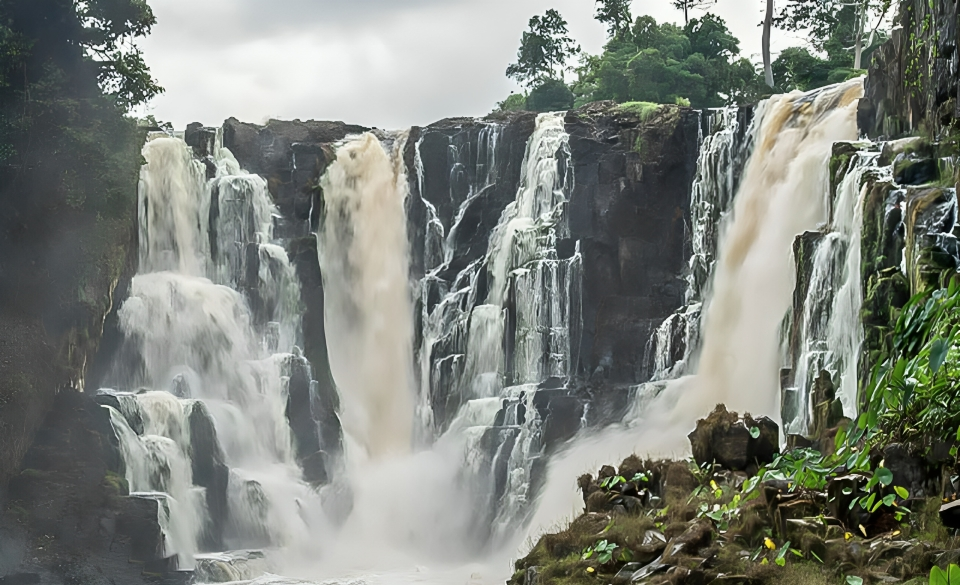
If you want to feel the raw, unfiltered pulse of Gabon’s wilderness, you go to Loango National Park. Situated on the country’s western coast, Loango spans roughly 1,550 square kilometers and is arguably the jewel in Gabon’s ecological crown. Getting there is an adventure in itself, usually involving a flight from Libreville to a remote airstrip, followed by a bumpy 4×4 ride and a boat trip across wide, glassy lagoons.
The magic of Loango lies in its impossible geography. It is one of the few places on Earth where dense primary rainforest spills directly onto untouched sandy beaches, backed by mangrove swamps and savannah. Walking along the coast here feels like stepping onto a prehistoric earth. There are no resorts, no beach umbrellas, no hum of traffic. There is only the roar of the Atlantic meeting the silence of the trees.
And then, there are the animals.
Loango is famous for its forest elephants. Unlike the massive bush elephants of the East African plains, forest elephants (Loxodonta cyclotis) are smaller, with straighter, downward-pointing tusks adapted for navigating dense vegetation. During the dry season, these intelligent giants frequently emerge from the dark canopy and walk straight onto the beach. Some researchers believe they do this to seek out minerals in the sand, while others think they simply enjoy the cool ocean breeze to escape the stifling humidity of the jungle. Watching a family of elephants silhouetted against the crashing surf of the Atlantic Ocean is a sight that reconfigures your understanding of nature.
But the elephants are just the beginning. The park is home to an astonishing array of life. Western lowland gorillas and chimpanzees forage in the thickets just inland. Leopards prowl the edges of the savannah, while African forest buffalo graze in the clearings.
If you look out to sea between July and September, you might catch the misting blow of humpback whales, which migrate to these warm waters to mate and calve. Loango is also home to the world’s second-largest concentration of whales and dolphins, right after South Africa. To stand on a beach and turn your head left to see a gorilla in the trees, and then turn right to see a humpback whale breaching in the ocean, is an experience unique to this specific coordinate on the planet.
And, of course, the surfing hippos. While spotting them is incredibly rare and requires a heavy dose of luck and patience, the rivers and lagoons of Loango empty directly into the ocean. Hippos, moving between freshwater grazing areas, occasionally ride the ocean currents. To witness a multi-ton river horse bobbing in the saltwater swells is a bizarre, joyful reminder of nature’s unpredictability.
Lopé and the Echoes of Ancient Humanity
While Loango offers the drama of the coast, Lopé National Park, located dead in the center of the country, offers a journey into deep time. Lopé is a UNESCO World Heritage site, recognized not just for its ecology, but for its profound human history.
As you travel by train—the Trans-Gabon Railway—from Libreville into the interior, the dense, claustrophobic rainforest suddenly breaks open. You are greeted by rolling, golden savannahs dotted with gallery forests. This landscape is a relict of the last Ice Age, an ecological time capsule created over 15,000 years ago when the climate was much drier, and the great African rainforests retreated.
Lopé is synonymous with mandrills. These highly social, spectacularly colorful primates—with their vivid blue and red muzzles—gather here in numbers seen nowhere else on Earth. It is not uncommon for researchers and lucky eco-tourists to encounter “hordes” of mandrills numbering in the hundreds, sometimes over a thousand individuals, moving like a living, breathing carpet through the forest undergrowth.
But Lopé is also a graveyard of ancient human endeavor. Long before Gabon was a modern state, this valley was a critical corridor for human migration. Archaeologists have discovered thousands of stone age tools scattered across the hillsides, and ancient petroglyphs carved into the rocks by hunter-gatherers millennia ago. It is a hauntingly beautiful place, where the boundary between human history and natural history dissolves. You realize that humans aren’t separate from this wilderness; for tens of thousands of years, we were a functional part of it.

The Leatherback Mariners of Pongara and Mayumba
Ecotourism in Gabon is governed heavily by the seasons. If you arrive between November and April, your attention will inevitably turn to the beaches at night.
Along Gabon’s coastline, particularly in Pongara National Park (just a short boat ride from Libreville) and Mayumba National Park in the far south, an ancient ritual plays out in the darkness. Gabon hosts the largest nesting population of leatherback sea turtles in the entire world.
These creatures are modern dinosaurs. A full-grown leatherback can weigh over 1,500 pounds and span up to seven feet in length. Under the light of the moon, these massive, tear-drop-shaped leviathans drag themselves out of the roaring surf and slowly ascend the dunes. The process is agonizingly slow and deliberate. The mother turtle digs a deep chamber in the sand with her rear flippers, drops dozens of ping-pong-ball-sized eggs, covers the nest, and drags herself back to the sea, leaving her offspring to the mercy of the elements.
Ecotourism here is tightly managed. Visitors are guided by researchers and trained rangers, using red-light torches so as not to disorient the nesting mothers. To sit in the sand, listening to the heavy, exhausted breathing of a leatherback turtle as she ensures the survival of her species, is profoundly humbling. It connects you to a rhythm of life that has persisted since the Cretaceous period, long before the first ape stood upright.
The Carbon Sink and the Global Stakes
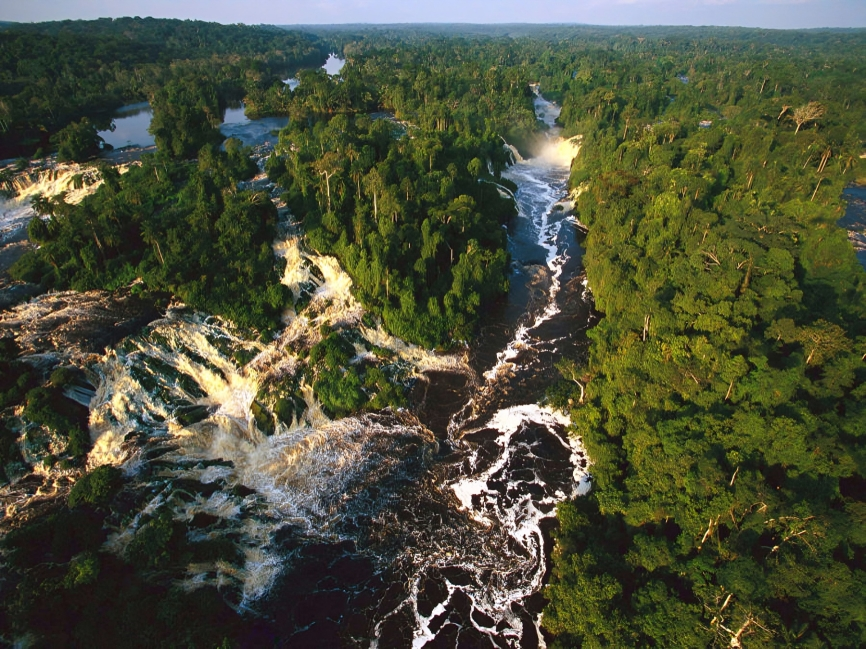
While ecotourism in Gabon offers bucket-list experiences for intrepid travelers, the country’s natural wealth holds a much heavier, global significance. Gabon is not just a pretty place to take photos of elephants; it is an essential piece of the Earth’s life support system.
The Congo Basin, of which Gabon is a critical part, is frequently called the “second lung” of the planet, after the Amazon. However, recent scientific studies, championed by experts like Lee White, suggest that the African rainforest might actually be a more resilient carbon sink than the Amazon.
Gabon’s forests absorb over a hundred million tons of CO2 from the atmosphere every year. The country is “carbon positive,” meaning it absorbs vastly more carbon than it emits. The towering Okoumé and Moabi trees act as massive, living batteries, storing carbon in their trunks and roots. Furthermore, beneath the forest floor lies a vast network of peatlands that lock away centuries of carbon.
Under the leadership of Lee White and the ANPN, Gabon has worked tirelessly to put a financial value on this ecological service. The argument is simple but revolutionary: if Gabon’s forests are keeping the world from burning up, the international community should compensate Gabon for keeping those forests intact. In 2022, Gabon launched a massive carbon credits program, seeking to monetize its conservation efforts without resorting to mass logging.
Ecotourism plays a vital role in this matrix. When tourists pay park fees, hire local guides, and stay in eco-lodges, they prove to the local communities and the government that a living tree, a wild gorilla, and a pristine beach have tangible economic value. Ecotourism transforms the abstract concept of “biodiversity” into paychecks, school fees, and community infrastructure.
The Spirit of the Forest
No exploration of Gabon is complete without acknowledging the profound spiritual connection between the Gabonese people and the rainforest. Ecotourism here is not just about observing animals; it is about encountering a culture that views the forest as a sacred, living entity.
Deep in the interior, indigenous groups like the Babongo (often referred to as Pygmies) have lived in harmony with the forest for thousands of years. Their knowledge of medicinal plants, animal tracking, and forest ecology is unparalleled. Increasingly, ecotourism initiatives are working to integrate this indigenous knowledge, employing local trackers whose ability to spot a leopard’s footprint on a leaf, or smell a gorilla troop from miles away, borders on the supernatural.
Central to Gabonese spiritual life is the Bwiti religion, a complex belief system that blends animism, ancestor worship, and, in modern times, elements of Christianity. The cornerstone of Bwiti is the consumption of Iboga, a powerful psychoactive root found in the Gabonese forest. During elaborate, multi-day ceremonies involving rhythmic drumming, chanting, and dancing, initiates consume Iboga to induce a trance state, allowing them to communicate with their ancestors and gain profound spiritual insight.
While the Bwiti ceremonies are sacred and not a “tourist attraction” in the commercial sense, respectful cultural exchange is a growing facet of Gabonese ecotourism. Understanding Bwiti is essential to understanding Gabon. It underscores a fundamental truth: the forest is not just a resource to be managed or a park to be visited. It is a temple. It is the source of life, medicine, and spiritual identity.
The Promise and the Peril of Ecotourism
For all its breathtaking beauty, the reality of ecotourism in Gabon is fraught with challenges. Calling it “Africa’s Last Eden” sets an incredibly high bar, but getting to Eden is neither easy nor cheap.
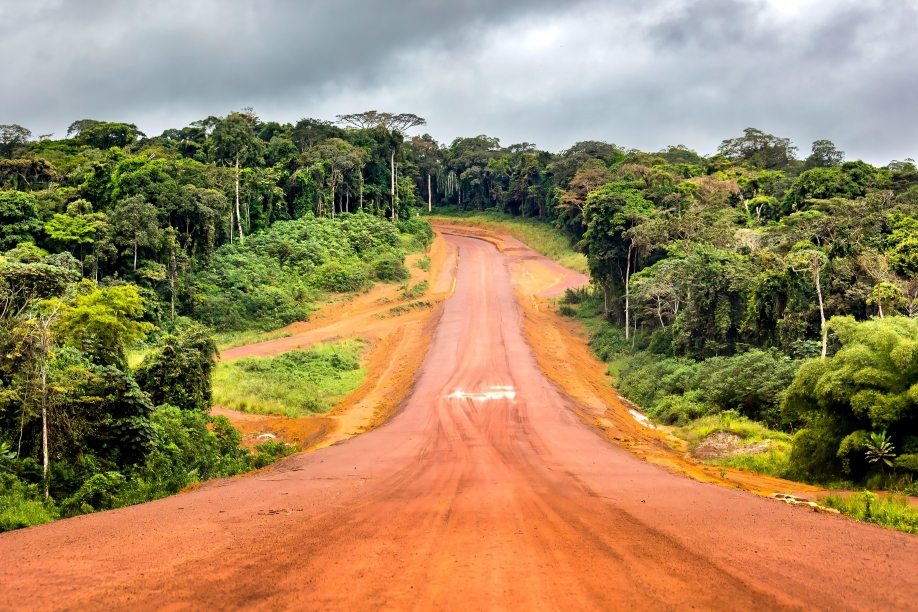
Unlike Kenya or South Africa, Gabon lacks the massive tourism infrastructure required for volume travel. Flights are expensive. Roads outside the capital are often unpaved and turn to impassable mud during the rainy seasons. Eco-lodges are few and far between, and the logistics of moving supplies into the deep jungle mean that accommodations are often high-cost.
This lack of infrastructure is a double-edged sword. On one hand, it keeps mass tourism at bay, ensuring that the ecosystems remain pristine and that the wildlife is not harassed by fleets of minivans. If you go to Loango, you will likely have the beach entirely to yourself. The encounters you have with gorillas or elephants are deeply intimate, quiet, and authentic.
On the other hand, the high cost and low volume of tourists mean that ecotourism has yet to generate the kind of massive revenue needed to completely replace the declining oil sector. And as oil reserves dwindle, the pressure on the Gabonese government to open up the forests to commercial logging, mining, and agriculture will only intensify.
There is also the human factor. Conservation policies, no matter how well-intentioned, often clash with the needs of local communities. When a national park is created, local villagers who have hunted in those forests for generations are suddenly subjected to strict anti-poaching laws. Human-wildlife conflict is a daily reality. Forest elephants, protected by law, frequently raid village farms, destroying a family’s entire annual crop of cassava in a single night.
For ecotourism to truly succeed in Gabon, it must be equitable. The revenue generated by the wealthy tourists snapping photos of surfing hippos must find its way back to the communities living on the edge of the parks. The ANPN and various NGOs are working to implement community-led conservation programs, training locals as guides, rangers, and hospitality staff, but it is a slow, complex process.
The Final Bastion
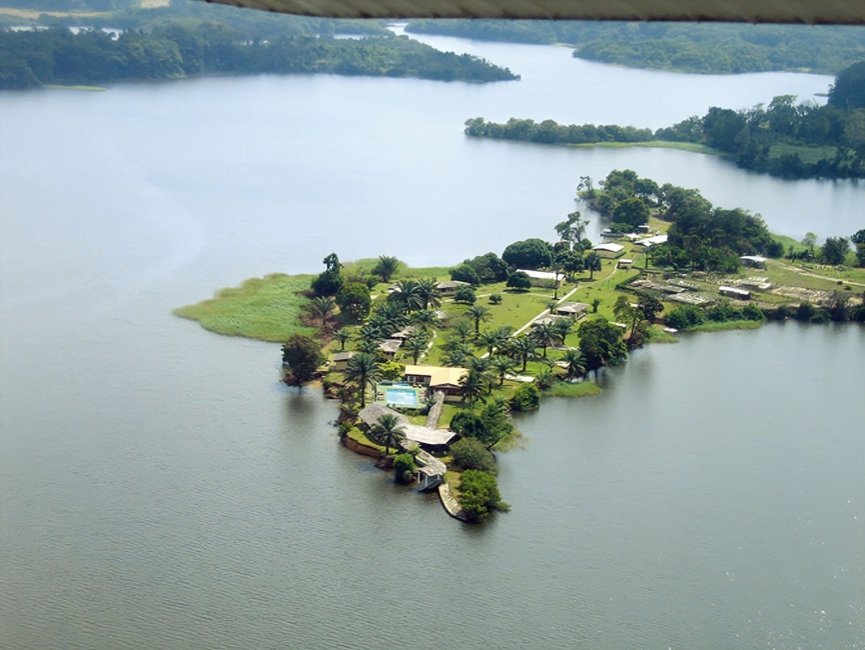
Standing on the edge of the Iguéla Lagoon in Loango as the sun begins to set, the sky turns a bruised purple, and the water mirrors the impenetrable green wall of the rainforest. The air hums with the sound of millions of insects, punctuated by the harsh call of a hornbill or the distant, rumbling bass of an elephant.
It is in these quiet moments that the sheer weight of what Gabon represents hits you. We live in a world that has tamed, paved, and fractured most of its wild spaces. We have confined nature to heavily managed, fenced-in reserves.
Gabon is different. Gabon is one of the last places on Earth where nature still operates on a grand, continental scale. The Megatransect proved that these ecosystems are still whole. The creation of the 13 national parks proved that political will can occasionally triumph over short-term greed.
To visit Gabon as an eco-tourist is not just a vacation; it is an act of bearing witness. It is a financial and moral vote for the preservation of the Congo Basin. When you wade through the humid undergrowth of Lopé, or watch a leatherback turtle drag herself from the surf in Pongara, or lock eyes with a silverback gorilla in the deep shadows of the jungle, you are experiencing the world as it was meant to be.
“Africa’s Last Eden” is not a marketing slogan. It is a desperate, beautiful truth. The wilderness of Gabon is a sanctuary not just for the animals that live within it, but for the human soul that yearns to remember where it came from. The challenge of the coming decades will be ensuring that this Eden does not become a memory, but remains a living, breathing reality for generations to come.