Musicians and cultural figures in Bangladesh have expressed growing concern over incidents involving disruption of musical programmes, pressure to cancel events and attacks at cultural venues in different parts of the country. They argue that interference in cultural activities not only restricts artistic freedom but also raises wider questions about cultural diversity, citizens’ rights and the responsibility of the authorities to maintain a safe environment for public events.
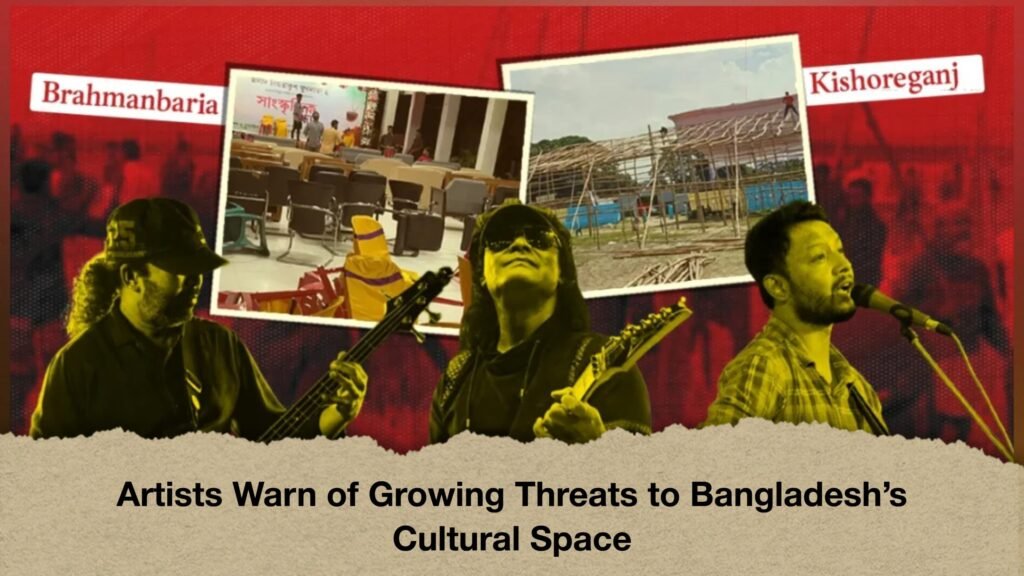
The issue has come under renewed scrutiny following several incidents in August. On 19 August, a concert in Kishoreganj was ordered to be cancelled after the local Imam-Olama Parishad wrote to the district administration, warning that the event could create a difficult situation if held.
On the same night, a cultural programme at the police lines in Brahmanbaria came under attack. A large number of madrasa students reportedly entered the venue and vandalised chairs arranged for members of the audience. Police intervened to bring the situation under control, using batons in the process. At least 30 people were injured, including several police personnel. Three police officers were later temporarily suspended over allegations of negligence in carrying out their duties.
The incidents have prompted renewed debate within the music community over how securely cultural programmes can be organised and where the responsibilities of the administration and law-enforcement agencies begin and end.
Hamin Ahmed, a founding member of the popular band Miles and president of the Bangladesh Musical Bands Association, said the recent incidents should not be viewed as isolated occurrences. He said there appeared to be a growing tendency in different parts of the country to obstruct musical activities and called on the government to address the issue with greater seriousness.
Speaking about the Brahmanbaria incident, Ahmed argued that the police response to the attack was part of their responsibility to maintain order and protect the event. He also questioned the decision to take action against police officers following the incident.
According to Ahmed, music cannot be treated merely as entertainment. It is also a profession and a source of livelihood for a large number of people. When concerts are cancelled, artists are threatened or venues are vandalised, the consequences extend beyond performers. Organisers, musicians, technical workers and others whose income depends on events can also be affected.
Ahmed further argued that religious values and cultural activities have coexisted in Bangladesh for generations. Attempts to control cultural expression through intimidation or extremism, he said, do not reflect the country’s long-established social reality. He urged the authorities to identify the reasons behind such developments and take effective measures to prevent their recurrence.
Ziaur Rahman Zia, composer and bassist of the band Shironamhin, has also raised concerns about the security of cultural activities. He questioned the responsibilities of the Ministry of Cultural Affairs if cultural programmes cannot be conducted safely. At the same time, he said ensuring public order remains a responsibility of the Ministry of Home Affairs.
Ziaur Rahman stressed that Bangladesh’s cultural identity encompasses far more than music alone. From songs and performances to traditional activities such as boat racing, the country has a broad and diverse cultural heritage. In his view, interference in artistic practice, cultural traditions and other forms of creative expression should not become an accepted feature of public life.
He also highlighted the balance between individual freedom and the rights of others. In a democratic society, citizens have rights relating to freedom of expression and personal liberty, but those rights must be exercised without infringing upon the legitimate rights of others. Any dispute surrounding a cultural programme, therefore, should be addressed through lawful and administrative channels rather than through force.
Singer and guitarist Ahmed Hasan Sunny has taken a broader view of the issue, linking the current concerns to the wider cultural environment in which children and young people grow up.
Sunny argued that without opportunities for children to learn and practise music, and without libraries and a healthy reading environment in schools, it would become harder to develop social cohesion and tolerance through cultural activities. He questioned why reading habits and access to libraries appear to be declining and why spaces for reading fiction and engaging with literature are becoming more limited.
For Sunny, music, literature and other creative pursuits play a role in expanding people’s intellectual horizons. They can expose individuals to different ideas and perspectives while helping create a more tolerant social environment. If opportunities for cultural participation continue to shrink, he warned, the consequences could eventually extend beyond the cancellation of individual programmes.
The debate also gained further attention after Home Minister Salahuddin Ahmed said on 22 August that music and film screenings in Brahmanbaria had, for many years, effectively faced conditions similar to a prohibition. His remarks added another dimension to discussions about the longstanding challenges facing cultural activities in the district.
At the centre of the current debate is a basic question: how should disagreements over cultural programmes be handled in a democratic society?
The musicians’ position is that objections to an event can be raised through lawful procedures, and the relevant authorities can assess whether any legitimate legal or public-order concerns exist. But intimidation, vandalism or physical intervention should not be used to force a programme to stop.
The issue also has an economic dimension. A concert involves considerably more than the artists appearing on stage. Event organisers, sound and lighting technicians, stage workers, venue staff, security personnel and other service providers may all depend on such programmes for income. Repeated disruption can therefore affect a wider network of people working within the cultural and entertainment sector.
The artists’ concerns ultimately centre on the need for a predictable and secure cultural environment. They are calling for impartial administrative action, effective enforcement of the law and adequate protection for lawful cultural activities.
For Bangladesh’s music and wider cultural community, the concern is not simply whether a particular concert can take place. It is whether artists, audiences and organisers can continue to participate in cultural life without fear of intimidation or disruption. The answer, they suggest, will have implications for the country’s broader cultural diversity, social tolerance and civic freedoms.