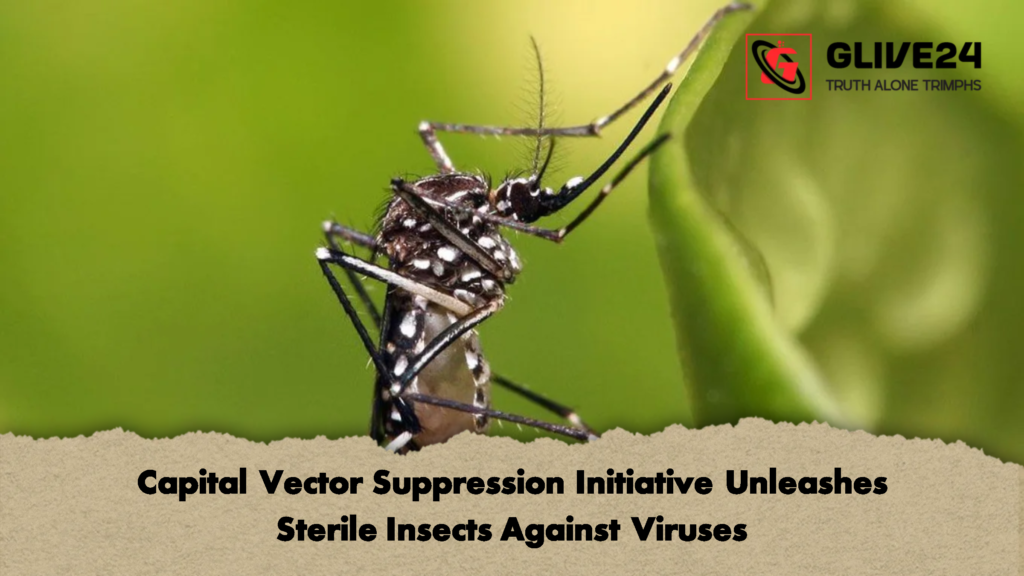
Health authorities and pest control specialists across Washington DC are rolling out an innovative biological strategy this season, releasing around 600,000 lab-reared male mosquitoes to safeguard the US capital. The targeted initiative seeks to crash local populations of invasive Asian tiger mosquitoes—the primary vectors responsible for transmitting severe human pathogens such as dengue, chikungunya, Zika, and West Nile virus. Orchestrated by Maryland-based pest management outfit Be Safe Mosquito Control, the ambitious campaign substitutes broad-spectrum chemical insecticides with precision insect genetics.
At the core of the strategy lies the deployment of male mosquitoes host-infected with Wolbachia, a widespread bacterium that disrupts normal insect reproduction through cytoplasmic incompatibility. When these non-biting male mosquitoes are introduced into neighborhood habitats, they actively outcompete wild males to mate with local females. Because the wild females do not carry the matching strain of Wolbachia, the resulting eggs fail to hatch, cutting off the vector lifecycle at the source. Since male mosquitoes feed purely on plant juices and nectar, the massive releases pose zero bite risk or harm to local residents and domestic animals.
Todd Montgomery, proprietor of Be Safe Mosquito Control, detailed the operational logistics during a broadcast interview with local news network WTOP. He emphasized that after a female mates with a Wolbachia-bearing male, her reproductive cycle for the rest of her lifespan is rendered ineffective. Over successive generations, this suppression technique systematically depresses target mosquito populations without leaving harmful chemical residues in urban gardens or waterways.
Biological vector control of this nature reflects a growing global shift away from traditional chemical fogging. Similar initiatives utilizing Wolbachia-infected mosquitoes have produced remarkable reductions in disease transmission across endemic regions in South America, Southeast Asia, and northern Australia. In countries such as Singapore, wide-scale releases have successfully slashed wild vector populations by up to 90 per cent in designated intervention zones.
Washington DC’s warm, humid summer climate creates ideal breeding conditions for container-breeding mosquitoes in residential yards, parks, and alleyways. West Nile virus remains an annual public health concern throughout the mid-Atlantic region, while travel-associated cases of dengue and Zika require constant epidemiological monitoring. Municipalities increasingly face public opposition to conventional pesticide spraying due to pollinator decline and rising insecticide resistance among urban mosquito stocks.
The Wolbachia strategy provides a non-toxic, highly targeted alternative that preserves beneficial insects like bees and butterflies. By curbing vector density early in the peak transmission period, public health officers hope to significantly reduce the incidence of mosquito-borne viral infections across the district. Success in the capital could pave the way for similar eco-friendly vector control frameworks across neighboring East Coast metropolitan areas.