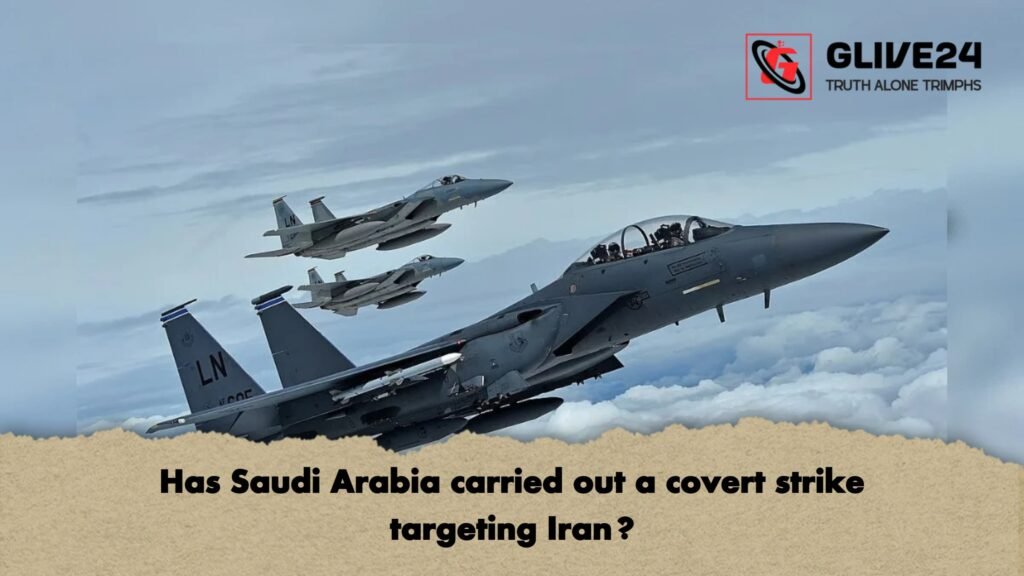
Reports from Reuters claim that Saudi Arabia may have conducted covert military operations inside Iranian territory amid a wider regional escalation involving Iran, the United States, and Israel. The information is attributed to two Western officials and two Iranian officials, all speaking anonymously.
According to the report, hostilities escalated after the United States and Israel launched strikes on Iran on 28 February 2026. In response, Iran carried out retaliatory attacks across six Gulf Cooperation Council (GCC) states, including Saudi Arabia. These attacks reportedly targeted not only military installations but also civilian infrastructure such as airports and oil refineries, while also disrupting shipping through the Strait of Hormuz.
Reported Timeline of Key Developments
| Date/Period | Event | Parties Involved |
|---|---|---|
| 28 February 2026 | US–Israel strikes on Iran begin | United States, Israel, Iran |
| March 2026 | Iranian retaliatory attacks on GCC states | Iran, GCC states including Saudi Arabia |
| Late March 2026 | Alleged Saudi covert air operations inside Iran | Saudi Arabia, Iran |
| 7 April 2026 | Washington and Tehran agree to ceasefire | United States, Iran |
Western officials cited by Reuters suggested that Saudi Arabia’s air force is believed to have carried out operations against Iran in late March 2026. One official stated that Saudi Arabia responded militarily after coming under attack. However, the specific targets of these alleged operations have not been independently confirmed.
The Saudi government has neither confirmed nor denied the reported strikes. Iran’s foreign ministry has also not issued a response on the matter. Reuters noted that it contacted Saudi Arabia’s foreign ministry, where a senior official declined to comment directly.
The report follows separate claims published by the Wall Street Journal that the United Arab Emirates also conducted retaliatory strikes against Iran during the same period, highlighting a broader pattern of regional escalation among Gulf states.
Despite the military escalation, diplomatic communication between Iran and Saudi Arabia reportedly continued during the conflict. Officials cited in the report said that Riyadh maintained contact with Tehran through the Iranian ambassador in Saudi Arabia, aiming to prevent further escalation.
An Iranian official confirmed that Tehran and Riyadh eventually agreed to reduce tensions with the objective of halting hostilities, protecting mutual interests, and preventing further escalation. Saudi officials also reiterated their long-standing position supporting de-escalation and regional stability.
Iran and Saudi Arabia have long been regional rivals, often supporting opposing sides in Middle Eastern conflicts. Diplomatic relations were severed for several years before being restored in 2023 following mediation efforts by China.
Separately, the report notes that during the broader conflict, Iran’s actions, including disruption of the Strait of Hormuz, contributed to pressure on regional energy exports, while Saudi Arabia’s oil exports remained relatively stable due to alternative shipping routes via the Red Sea.