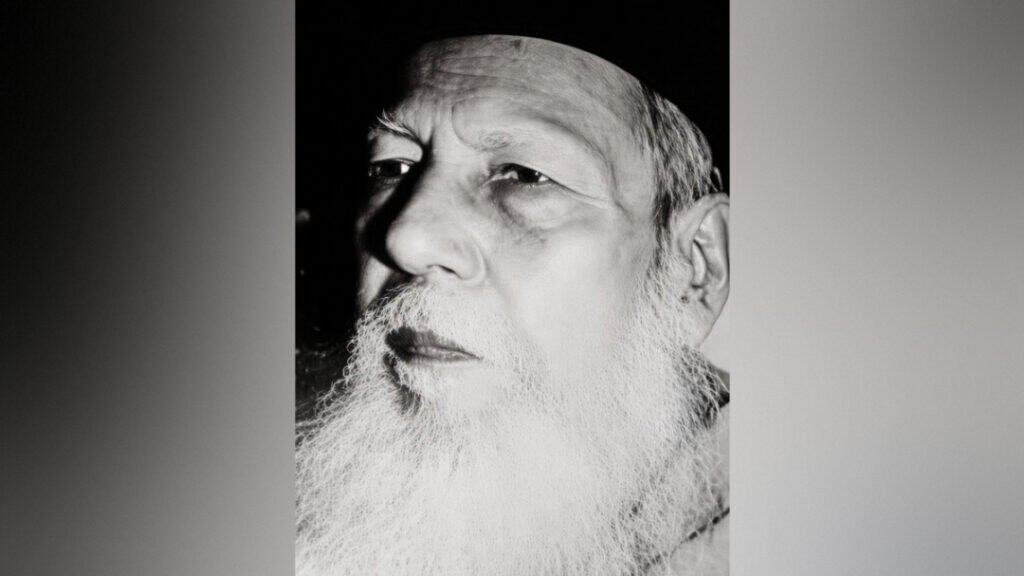
Some people leave this world, yet the light they kindle continues to guide generations. Their passing marks the end of a life, but not the end of their influence. Through their ideas, achievements and enduring values, they remain present in the lives of those who follow them. Kazi Motahar Hossain was one such exceptional figure—a distinguished scholar whose life was devoted to the pursuit of knowledge, the advancement of scientific thought and the promotion of intellectual freedom.
Remembering him is an opportunity to reflect on the contributions of a man whose influence extended well beyond his professional achievements. He combined scientific rigour with a deep appreciation of literature and culture, demonstrating that intellectual excellence and human sensitivity could flourish together. Modest in manner yet remarkable in accomplishment, he helped lay the foundations for future generations of scholars and thinkers in Bangladesh.
From a promising student to a distinguished scholar
Kazi Motahar Hossain was born on 30 July 1897 at his maternal uncle’s home in Lakshmipur village, in Kumarkhali upazila of Kushtia district. His ancestral home was in Bagmara village, Pangsа upazila, in Rajbari district.
His academic ability became apparent early in life. With the support of scholarships, he progressed through his education and passed the matriculation examination from Kushtia Muslim High School in 1915. He subsequently studied at Presidency College in Calcutta, where his exposure to the renowned scientist Acharya Prafulla Chandra Ray helped shape his intellectual development.
In 1919, Hossain completed his BA with honours in physics at Dhaka College, securing first place in the Bengal and Assam region. He went on to obtain an MA in physics in 1921, achieving first place in the second division.
These accomplishments established his reputation as a gifted student. Yet his lasting significance lay not simply in examination results or academic qualifications. He believed that education should extend beyond personal advancement and professional success. Knowledge, in his view, had the power to sharpen judgement, challenge superstition and enable people to think independently.
That conviction would become a defining feature of his career, influencing both his scientific work and his involvement in the intellectual life of Bengal.
A pioneer in statistics and university education
Kazi Motahar Hossain was among the pioneers of statistical studies in Bangladesh. His professional career began in 1921, when he joined the physics department of the University of Dhaka as a demonstrator. In 1923, he became an assistant lecturer in the same department, beginning a long association with university teaching and research.
At a time when specialised statistical education was still developing in the region, Hossain recognised the importance of establishing a stronger academic foundation for the discipline. His contribution to the introduction of postgraduate-level statistics courses at the University of Dhaka in 1948 was particularly significant. The initiative helped broaden the scope of higher education and created opportunities for more systematic study and research in statistics.
He continued to strengthen his expertise through further academic training. In 1938, he obtained a diploma in statistics from the Indian Statistical Institute. In 1951, he earned a PhD in statistics from the University of Dhaka, reflecting his sustained commitment to research and professional development.
His academic career progressed alongside these achievements. He became a reader in 1951 and was appointed professor in 1954. In 1964, he took on an important leadership role as the first director of the Institute of Statistical Research and Training, an institution established to advance statistical education and research. In 1969, the University of Dhaka appointed him professor emeritus in recognition of his contribution to academia.
Although he retired from regular service in 1961, his dedication to intellectual pursuits did not end with his formal employment. For Hossain, scholarship was not merely a profession but a lifelong commitment. His work helped strengthen the academic environment in which future researchers and teachers could develop their skills.
The significance of such contributions often extends beyond what can be measured through appointments or qualifications. A teacher influences students, who may later become researchers, educators and leaders in their own fields. Through this process, knowledge moves from one generation to another, becoming a shared social resource rather than the possession of a single individual.
Hossain’s career exemplified this enduring impact. His commitment to education and research helped establish a foundation upon which subsequent generations could build.
Where scientific reasoning met literary sensibility
Although best known for his scientific and academic work, Hossain also had a profound interest in literature, culture and the wider intellectual life of society. His engagement with these fields demonstrated that a scientific outlook need not be confined to equations, measurements and formal research. Scientific reasoning could coexist with artistic appreciation and a deep concern for human experience.
One of the most notable aspects of his personal life was his close friendship with the celebrated poet Kazi Nazrul Islam. Nazrul affectionately called him ‘Motihar’, a familiar form of address that reflected the warmth of their relationship. Their friendship also illustrates the connections that can develop between people from different intellectual disciplines when they share curiosity, creativity and mutual respect.
Hossain’s contribution to progressive intellectual thought became particularly evident through his involvement in the Muslim Sahitya Samaj, which he helped establish in 1926 alongside Kazi Abdul Odud, Syed Abul Hossain and Abul Fazal, among others.
The organisation became associated with rational thinking, intellectual freedom and progressive debate at a time when challenging established beliefs could be difficult. Hossain was also involved in the publication and editorial activities of Shikha, a journal connected with this intellectual movement.
The ideas promoted by such initiatives placed considerable emphasis on the importance of questioning inherited assumptions and cultivating independent judgement. They encouraged readers to approach social and cultural questions through reason rather than unquestioning acceptance.
For Hossain, knowledge was not simply an accumulation of facts. It was a means of understanding the world and freeing the mind from intellectual limitations. Science offered a method of investigating truth, literature opened a window into human emotions, and freedom of thought allowed individuals to examine their beliefs critically.
His involvement in these different fields reflected a broad understanding of education and culture. He demonstrated that scientific achievement and literary appreciation were not opposing pursuits. Instead, each could enrich the other, contributing to a more balanced and humane understanding of life.
Hossain was also among the founders of Bangla Academy. Through his scientific writings, essays and wider cultural engagement, he made contributions that reached beyond the university classroom. His life stands as an example of how one individual can combine intellectual discipline with creativity, reason with empathy, and academic achievement with a commitment to the wider community.
A legacy extending beyond the family
The influence of a distinguished individual can often be seen in the values carried forward by later generations. Hossain’s family included several prominent figures in education, literature and music, reflecting a strong association with intellectual and cultural pursuits.
His children included Dr Sanjida Khatun, a renowned Rabindra Sangeet singer and cultural figure, as well as Fahmida Khatun, Mahmuda Khatun and the popular writer Kazi Anwar Hossain. His daughters Zobaida Mirza and Obaida Sad also held important responsibilities in the field of education.
Their achievements form part of the family’s wider cultural and intellectual legacy. They also illustrate the importance of an environment in which education, creativity and independent thought are valued. Families that encourage learning and cultural engagement can contribute to the development of individuals whose work enriches society.
Yet Hossain’s legacy cannot be confined to his family or personal circle. It is reflected in the development of statistical education in Bangladesh, the work of university researchers, the practice of literature and culture, and the continuing efforts of those who defend reason and intellectual freedom.
His life demonstrates that a meaningful legacy is not measured solely by personal recognition. It also lies in the institutions strengthened, the opportunities created and the values passed on to others.
Remembering a life devoted to truth and humanity
Kazi Motahar Hossain died on 9 October 1981. His death brought his long personal journey to an end, but it did not erase the significance of his work or the ideas he championed.
His example remains relevant wherever teachers encourage students to question, researchers pursue evidence and individuals challenge superstition through reason. The institutions and intellectual traditions he helped strengthen continue to form part of Bangladesh’s educational and cultural heritage.
His life also offers an important lesson for the present day. The expansion of access to information does not automatically lead to deeper understanding, sound judgement or greater humanity. Knowledge becomes meaningful when it is accompanied by intellectual honesty, critical thinking and a willingness to use learning for the benefit of others.
Hossain’s example invites us to consider not only how much we know, but also how we use that knowledge. Do we approach questions with an open mind? Do we respect evidence and reason? Do we create opportunities for younger generations to learn, question and contribute? These are questions that remain central to any society seeking lasting intellectual and cultural progress.
To remember Hossain, therefore, is to do more than honour a distinguished scholar from the past. It is to recognise the continuing importance of the principles that guided his life: the pursuit of truth, respect for learning, freedom of thought and the belief that education should serve humanity.
His career shows that professional titles and public recognition may fade with time, but work undertaken in the service of knowledge can have a much longer life. A teacher’s influence may continue through generations of students; a researcher’s contribution may become part of an established discipline; and an advocate of intellectual freedom may inspire others long after his own voice has fallen silent.
Kazi Motahar Hossain was a devoted scholar, a pioneer in statistical education, a supporter of rational inquiry and a man whose interests embraced science, literature and culture. His life embodied the possibility of combining intellectual rigour with human understanding.
Decades after his death, his memory continues to command respect. His example encourages us to pursue knowledge with sincerity, value truth over prejudice, confront darkness with reason and recognise the dignity of every human being.
The true measure of a remarkable life lies not only in what its owner achieves, but also in what others are able to learn and accomplish because of it. In that sense, Hossain’s life continues to reach beyond its own time, surviving in the ideas, institutions and aspirations that he helped nurture.
His legacy remains an enduring source of inspiration for Bangladesh’s academic, scientific and cultural communities. To honour him meaningfully is to carry forward the values he represented and ensure that the light of knowledge continues to guide future generations.
A respectful tribute to Kazi Motahar Hossain—a life devoted to knowledge, reason and the freedom of the human mind.