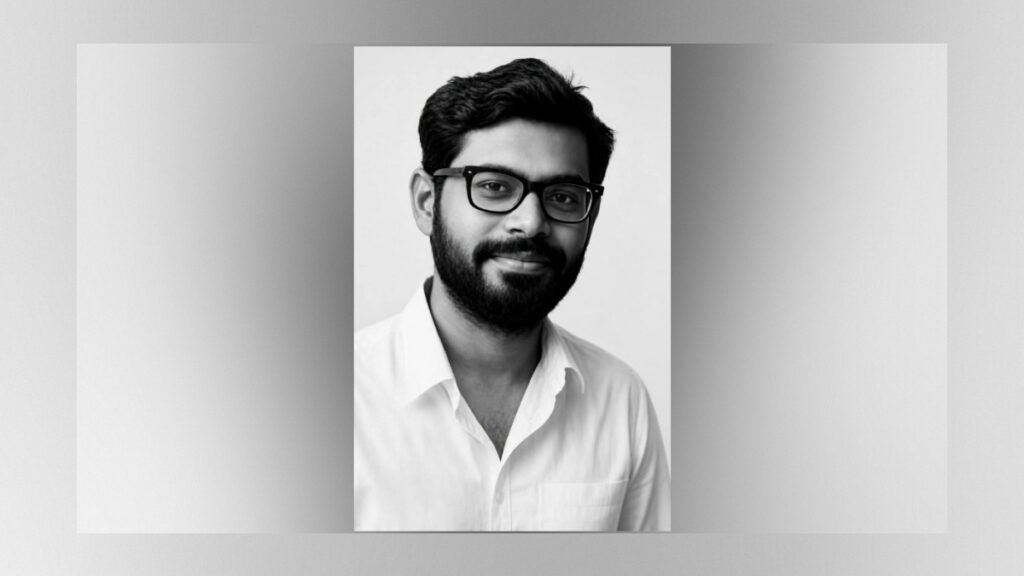
Some deaths mark the end of a life; others become inseparable from the history of a nation. Shaheed Kazi Nurunnabi, known to his family and close associates as Babul, was one such young man. A promising medical student with an interest in writing and a future that appeared full of possibilities, he gave up his personal ambitions when Bangladesh’s struggle for independence reached its most decisive stage.
Nurunnabi was born on 31 July into an educated and respected family in Kazipara, Naogaon. His father was Kazi Sakhawat Hossain and his mother was Nurus Sabah Rokia. The main entrance to their family home carried the name ‘Lata Bitan’.
From an early age, Nurunnabi was known as an intelligent, sensitive and creative young man. He chose medicine as his career and was studying at Rajshahi Medical College. In 1971, he was a final-year medical student and also served as president of the college unit of Chhatra League.
His life was on a promising path. Yet 1971 changed everything.
From medical studies to the Liberation War
The political crisis in what was then East Pakistan had reached a critical point by 1971. The Bengali nationalist movement had developed into a struggle for independence, and the violence that followed the military crackdown transformed the lives of millions.
For Nurunnabi, the call of the Liberation War took precedence over his own career.
The young man who had been preparing to become a doctor, and whose future was expected to involve treating patients and saving lives, became involved in the armed struggle for Bangladesh’s independence. During the war, he was associated with the leadership of the Mujib Bahini in the Rajshahi region and took part in the Liberation War.
His decision meant leaving behind the relative security of student life. The future he had been building through medical education was suddenly uncertain. Instead, he entered a conflict in which imprisonment, torture and death were constant risks.
His story reflects the choices faced by many young Bengalis during the Liberation War. Personal ambitions were often placed aside as the struggle for independence became the overriding concern.
A diary that preserved his thoughts
Even during the difficult days of the war, Nurunnabi maintained a diary. He wrote about the events of each day, the war around him, the people he encountered and his own thoughts and feelings.
The diary provides an insight into a young man whose identity extended beyond that of a medical student and political activist. He was also someone with a strong interest in writing and a carefully developing personal voice.
His handwriting was reportedly distinctive, and his habit of recording his experiences suggests how closely he observed the world around him.
Had he survived, Nurunnabi might have completed his medical studies and built a career in healthcare. His interest in writing might also have developed further. Those possibilities, however, remained unrealised.
His life was interrupted before he could discover what the future might have held.
1 October 1971: the last known chapter
On 1 October 1971, Kazi Nurunnabi was captured by Pakistani forces. He was taken to Shaheed Shamsuzzoha Hall at Rajshahi University, a place that remains associated with the violence and repression of the Liberation War.
After that, his family received no further news of him.
Babul never returned home. The young medical student who had once imagined a future in medicine disappeared amid one of the darkest periods in the country’s history.
His family waited, but there was no return. Nor did he live to see Bangladesh achieve victory on 16 December 1971.
The contrast is painful: a young man who had sacrificed his own future for the independence of his country did not survive long enough to witness the birth of that independent state.
A sacrifice tied to the story of independence
Bangladesh’s victory came on 16 December 1971 after months of war and immense suffering. The conflict claimed countless lives and left many families searching for missing relatives.
Nurunnabi became part of that history.
For those who died or disappeared during the struggle, independence was a future they would not personally experience. Their sacrifices were made amid uncertainty, without any guarantee that they would live to see the outcome.
Nurunnabi’s life carries that particular poignancy. He had a professional future ahead of him, but the events of 1971 placed the question of national freedom above his own ambitions.
He never raised the flag of independent Bangladesh himself. He never returned to the medical college as a qualified doctor. Yet his name continued to be remembered in connection with the institution where he had studied and the movement in which he became involved.
Remembered in Naogaon and Rajshahi
The memory of Kazi Nurunnabi has been preserved in both Naogaon, his birthplace, and Rajshahi, where he pursued his medical education.
A student hostel at Rajshahi Medical College has been named after him in recognition of his memory. In Naogaon, the name ‘Par Naogaon Shaheed Kazi Nurunnabi Market’ also carries his name.
Such memorials provide physical reminders of his life, but the significance of his story extends beyond any particular building or place.
Nurunnabi represents a generation of young Bengalis whose lives were transformed by the Liberation War. Many had careers to build, families to support and personal ambitions to pursue. The events of 1971 disrupted those ordinary expectations and placed them in circumstances where sacrifice became part of daily life.
An unfinished life remembered
Kazi Nurunnabi’s story is ultimately the story of an unfinished life.
He wanted to become a doctor. He had an interest in writing. He had already taken on leadership responsibilities as a student. His future contained possibilities that were never realised.
Instead, his life became part of the history of Bangladesh’s independence.
His birth anniversary is therefore an occasion to remember not only the individual but also the generation to which he belonged. Their stories include courage, loss, uncertainty and dreams that were left incomplete.
Nurunnabi did not live to witness the red-and-green flag flying over an independent Bangladesh. He did not see the victory of 16 December. But his name remains connected to the struggle that preceded that victory.
Rabindranath Tagore’s well-known lines are often recalled when remembering lives given in sacrifice:
“Who gives his life completely,
His sacrifice never perishes.”
Shaheed Kazi Nurunnabi—Babul—remains remembered as a freedom fighter, a final-year medical student of Rajshahi Medical College, a student leader and a young man whose promising future was cut short during the Liberation War.
His life ended before his dreams could be fulfilled. His memory, however, continues to form part of Bangladesh’s history of independence.
Tribute to Shaheed Kazi Nurunnabi.