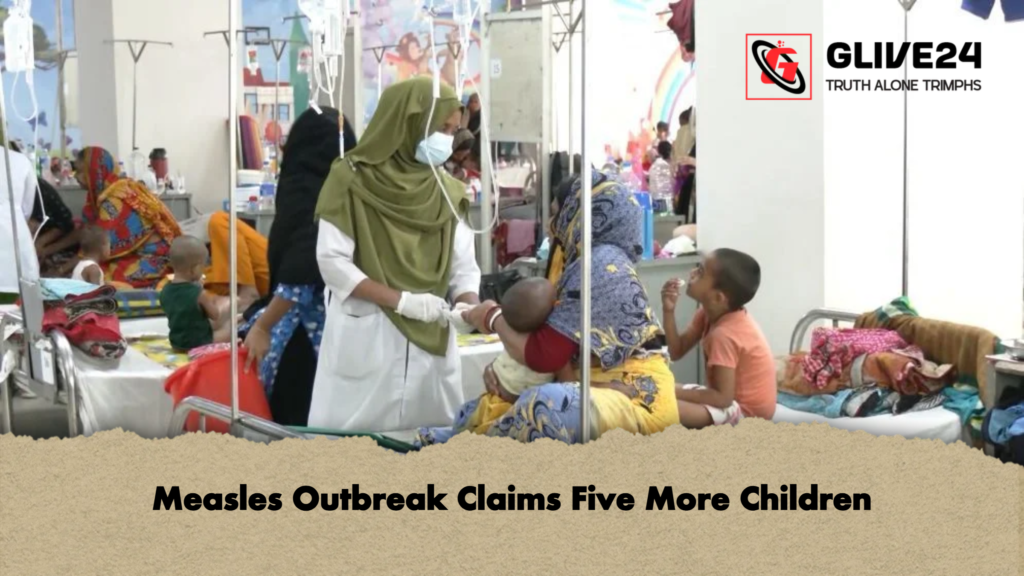
Bangladesh’s measles situation is raising fresh concerns as five more children died with symptoms of the disease in the past 24 hours, while 124 new cases were confirmed during the same period. Health authorities also identified an additional 959 suspected measles patients, indicating that transmission remains active across different parts of the country.
The figures were released by the Directorate General of Health Services (DGHS) in its latest health update published on Wednesday (5 August). The report covered information collected between 8:00am on 4 August and 8:00am on 5 August from various regions of Bangladesh.
According to the DGHS, all five children who died with measles-like symptoms during the reporting period were residents of the Dhaka Division. However, laboratory tests did not confirm measles as the cause of death in any of these cases within that timeframe.
The health authorities have been monitoring the national measles situation since 15 March this year. Since the beginning of the surveillance period, 758 deaths have been reported among patients showing symptoms associated with measles. Of these, 96 deaths have been officially confirmed through laboratory testing as measles-related fatalities.
The number of confirmed measles infections has also continued to rise. In the latest 24-hour period, 124 people tested positive for measles, bringing the total number of confirmed cases since 15 March to 16,655. During the same period, the number of suspected measles cases increased to 132,905.
Health officials have warned that measles remains one of the most contagious viral diseases, spreading mainly through respiratory droplets released when an infected person coughs or sneezes. Children, particularly those who are unvaccinated or have weakened immunity, face a higher risk of severe complications.
Although measles often begins with fever, cough, runny nose and skin rashes, the disease can lead to serious health problems if not managed properly. Complications may include pneumonia, dehydration, malnutrition-related conditions and other life-threatening illnesses, especially among young children.
The DGHS reported that 124 measles patients were admitted to hospitals during the latest 24-hour period. Since monitoring began in March, a total of 115,234 patients with measles have required hospital treatment. Among them, 111,005 patients have recovered and were discharged after receiving medical care.
Health experts have stressed the need for stronger surveillance, early identification of cases, isolation of infected individuals and wider coverage of routine childhood vaccination programmes to contain the outbreak. They have particularly called for intensified vaccination campaigns in areas reporting higher infection rates.
The DGHS said it is continuing to monitor the situation and taking necessary measures to provide treatment and limit further spread of the virus. However, with new infections and deaths still being reported, health authorities have urged families and healthcare workers to remain vigilant and ensure that vulnerable children receive timely medical attention and vaccination protection.