A potentially catastrophic incident aboard a Flydubai flight bound for Israel was averted after passengers and crew members intervened during a violent confrontation in the cockpit, Israeli Prime Minister Benjamin Netanyahu said.
Flight FZ1073, travelling from Dubai to Tel Aviv on 30 September, was diverted to Tabuk in north-western Saudi Arabia after an emergency developed in the cockpit. According to Israeli officials, the co-pilot stabbed the captain and then appeared to attempt to take control of the aircraft. The plane subsequently made a safe emergency landing in Tabuk, with all passengers accounted for.
Netanyahu described the episode as a serious threat that could have resulted in a major loss of life. He said the consequences would not necessarily have been limited to Israel, arguing that a crash involving a passenger aircraft could also have had wider repercussions for international aviation.
Speaking about the passengers who intervened, Netanyahu praised their actions and said that “good people won” in the incident. He also discussed the episode with US President Donald Trump, according to the Israeli prime minister.
What happened inside the cockpit
The aircraft was flying from Dubai to Tel Aviv when an altercation broke out between the pilots. Israeli officials said the co-pilot stabbed the captain before the aircraft began a rapid and abnormal descent.
Data reported by flight-tracking services showed the aircraft losing almost 14,000 feet in less than 30 seconds during one stage of the incident. The plane also transmitted emergency signals before diverting towards Saudi Arabia. One of the signals used the internationally recognised code for unlawful interference, although the precise circumstances surrounding its activation remain part of the investigation.
Despite being injured, the captain was reportedly able to open the cockpit door. Passengers and a crew member then entered the cockpit and helped restrain the co-pilot. Two other pilots travelling on the aircraft also assisted in regaining control of the plane, allowing it to be diverted safely to Tabuk.
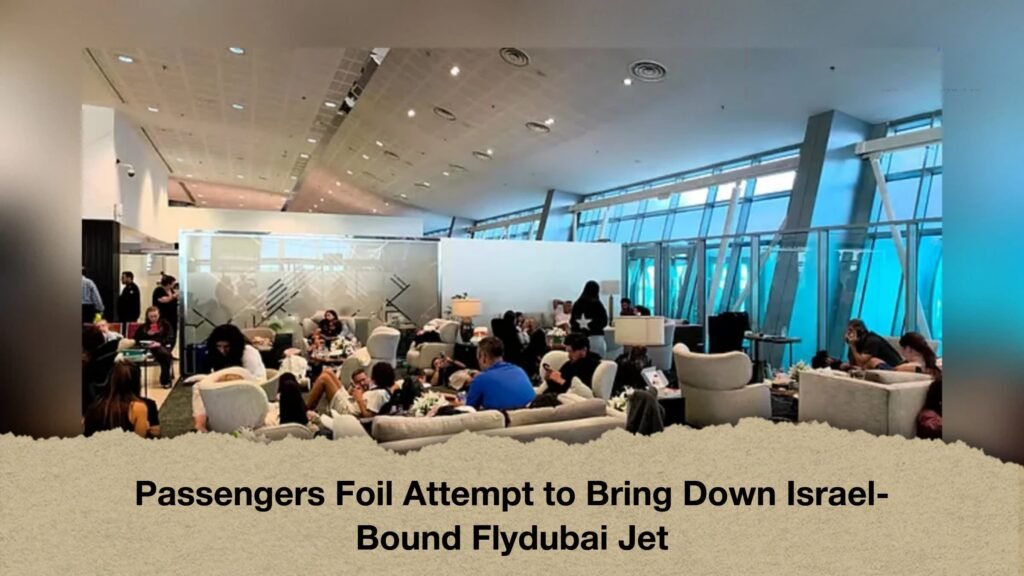
Saudi authorities said the aircraft landed safely at Prince Sultan bin Abdulaziz International Airport in Tabuk after an emergency call was received. Both the captain and co-pilot sustained injuries and were taken to hospital for treatment. Passengers were cared for at the airport while arrangements were made for them to continue their journey.
Netanyahu raises questions over possible wider involvement
A key question now is why the cockpit confrontation occurred and whether anyone else was involved.
Asked whether Iran could have played a role, Netanyahu said it was too early to reach a conclusion. He told Reuters that investigators would seek to establish the attacker’s wider connections, including whether he had accomplices and whether any external organisation or state had been involved.
The co-pilot was being questioned by Saudi authorities after the aircraft landed. Netanyahu said he could later be transferred to the United Arab Emirates because that was where he had boarded the flight. Israel may also take part in the investigation, he said.
Netanyahu added that Israel had received no prior warning or intelligence indicating that such an incident was about to take place. He also spoke with UAE President Sheikh Mohamed bin Zayed about the matter, with the UAE agreeing to participate in the investigation, according to Netanyahu.
Israel calls it an attempted terror attack
Israeli authorities have described the incident as an attempted terrorist attack. However, the precise motive of the co-pilot has not been established publicly, and there has been no independent confirmation that the incident was directed by Iran or any other external actor.
That distinction remains important as the investigation develops. Netanyahu has publicly described the co-pilot’s actions as an apparent attempt to crash the aircraft, but other details — including the motive and whether there was a wider plot — remain under investigation. Al Jazeera reported that there had been no independent confirmation of a hijacking attempt at the time of its reporting.
The incident comes against a backdrop of heightened security concerns surrounding Israeli aviation. Israel maintains stringent aviation-security procedures, and the episode is likely to prompt further scrutiny of cockpit security and procedures for flights carrying passengers to the country.
Flydubai urges caution
Flydubai has taken a more cautious position, saying that an incident occurred in the cockpit but that its cause and motives remain unknown.
The airline said the crew managed to regain control of the aircraft, divert it and land safely in Tabuk. It has urged people not to speculate prematurely while the relevant authorities establish what happened.
The passengers were subsequently flown towards Israel on a replacement aircraft. Saudi authorities said all passengers aboard the original flight departed Tabuk for their final destination after arrangements were made with Flydubai.
For now, the central facts are clear: a serious confrontation occurred in the cockpit, both pilots were injured, the aircraft experienced a rapid descent, and passengers and crew helped prevent the situation from escalating into a disaster. What remains unresolved is the motive behind the attack and whether the co-pilot acted alone.
The investigation in Saudi Arabia, with possible involvement from Israel and the UAE, is expected to determine those unanswered questions. Until then, the airline’s warning against premature conclusions remains particularly relevant.