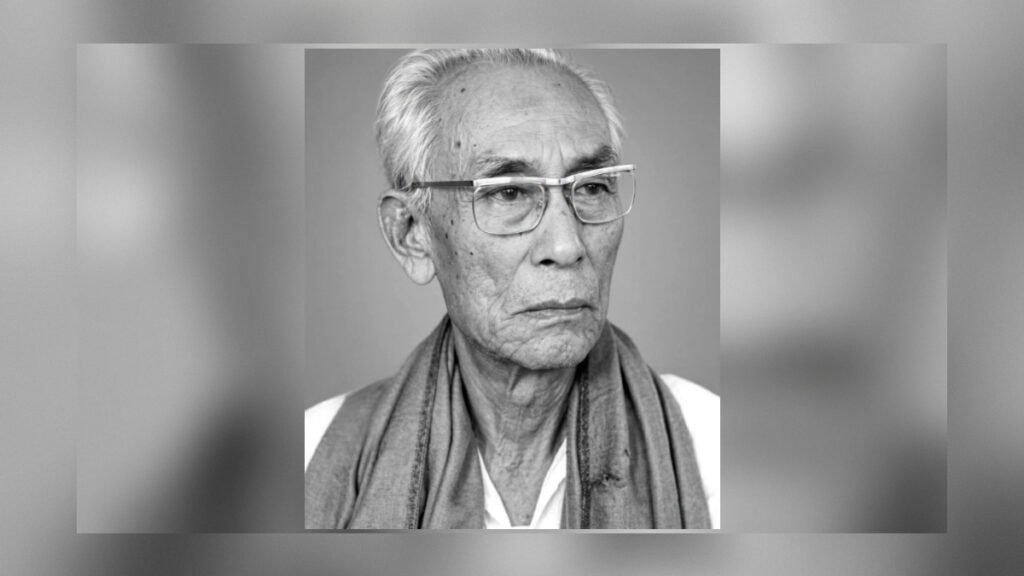
Some artists leave behind far more than a collection of songs. Their voices, melodies and artistic sensibilities become part of the cultural memory of generations. Sachin Dev Burman was one such figure. Born in Comilla, he went on to become one of the most influential singers and composers in the musical history of the Indian subcontinent.
His music carried a distinctive sense of Bengal. Folk traditions, classical training, human emotions and the simplicity of rural life came together in a style that was recognisably his own. Decades after his death, his compositions continue to attract listeners and retain a place in the region’s musical heritage.
Among his memorable works is ‘Shono Go Dakhina Hawa’, a song closely associated with the natural imagery and emotional character found in much of his music. The song was included in a collection of his Puja songs released in 1970. Its lyrics were written by his wife, Meera Dev Burman, while Sachin Dev Burman composed and performed the song himself.
The gentle imagery of the southern breeze reflects a recurring quality in his music: the ability to turn familiar elements of everyday life into deeply evocative melodies.
Sachin Dev Burman was born on 1 October 1906 in Chartha, near Golapukur in Comilla, in present-day Bangladesh. His father, Nabadwip Chandra Dev Burman, belonged to the Tripura royal family and was a skilled sitar player and practitioner of classical music. Growing up in such an environment gave the young Sachin an early exposure to musical traditions.
His royal ancestry remained part of his background, but music became the defining pursuit of his life. He became widely known in Bengali musical circles as ‘Sachin Karta’. In Bombay, fellow musicians and colleagues affectionately referred to him as ‘Burman Dada’, reflecting the close professional relationships he developed during his career.
His childhood in Comilla also shaped his musical imagination. The folk songs of rural Bengal, the sounds associated with rivers and boats, and traditions such as Baul and Bhatiyali music left a lasting impression on him. These influences later appeared in different forms throughout his compositions.
His musical education extended well beyond his family environment. After receiving his early training from his father, he studied under the noted singer and musician K. C. Dey in Calcutta. He also received guidance from musicians including Bhishmadev Chattopadhyay, Badal Khan and Ustad Allauddin Khan. This training exposed him to the discipline of classical music while allowing him to retain the spontaneity and emotional directness of Bengali folk traditions.
His career gradually took him from the musical circles of Calcutta to Bombay’s rapidly expanding film industry. There, he established himself as a composer with a distinctive musical identity. Across Bengali and Hindi cinema, he worked on more than a hundred films, creating melodies that became part of the popular musical culture of the subcontinent.
His compositions were performed by many of the leading singers of his era, including Lata Mangeshkar, Asha Bhosle, Mohammed Rafi, Kishore Kumar, Geeta Dutt, Manna Dey, Hemanta Mukherjee, Mukesh and Talat Mahmood.
One of the defining features of his work was its apparent simplicity. He did not rely on unnecessary musical complexity to make a song memorable. Instead, he placed considerable emphasis on melody, expressive singing and carefully shaped arrangements. His understanding of individual voices also allowed him to match compositions with singers in ways that brought out their particular strengths.
His Bengali repertoire included songs such as ‘Shono Go Dakhina Hawa’, ‘Sundari Kamala’, ‘Sajani Go’, ‘Keno Pritam’ and ‘Ore Sujan Naiya’. In Hindi cinema, films including Pyaasa, Kaagaz Ke Phool, Guide, Aradhana and Abhimaan featured music that demonstrated the range of his abilities as a composer.
His work often brought together apparently different musical worlds. Elements rooted in Bengal’s folk traditions could coexist with classical influences and the requirements of mainstream cinema. Yet the original emotional character of his music remained intact.
That balance helped his compositions travel beyond the cultural environment in which he had grown up. His music could evoke rivers, boats, rural landscapes, love and separation while remaining accessible to audiences in the cities and across linguistic boundaries.
His musical legacy was also carried forward by his only son, Rahul Dev Burman, who later established himself as a major composer in Indian film music. Together, the two generations of the Burman family became an important part of the history of popular music in Indian cinema.
Sachin Dev Burman’s contribution was recognised through several major honours, including the Sangeet Natak Akademi Award, a Filmfare Award and the Padma Shri in 1969. Yet his standing in the history of music cannot be measured by awards alone. His most enduring legacy lies in the continued presence of his songs in the musical memory of the region.
Many of his compositions remain closely connected to ordinary human experiences. Rivers, boats, love, longing, separation and nature appear not merely as subjects but as emotional landscapes. His ability to transform familiar experiences into memorable melodies gave his music an enduring quality.
Sachin Dev Burman died in Bombay on 31 October 1975. His death brought an end to his life, but not to his musical journey. His recordings continued to reach new audiences, while musicians and singers across generations continued to engage with his work.
His story began in Comilla, but his artistic influence extended far beyond his birthplace. He became an important figure in the musical heritage of Bengal and the wider Indian subcontinent, carrying elements of Bengali folk culture into the broader world of popular and film music.
Whenever ‘Shono Go Dakhina Hawa’ is heard, its imagery can still evoke the atmosphere associated with Bengal—the southern breeze, the quiet countryside and the warmth of a familiar voice. It is this emotional connection that has helped keep his music alive.
Sachin Dev Burman passed away more than five decades ago, yet his voice and melodies remain part of the region’s cultural memory. His career demonstrates how deeply local musical traditions can shape work that eventually reaches audiences across generations and geographical boundaries.
On his birth anniversary, Sachin Dev Burman is remembered as a singer and composer whose distinctive musical language connected Bengal’s folk heritage with the wider world of Indian cinema.