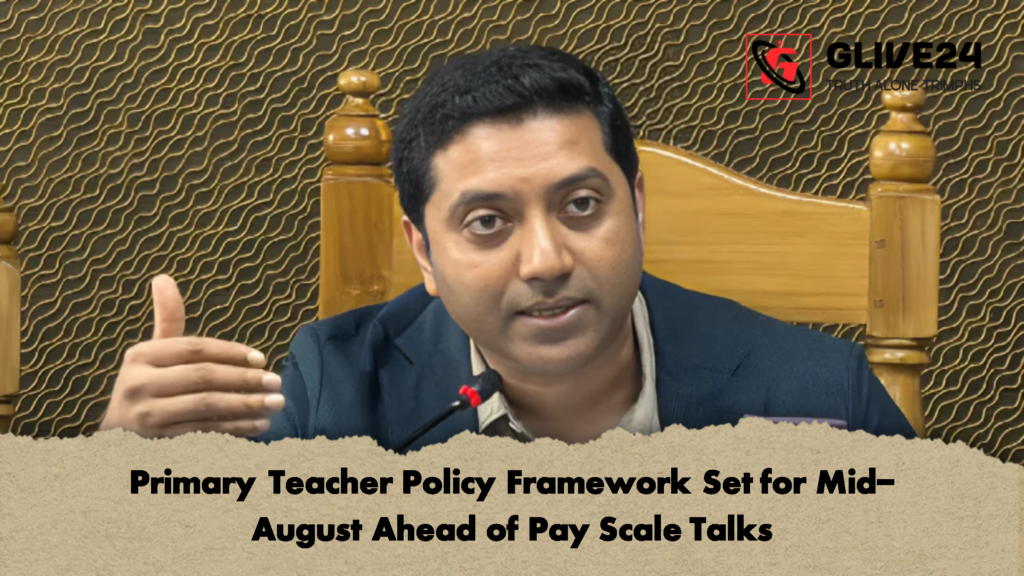
The Bangladeshi government will formulate a comprehensive new policy framework for primary school teachers by 17th August before initiating formal discussions on revised pay scales and service benefits, State Minister for Primary and Mass Education Bobby Hajjaj announced on Sunday.
Speaking to primary education administrators and teachers, the State Minister made it clear that establishing structural guidelines and governance rules remains the immediate mandate. Once the forthcoming framework is finalised, the ministry intends to open structured negotiations regarding salary scales, professional incentives, and terms of service for educators nationwide.
Structural Reforms and Sylhet District Initiatives
The Minister outlined these measures as the chief guest at a day-long training workshop organised by the District Primary Education Office at the Primary Teachers’ Training Institute (PTI) Multipurpose Auditorium in Sylhet.
Titled “Conducting Classroom Activities, Monitoring, Accountability, and Evolving Expectations from Local Administration in Bangladesh’s Primary Education,” the session focused on upgrading administrative oversight and classroom governance at the grassroots level.
Bobby Hajjaj emphasised that the administration is combining local operational realities with proven global benchmarks to overhaul the primary education system. Key operational highlights from his address include:
-
Addressing Regional Staffing Shortages: Tailored recruitment and deployment strategies have been introduced specifically for the Sylhet division to eliminate persistent teacher vacancies.
-
School Mid-Day Meal Expansion: A pilot nutrition scheme is currently undergoing evaluation; upon successful verification, the mid-day meal programme will expand to primary schools nationwide.
-
Tightened Field Supervision: Direct administrative monitoring is being updated to hold local education officers strictly accountable for academic delivery.
Standardising Private Schools and Tea Garden Education
The ministry’s broader roadmap targets long-standing equity gaps across non-government and marginalised school systems:
-
Private Primary School Integration: Plans are under way to bring private primary institutions under a unified, standardised regulatory framework, ensuring a consistent national curriculum and transparent operating guidelines.
-
Tea Garden School Revival: Urgent measures are being implemented to fully reactivate and resource primary schools situated within tea estate communities, securing continuous access to basic education for plantation workers’ children.
The mid-August deadline represents a critical juncture for the ministry as it seeks to balance institutional reform with teachers’ long-standing demands for financial recognition and clear career progression.