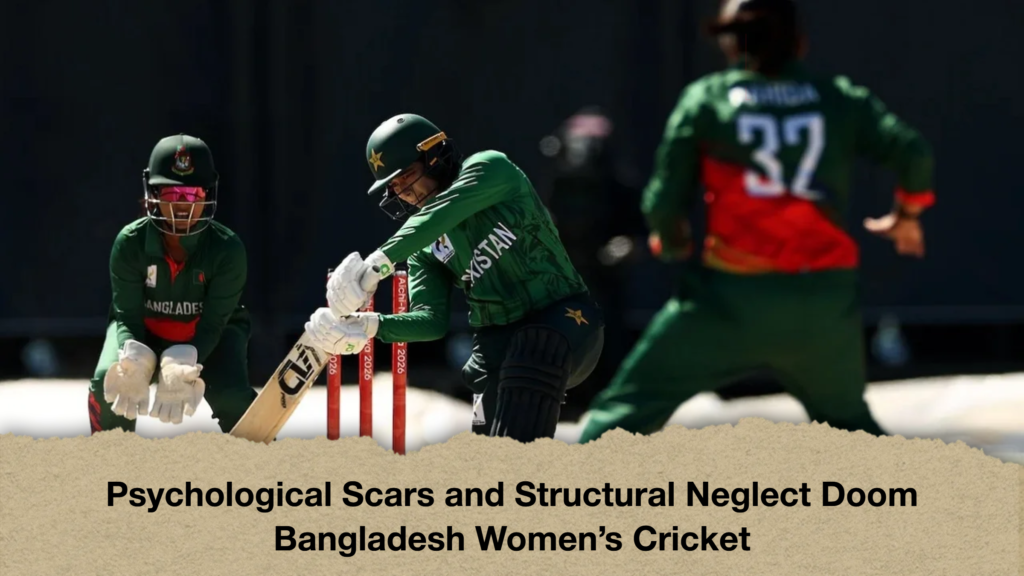
Bangladesh’s women’s cricket team has surrendered its Asian Games podium spot following a disappointing 31-run defeat to Pakistan in the bronze medal play-off. The loss, which means the squad failed to retain the medal secured at the 2023 Hangzhou Games, has laid bare a deep-seated crisis that extends far beyond recent performances on the pitch. Head coach Sarwar Imran has cast a harsh light on the structural flaws, psychological burdens, and administrative instability undermining the national setup.
The campaign at the Korogi Sports Park in Nishine, Japan, started ominously and ended in total disarray. Having advanced to the semi-finals purely on a toss rule after their opening fixture against China was washed out, Bangladesh were promptly outclassed by India in a heavy 114-run defeat. The bronze medal fixture against Pakistan offered a chance at redemption, yet the team faltered once again while chasing a modest target of 145. Bangladesh folded for a subdued 114 for seven in their 20 overs, never truly threatening the opposition.
Head coach Sarwar Imran believes the origin of this slump stretches back two months to the Women’s Asia Cup, where a devastating collapse against Sri Lanka from a winning position shattered team confidence. Since that fixture, Bangladesh have consistently struggled to assert themselves with the bat, posting below-par totals of 120 to 130 even against lower-ranked nations like Indonesia and the United Arab Emirates. That lack of conviction was painfully apparent in Nishine, where defensive batting during the powerplay—yielding just 24 runs—left the side needing an improbable 103 runs from the final ten overs.
The on-field struggles have been severely exacerbated by off-field disruption. Prior to the tournament, captain Nigar Sultana Joty announced her intention to step down from the Twenty20 leadership, injecting uncertainty into the camp. Sarwar Imran noted that constant public criticism directed at the management and captaincy created an unhealthy environment, arguing that the squad’s current predicament is primarily psychological and stems from a failure to foster resilience within the group.
Underpinning these acute issues is a chronic neglect of grassroots development. In stark contrast to nations like Sri Lanka, where female cricket is actively cultivated across hundreds of schools, Bangladesh lacks an established pipeline to nurture young talent. Selectors face a acute scarcity of depth, drawing from a restricted pool of barely thirty competitive players nationwide. Without immediate investment in inter-school competitions, structured Under-18 tournaments, and dedicated training facilities, the national team remains trapped in a cycle of stagnation. For Bangladesh to regularly challenge South Asia’s elite, comprehensive reform off the field must precede success on it.