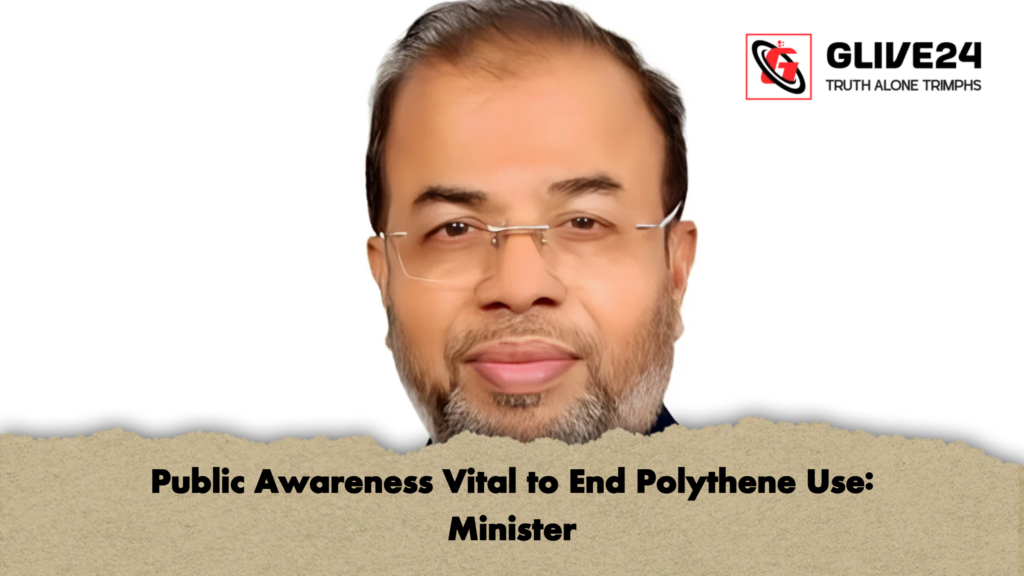
Environmental, Forest and Climate Change Minister Sheikh Faridul Islam has stressed the need to raise public awareness and strictly enforce existing laws to curb the use of banned polythene bags and reduce environmental pollution.
He made the remarks on Monday (27 July) while taking part in an awareness campaign against polythene during a visit to Mohammadpur Krishi Market in the capital.
During the visit, the minister spoke with traders, shoppers and members of the public about the environmental consequences of polythene use. He urged consumers to choose environmentally friendly alternatives and called on traders to stop stocking, selling and supplying banned polythene bags.
The minister said the Prime Minister had directed the authorities to stop the use of single-use polythene. The government has already prohibited the use of thin polythene bags under existing legislation, he said, adding that the priority now was to ensure effective enforcement of the law.
“We are first trying to encourage people to stop using polythene through awareness,” he said. “If people continue to use banned polythene despite these efforts, we will be compelled to take strict action.”
Polythene waste is a major environmental concern because it does not break down easily and can remain in the environment for long periods. The minister said banned polythene was harmful to soil, water, air and biodiversity. He also pointed to its role in worsening urban waterlogging, as discarded bags can block drains and obstruct the normal flow of rainwater.
He stressed that tackling polythene pollution could not be left to government agencies alone. Traders, consumers and citizens from all sections of society must play a responsible role in reducing dependence on the material, he said.
The minister particularly urged shopkeepers and market traders not to stock, sell or distribute banned polythene. He encouraged wider use of alternatives made from jute, cloth and other reusable, environmentally friendly materials.
The push for alternatives is also aimed at changing everyday shopping habits. Consumers can help reduce demand by carrying reusable bags when visiting markets, while traders can support the transition by offering suitable alternatives instead of banned polythene. Regular inspections and awareness campaigns, alongside enforcement measures, are expected to remain part of the government’s efforts.
The minister said enforcement agencies had already intensified action against the use of banned polythene. Over the past six months, 168 mobile courts have been conducted as part of anti-polythene operations, resulting in 206 cases. More than Tk 1.9 million in fines was imposed during the period, while over 50,000 metric tonnes of polythene were seized, according to the minister.
The scale of the enforcement activity highlights the continuing challenge of controlling polythene use despite legal restrictions. Authorities are now placing greater emphasis on combining enforcement with public education, with the aim of encouraging people to voluntarily shift towards reusable alternatives.
During his visit to Mohammadpur Krishi Market, Sheikh Faridul Islam distributed environmentally friendly shopping bags among shoppers and traders as part of the awareness drive.
Senior officials from the Ministry of Environment, Forest and Climate Change and the Department of Environment were also present during the inspection.
Officials said regular market inspections and public awareness initiatives would continue alongside legal action against the stocking, sale and use of banned polythene. The government is seeking greater cooperation from both traders and consumers to make the shift towards environmentally sustainable shopping practices more effective.