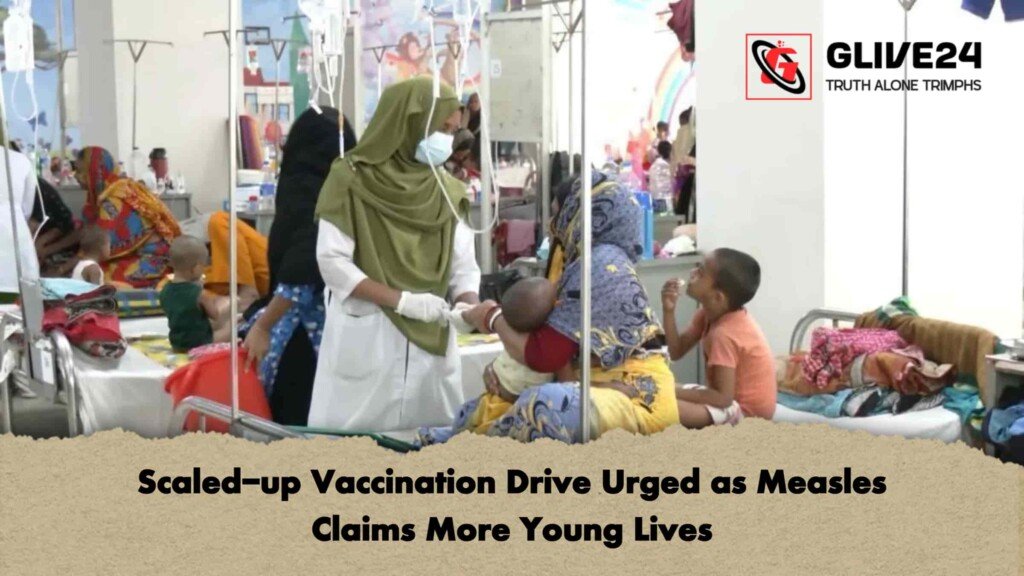
Health authorities have confirmed the deaths of two more children exhibiting measles symptoms over the past 24 hours, bringing the total toll from the disease and its associated complications to 805 since 15 March.
According to the latest daily epidemiological update released on Thursday, 23 July, by the Directorate General of Health Services (DGHS), the latest fatalities were recorded in the Sylhet and Rangpur divisions, with each region reporting one death.
A Growing Burden on Healthcare Infrastructure
The casualty figures underscore a persistent public health challenge across the country. Of the 805 total fatalities documented since mid-March, laboratory tests confirmed measles in 95 cases, whilst 710 children succumbed to severe symptoms clinically indicative of the viral infection.
The report also highlighted a continuous influx of new cases. Over the past 24 hours, 166 children tested positive for measles, while an additional 848 children presented with classic clinical symptoms, such as high fever, coughing, and distinct cutaneous rashes. This brings the cumulative tally of suspected symptom-bearing cases to 121,200, alongside 15,000 confirmed laboratory diagnoses since the outbreak’s surveillance window opened on 15 March.
Hospitals and specialised paediatric units have experienced significant strain over the four-month monitoring period. Hospital admissions linked to measles and associated health complications have surpassed 103,800 patients. On a positive note, recovery rates remain substantial; DGHS figures indicate that 100,188 children have successfully recovered and been discharged from healthcare facilities nationwide following treatment.
Contextualizing the Outbreak: Transmission and Prevention
Measles remains one of the most contagious viral diseases known to medical science, primarily spreading through respiratory droplets when an infected person coughs or sneezes. The virus can linger in the air or on surfaces for up to two hours, making densely populated areas particularly vulnerable to rapid transmission dynamics. While the infection can cause severe illness across all age groups, malnourished infants and children with compromised immune systems face the highest risk of fatal complications, including severe diarrhoea, encephalitis, and severe respiratory infections such as pneumonia.
Public health experts emphasise that measles is almost entirely preventable through timely immunization. The World Health Organization (WHO) recommends a two-dose vaccination regimen to ensure herd immunity, typically requiring at least 95 per cent coverage across communities to halt transmission chains effectively. Disruptions to routine childhood immunisation schedules—often exacerbated by logistical hurdles or localized gaps in healthcare access—frequently create pockets of susceptibility that trigger periodic resurgences.
Field healthcare workers are continuing targeted surveillance, contact tracing, and localized ring-vaccination campaigns in severely affected districts. Health officials urge parents and guardians to ensure their children receive all scheduled doses under the national expanded programme on immunisation (EPI) and to seek immediate medical attention if early symptoms appear.