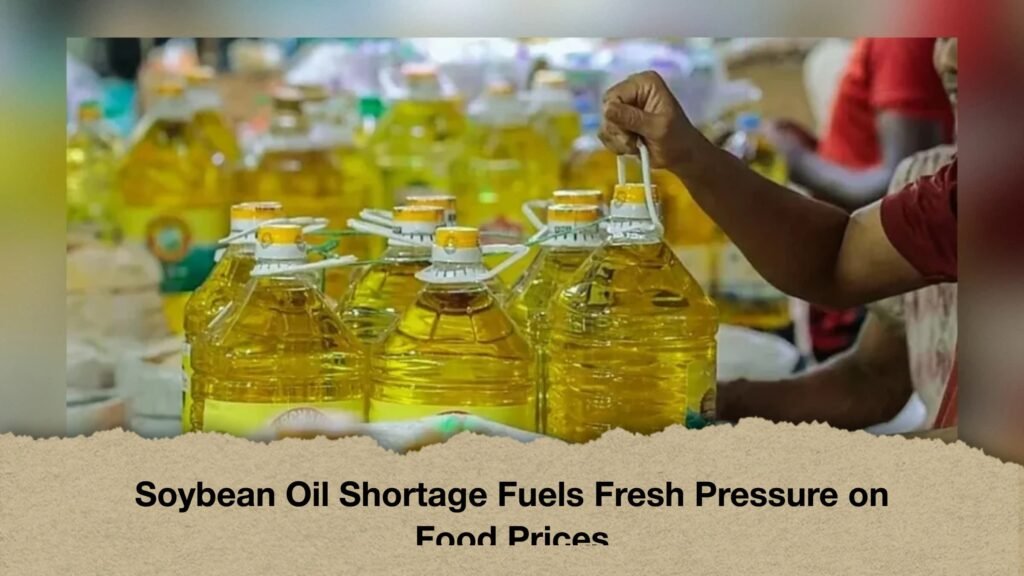
A fresh supply squeeze in bottled soybean oil has emerged in Bangladesh, leaving many retail shops with limited stocks and raising concerns over another round of price increases. The shortage has also pushed up the prices of loose soybean and palm oil, while consumers are simultaneously facing higher prices for farm eggs.
Retailers say oil companies are releasing smaller quantities of bottled soybean oil than usual. As a result, dealers and suppliers are also providing shops with reduced allocations. According to several retailers, dealers have told them that companies are seeking another price increase and have therefore restricted supplies.
A visit to the Mohammadpur Town Hall market in Dhaka found that bottled soybean oil was not readily available in quantities matching consumer demand. At least six shops had only four or five bottles each. Some shops had no one-litre bottles, while others had run out of the two-litre size. Five-litre bottles were also reportedly in short supply.
Retailers stressed that supplies had not stopped altogether. The problem, they said, was that deliveries were significantly below normal demand. Some shopkeepers are also keeping part of their limited stock away from public display so that they can meet the needs of regular customers.
Iman Ali, a grocery retailer at the Mohammadpur Krishi Market, said his shop normally requires around 10 cartons of soybean oil a day but received only four cartons from a dealer.
“I have to provide oil when regular customers ask for it. That is why I keep some bottles aside,” he said.
The shortage of bottled oil is already affecting the market for loose edible oil. When bottled soybean oil becomes difficult to find, consumers often turn to loose soybean oil as an alternative, increasing demand for the latter.
According to data from the Trading Corporation of Bangladesh (TCB), the price of loose soybean oil rose by about 1 per cent over the past week to Tk 190-195 a litre. Loose palm oil increased by around 0.88 per cent to Tk 170-175 a litre. In practical terms, prices of the two varieties have risen by roughly Tk 2-4 per litre.
The latest supply disruption follows several episodes of market pressure earlier this year. Shortages of bottled soybean oil first became noticeable around February. Towards the end of April, the price of bottled soybean oil was increased by Tk 4 per litre to Tk 199.
Another supply shortage emerged around July. On 3 September, the price was raised by a further Tk 5, bringing the retail price to Tk 204 a litre. The latest disruption therefore marks the third reported supply squeeze in the bottled soybean oil market this year.
Edible oil refiners and producers are now seeking another increase in prices. The Bangladesh Vegetable Oil Refiners and Vegetable Fat Manufacturers Association wrote to the commerce secretary on 20 September requesting a fresh adjustment.
The government, however, has indicated that no immediate decision will be taken. Commerce Minister Khandkar Abdul Muktadir told journalists in Sylhet on Wednesday that although businesses had demanded higher edible oil prices, the government would examine the matter before reaching a decision. He said prices would not be increased before the claims were reviewed.
The dispute comes at a time when edible oil remains a basic household necessity. Any increase in cooking oil prices can put additional pressure on family food budgets, particularly for lower-income households that have limited scope to absorb higher daily expenses.
Egg prices rise as chicken and fish remain costly
The pressure on household budgets is not limited to cooking oil. Farm egg prices have risen sharply over the past week, with the price of a dozen increasing by around Tk 10 to Tk 155-160.
In neighbourhood grocery shops, four eggs are selling for around Tk 55. For low-income families that cannot afford to buy a full dozen at once, purchasing one or two eggs at a time can mean paying around Tk 15 per egg.
Broiler chicken prices have also remained high. For around two months, broiler chicken has been selling at close to Tk 200 a kilogramme. There has been little relief for consumers despite the prolonged period at that level.
Fish prices are similarly elevated. Ruhu weighing between two and two-and-a-half kilogrammes is selling for Tk 380-400 a kilogramme, while pabda is priced at Tk 400-450. Tilapia is selling for Tk 250-260 a kilogramme and pangas for Tk 250-280.
The combination of higher prices for cooking oil, eggs, chicken and fish is placing particular pressure on households with limited incomes. These products form part of the regular food basket for many families, meaning sustained price increases can force consumers to reduce quantities, switch to cheaper alternatives or cut back on some items altogether.
Ansar Hossain, who works as a security guard in Dhaka’s Shekertek area, said his income allows him to buy relatively inexpensive sources of animal protein such as eggs and broiler chicken, but even these items are becoming increasingly difficult to afford.
“I do not earn much. With what I make, I can manage to buy broiler chicken and eggs. But the price of broiler chicken has not fallen for two or three months, and eggs now cost Tk 160 a dozen,” he said.
For consumers, the immediate concern is whether the bottled soybean oil supply will return to normal and whether companies will be allowed to raise prices again. With the government yet to complete its review of the industry’s request, the coming days will be closely watched by retailers, dealers and households already coping with elevated food costs.