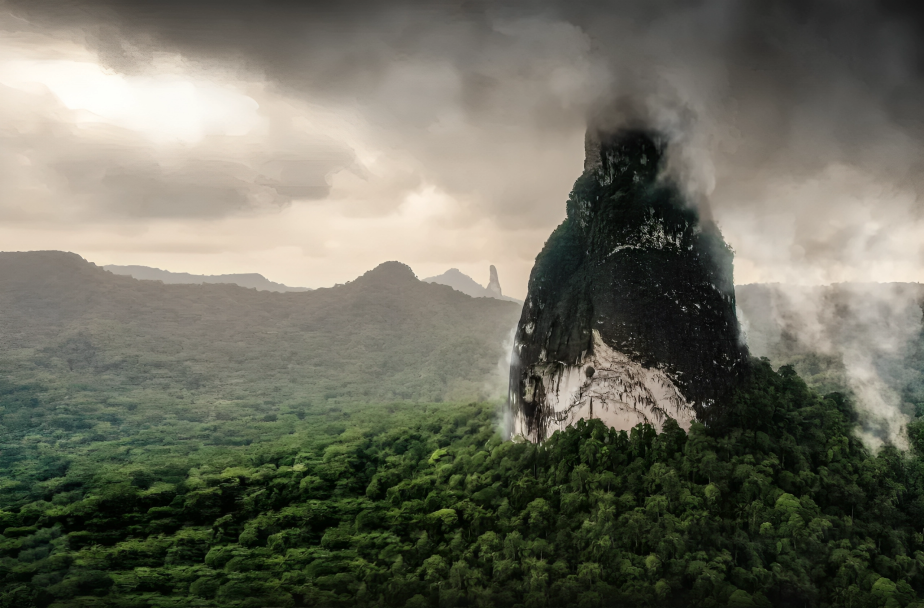
If you want to understand the soul of São Tomé and Príncipe, you must first look to the soil. To step off a plane in this tiny, two-island archipelago in the Gulf of Guinea is to be instantly enveloped by the tropics. The air is thick, warm, and sweet, smelling faintly of damp earth and the vast, dark expanse of the surrounding Atlantic Ocean. For most of modern history, this isolated equatorial nation was a mere footnote on global maps, a speck of land floating off the western coast of Central Africa. But turn the clock back slightly over a century, and these volcanic islands were the beating heart of a booming global industry. Long before eco-tourists arrived seeking pristine beaches and untouched rainforests, these islands were known globally for one distinct export: cocoa.
To trace the history of São Tomé and Príncipe is to trace the history of chocolate itself—a story of botanical miracles, staggering colonial wealth, profound human exploitation, and, ultimately, a slow, wild reclamation by nature.
The Seed is Planted
The story of the “Chocolate Islands” did not actually begin with chocolate. The Portuguese first cleared the islands’ dense, primeval forests in the early 16th century, establishing sprawling sugarcane plantations. Relying entirely on forced human labor, this tiny colony briefly surged to become the largest producer of sugar in the world during that era. But as global markets shifted and the sugar boom faded, the Portuguese colonial administrators began desperately searching for a new, profitable cash crop to sustain the colony’s economic viability.
In 1780, they introduced the coffee plant, but it was a decision made a few decades later that would alter the archipelago’s destiny forever. In 1819, colonial authorities introduced the cocoa tree (Theobroma cacao) to the islands. The very first seedlings were ferried across the Atlantic Ocean from Brazil, marking a monumental historical milestone: the arrival of cocoa in Africa.
The islands’ equatorial climate, characterized by intense heat and rich volcanic soil, provided the absolute perfect environment for the fragile trees. By 1824, the first cocoa tree to reach full maturity stood on the smaller northern island of Príncipe. As the 19th century progressed, the timing of this agricultural experiment proved fortuitous. The Industrial Revolution was sweeping across Europe, transforming chocolate from an exclusive, bitter beverage reserved for the elite into a cheap, mass-produced, and highly affordable confectionery. The global demand for cocoa skyrocketed just as Portugal was losing its colonial grip on Brazil. Seeking to capitalize on this surging European appetite, the Portuguese heavily shifted their agricultural ambitions to their West African territories, primarily São Tomé and Príncipe.
The Era of the Roças
To meet the insatiable European demand, the Portuguese authorities and wealthy expatriates began transforming the island landscape, establishing a massive agricultural system built around roças. Calling these estates “plantations” feels woefully inadequate; a roça was, in reality, a self-sufficient company town.
Around the turn of the 20th century, roughly 150 of these sprawling estates dominated the two islands. They operated as entirely self-contained universes, functioning largely independently of the standard colonial administration. Beyond the endless groves of cocoa trees, a roça contained everything required for life and labor: workshops, chapels, schools, warehouses, drying terraces, workers’ housing, and elegant plantation mansions for the European elite. Buildings were typically arranged around a central plaza, a nerve center used for drying the fermented cocoa beans and conducting daily roll calls.
The scale of these operations was staggering. Take, for example, Roça Água Izé, located a short drive from the modern capital. By 1884, this massive 2,600-hectare estate boasted 50 kilometers of its own internal railway lines. It was operated by 50 European employees who oversaw a labor force of 2,500 Angolan contract workers. Decades later, in 1928, Água Izé would construct a grand, state-of-the-art medical facility that was considered the finest hospital in West Africa at the time.
Another prominent estate, Roça Sundy on Príncipe, was founded in 1822 and grew into one of the most vital cocoa and coffee producers in the territory. Interestingly, Sundy’s legacy extends beyond agriculture. In 1919, British astronomer Sir Arthur Eddington traveled to this very roça to observe a total solar eclipse. The measurements Eddington took from the plantation grounds provided the very first experimental confirmation of Albert Einstein’s General Theory of Relativity, tying this remote agricultural outpost to one of the most profound scientific breakthroughs of the 20th century.
By 1905, this highly organized, aggressive agricultural system reached its absolute peak. São Tomé and Príncipe officially became the world’s top producer and exporter of cocoa. Between 1905 and 1911, these small islands pumped out more cocoa than any other nation on earth, officially earning their enduring moniker: “the Chocolate Islands”. The biggest names in the British confectionery industry—including J. S. Fry & Sons, Rowntree’s, and the famous Cadbury Brothers—relied primarily on São Tomé and Príncipe for their raw cocoa supply.
The Ugly Secret
However, the staggering wealth and architectural grandeur of the roças were built upon a foundation of profound human suffering. When the Portuguese authorities imported the cocoa trees from Brazil, they also imported the deeply exploitative labor practices used on South American plantations.
The manual labor required to clear the jungle, plant the trees, and harvest the pods was carried out by serviçais—contract laborers who were subjected to conditions that amounted to indentured servitude or outright slavery. The economic trap was absolute. In the early 1900s, male serviçais were paid a meager monthly wage of approximately 2,500 reis (roughly US$2.50 at the time), while female workers were paid even less, receiving only 1,800 reis. Because the plantation owners owned absolutely every store on the island, virtually all the wages paid to the laborers immediately flowed right back into the pockets of the roça owners.
The dark reality of the “Chocolate Islands” could only remain hidden for so long. British journalists eventually traveled to the islands and exposed the abhorrent, slave-like conditions under which the serviçais toiled. The global revelation of this ugly secret sparked massive international outrage. It led to a widespread boycott of São Toméan cocoa by major European chocolate manufacturers, with Cadbury being the most notable brand to pull its business.
The Fall and the Forest’s Revenge
The combination of the international boycott and the sudden inability to attract buyers or new workers sent the island’s booming economy into a tailspin. But it was nature itself that dealt the final, devastating blows to the colonial cocoa empire.
In the 1910s and 1920s, the poorly maintained fields were ravaged by fungal diseases, insect infestations, and the swollen shoot virus. In 1919, a massive plague of thrips descended upon the islands, devastating that year’s harvest and proving even more destructive to the industry than the European boycott had been. In 1911, the islands had already lost their crown as the world’s top producer, overtaken by the British colony of the Gold Coast (modern-day Ghana). By 1935, a massive portion of the roças had been abandoned entirely or repurposed merely to grow subsistence crops to keep the local population alive.
The final chapter of the traditional plantation era closed in 1975, when São Tomé and Príncipe officially gained independence from Portugal. In the wake of independence, some 200 plantations were nationalized. While the local population widely supported this move, the newly independent nation lacked the massive capital required to maintain the estates. Without investment, production plummeted, and the grand facilities were left to decay.
Today, the historic roças offer a deeply poignant, almost haunting glimpse into the past. Nature is slowly, methodically obliterating the traces of human intervention. Ferns sprout from the crumbling stonework of old hospitals, and massive palm trees push their way through the rusted roofs of former colonial mansions. Yet, these spaces are not merely dead ruins. The roças remain living communities where modern generations continue to adapt the spaces, weaving their own lives into the decaying architecture of the past. Recognizing the extraordinary historical and cultural weight of these sites, UNESCO inscribed The Roças of São Tomé and Príncipe on the World Heritage List in 2026, protecting six historic estates (including Roça Sundy) for future generations.
The Modern Alchemist: Claudio Corallo
While the era of massive, exploitative cocoa production has vanished, the 21st century has seen a remarkable renaissance in São Toméan chocolate. Modern producers have entirely shifted their focus away from volume, concentrating instead on producing certified organic and fair-trade cocoa of the highest possible quality.
No one embodies this modern revival quite like Claudio Corallo. Born in Florence, Italy, in 1951, Corallo is an agricultural engineer and businessman whose life reads like an adventure novel. In 1974, he moved to Zaire (now the Democratic Republic of the Congo), where he worked in the depths of the Congo River basin, eventually buying 1,250 hectares of coffee plantations. Following severe political upheaval in Zaire, Corallo was forced to flee the country, eventually relocating to São Tomé and Príncipe in December 1992.
It was on the island of Príncipe that Corallo and his wife, Bettina, made a remarkable discovery. While exploring the abandoned Terreiro Velho plantation in 1992, they found original heirloom cocoa plants that had been brought over from Brazil in the 1800s, surviving wild in the deep jungle. For years, these plants had been tended only by the local monkeys. The monkeys, seeking the sweet pulp surrounding the cocoa beans, would suck the pulp and spit the seeds onto the forest floor, inadvertently creating perfect nurseries and propagating the heirloom crop.
Corallo purchased the abandoned 120-hectare estate and began a meticulous scientific journey to perfect the cocoa. Through obsessive testing, he determined that the bitterness traditionally associated with chocolate was actually a defect caused by processing failures, poor moisture storage, and the punishing equatorial heat. He built his own laboratory for peeling, roasting, and rinding, developing entirely new fermentation tests. Today, he operates the “Claudio Corallo Cacao and Coffee” refinery, controlling every single step of the process from the tree to the final chocolate bar. Working alongside nature on his organic, biodynamic farm, the Italian agronomist produces what many culinary experts simply call the greatest chocolate ever made.
The legacy of São Tomé and Príncipe is no longer defined merely by the sins of the past. As vines reclaim the colonial mansions and local artisans craft world-class chocolate from heirloom seeds planted by monkeys, “the Chocolate Islands” are finding a new, sustainable identity—one that honors the richness of the soil without breaking the spirit of the people who walk upon it.
To see a visual exploration of this incredible landscape and meet the modern pioneers of the island’s cocoa renaissance, check out this full documentary on São Tomé and Príncipe’s chocolate legacy. This video offers a breathtaking aerial and ground-level view of the lush volcanic islands, the crumbling colonial ruins, and a fascinating visit to Claudio Corallo’s revolutionary cocoa plantations.