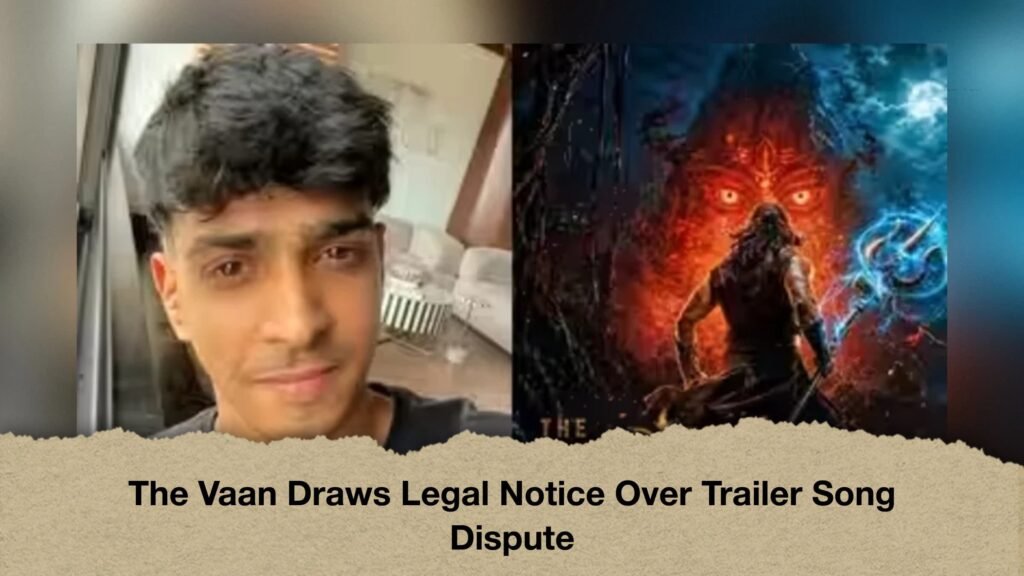
Siddharth Malhotra and Tamannaah Bhatia’s much-anticipated film The Vaan: Force of the Forest has become embroiled in a music rights dispute ahead of its scheduled release. Singer and composer Sargam Vaish has alleged that his song was used in the film’s official trailer without his permission.
Vaish has called on the filmmakers to remove the track from the trailer and has indicated that he is prepared to pursue legal action if his concerns are not addressed.
According to a report by The Times of India, Vaish raised the allegation in a video shared on social media. He claimed that his rendition of ‘Aigiri Nandini’ had been used in a specific section of The Vaan’s official trailer without authorisation.
The singer said the issue was not simply a matter of a similar melody or musical arrangement. According to his claim, the trailer contains elements of his original recording, production and vocals. He also shared a comparison on social media, placing a section of his own recording alongside the portion used in the trailer.
Vaish said he had spent nearly three years working on the song. His allegation therefore concerns what he describes as the use of his actual recorded work rather than an independent composition that merely resembles his music.
Existing agreement adds another layer
The singer has also raised concerns about an existing agreement covering the song. Vaish claims that ‘Aigiri Nandini’ is already under contract with a major music label. He has suggested that using the track in a film trailer or other promotional material without the necessary permission could have implications for the rights arrangements surrounding the song.
Vaish has asked the makers of The Vaan to remove the track from the trailer. He has also requested documentary evidence if the filmmakers obtained a valid licence or other authorisation to use the song.
His position is that artists or other rights holders should be consulted before their creative work is used for commercial purposes. The dispute has consequently brought attention to the permissions required when recorded music is incorporated into film promotion.
A report by Hindustan Times quoted Vaish as saying that the master rights to ‘Aigiri Nandini’ are held by him and his team. He said they had already consulted a lawyer and begun preparations for legal proceedings against the filmmakers.
Vaish also claimed that a legal notice was sent to the makers on 21 September. The full contents of the notice have not been made public in the reports available.
Filmmakers yet to respond
There has been no public response so far from the makers of The Vaan or the production company regarding Vaish’s allegations. As a result, several questions remain unanswered, including how the song came to be included in the trailer and whether its use was covered by any licence, contractual arrangement or other form of permission.
The distinction between a musical composition, a recorded performance and the master recording can be significant when questions over music rights arise. Vaish has specifically alleged that portions of his recording and vocals were used, while also referring to his existing agreement with a music label. The relevant contracts and licensing documents could therefore play a central role in establishing whether the trailer use was authorised.
Directed by Deepak Mishra and Arunabh Kumar, The Vaan: Force of the Forest stars Siddharth Malhotra and Tamannaah Bhatia, with Shweta Tiwari, Maniesh Paul and Anup Soni also part of the cast. The story is set against the forests of central India and draws on folklore surrounding a forest goddess.
The film has undergone several changes to its release schedule and is currently expected to arrive in cinemas on 25 September. The music rights allegation has surfaced just before the scheduled release, adding another point of discussion around the film’s promotional campaign.
For now, the allegations have been made by Vaish and have not been publicly addressed by the filmmakers. The precise circumstances surrounding the use of ‘Aigiri Nandini’ will depend on the production team’s response and any contracts, licences or other documents relating to the song.