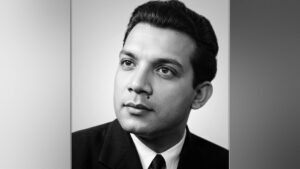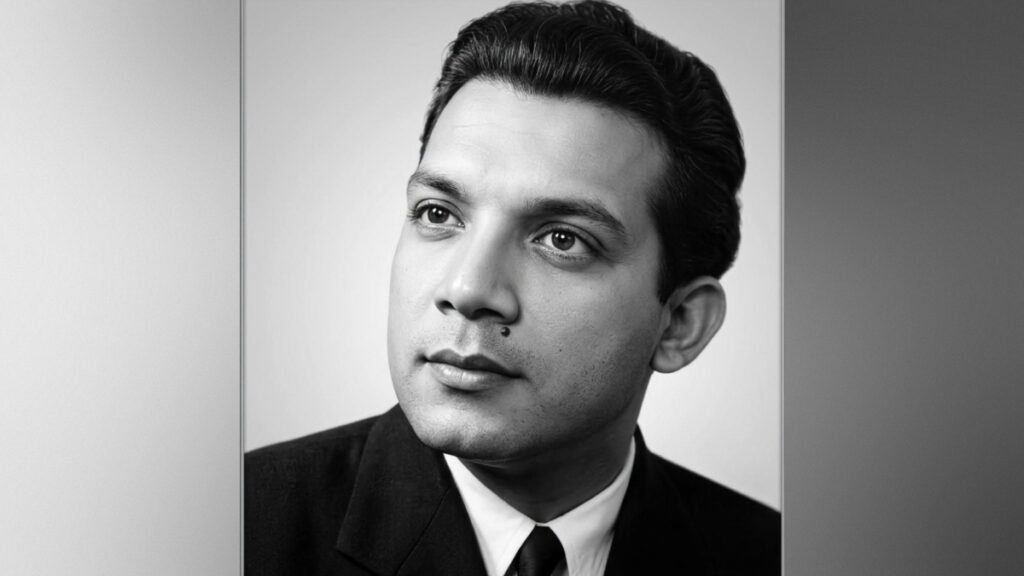
Dr Mohammad Fazle Rabbi, a professor at Dhaka Medical College and a specialist in clinical medicine and cardiology, devoted his professional life to caring for people. For him, medicine was not simply a profession. It was a responsibility to stand beside the sick, regardless of their religion, identity or background.
That commitment remained unchanged even during the final, violent days of the 1971 Liberation War.
Dr Rabbi was among the professionals who became victims of the violence surrounding the closing days of the war. His final hours, remembered by his family, have become closely associated with a simple sentence that reflected his approach to medicine and humanity: “Do not forget, they are human too.”
On the nights of 13 and 14 December 1971, his wife, Jahanara Rabbi, reportedly had the same dream. In it, she was visiting an unfamiliar place with her three children, wearing a white cotton sheet. Between four black pillars stood something covered in white cloth.
The following morning, 15 December, she told her husband about the dream. Dr Rabbi responded calmly: “Perhaps you saw my grave.”
The remark deeply unsettled Jahanara. With the situation in Dhaka becoming increasingly dangerous, she asked her husband to contact fellow academics and acquaintances. Dr Rabbi made several telephone calls, but most of the people he tried to reach could not be contacted.
Dhaka was then passing through the final and most turbulent stage of the war. Aircraft could be heard overhead, while rockets, shells and other explosions added to the fear gripping the city. Movement was restricted and uncertainty was widespread.
At around 10am, the curfew was relaxed for only two hours.
Despite the danger, Dr Rabbi decided that he needed to visit a patient in Old Dhaka. The patient was a non-Bengali.
His wife tried to stop him from leaving. Dr Rabbi, however, reportedly smiled and told her: “Do not forget, they are human too.”
Those words have survived as the most powerful expression of his humanitarian outlook. At a time when war had created intense divisions and fear, he refused to allow a patient’s identity to determine whether that person deserved medical care.
Dr Rabbi went to see the patient and returned home before the curfew resumed.
He then had lunch with his family. The food included leftover curry from the previous day. Yet, while eating, he remarked that he had enjoyed such a good meal that day.
For his family, the seemingly ordinary comment later became a poignant memory of his final afternoon.
Jahanara wanted the family to leave their home that evening and seek safety elsewhere. Dr Rabbi agreed but suggested that they wait until the afternoon had passed a little.
Soon afterwards, the atmosphere at the house changed dramatically.
The cook came running to inform the family that the house had been surrounded. A mud-covered microbus was standing outside, while Rajakar and Al-Badr members and Pakistani soldiers were reportedly present around the property.
Dr Rabbi understood that the men had come for him.
Speaking quietly to his wife, he told her, “They have come to take me.”
He then instructed the gatekeeper to open the gate.
At about 4pm, Dr Rabbi left his home with the men who had arrived. For his family, that moment marked the beginning of an agonising wait.
His body was found on 18 December 1971, three days after he was taken from his home.
Born on 22 September 1932, Dr Mohammad Fazle Rabbi had spent his career treating patients and teaching medicine. His work at Dhaka Medical College placed him among the country’s medical professionals, while his specialisation in clinical medicine and cardiology reflected his contribution to the healthcare sector.
His death came during one of the darkest periods of the Liberation War. In the final days before victory, intellectuals and professionals in Dhaka were targeted amid a wider campaign of abductions and killings. The violence left families searching for loved ones and a newly independent Bangladesh mourning many of its prominent professionals and intellectuals.
Dr Rabbi’s story is remembered not only because of the circumstances of his death, but also because of the principle he upheld until the end of his life.
He had spent years writing medical prescriptions intended to save lives. Yet, in the final days of the war, violence deprived him of his own life. The contrast has given particular meaning to the way his memory has been preserved: the doctor who wrote prescriptions for his patients left behind a lasting humanitarian message of his own.
“Do not forget, they are human too.”
The sentence is more than a recollection of one conversation between a husband and wife. It captures the principle that a doctor’s responsibility extends beyond differences created by conflict, community or identity. For Dr Rabbi, an ill person remained a person in need of care.
His medical prescriptions may have disappeared with time, but the principle behind his work has endured. His life continues to be recalled as an example of professional duty combined with compassion, particularly because he continued to care for a patient even when doing so meant venturing outside his home at a moment of extraordinary danger.
On his birth anniversary, remembrance of Dr Mohammad Fazle Rabbi carries both grief and respect. His life was taken during a period of immense brutality, but the words attributed to him remain a reminder of the value he placed on human life.
He devoted himself to treating people.
He believed in standing beside those who needed help.
And in the final days of his life, he remained faithful to that principle.
With profound respect, Dr Mohammad Fazle Rabbi is remembered as a physician whose legacy extends beyond medicine.
“Do not forget — they are human too.”