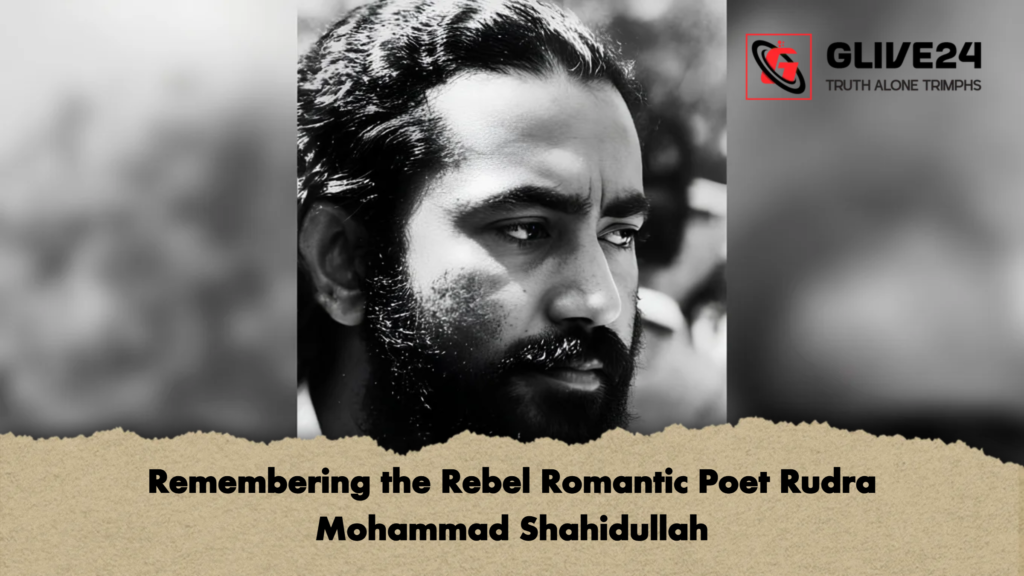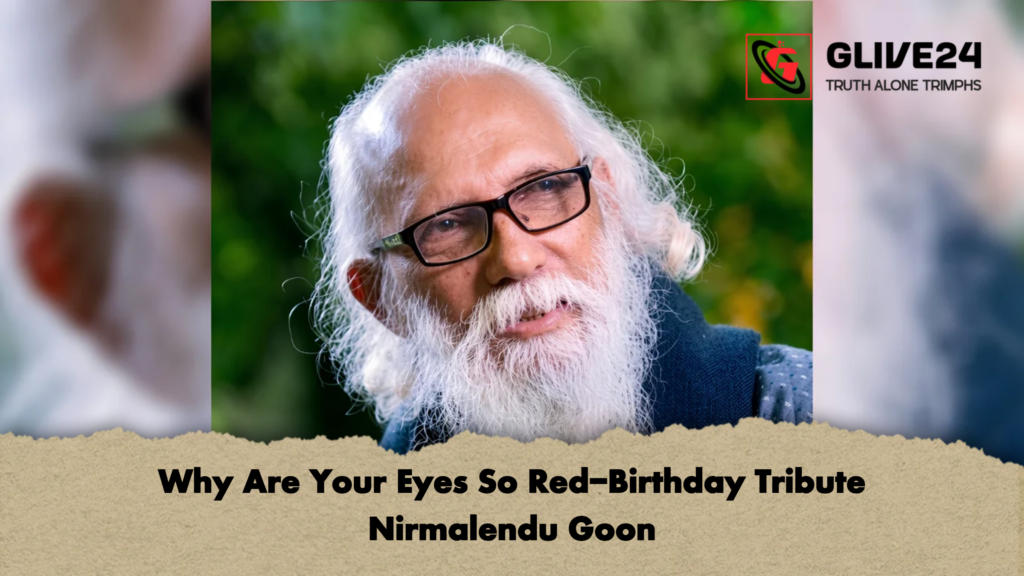
Nirmalendu Goon remains one of the most prominent figures in Bengali poetry, having inspired successive generations with his literary brilliance. His poetry predominantly explores themes of romance, rebellion, the rights of the masses, the spirit of the Liberation War, and a profound reverence for the founding father of Bangladesh, Sheikh Mujibur Rahman. Owing to the seamless integration of the national identity, Bangladesh’s struggle for liberation, and the legacy of Sheikh Mujibur Rahman within his verses, the literary magazine Lok formally bestowed upon him the title ‘Poet of Bangabandhu’.
Early Life and Family Background
Born on 21 June 1945 in Kasban village, located in the Barhatta Upazila of Netrokona district, his birth name was Nirmalendu Prakash Goon Chowdhury. He is the youngest of five siblings, comprising three sisters and two brothers, born to Sukhendu Prakash Goon and Binapani Devi. Following the death of his mother when he was merely four years old, his stepmother, Charubala, raised him and initiated his early education.
Educational Background and Literary Inception
Goon completed his matriculation in 1962 from the Coronation Krishnaprasad Institute in Barhatta. His inclination towards literature manifested during his school years; prior to sitting his matriculation examinations, his maiden poem, Nuton Kandari, was published in Uttar Akash, a periodical based in Netrokona.
He subsequently attended Anandamohan College in Mymensingh, where he secured a residential scholarship. In the 1964 Intermediate in Science (ISc) examinations, he emerged as the sole student from Netrokona College to be included among the 119 students who attained first-division marks under the Dhaka Board. Although he secured admission to the Department of Pharmacy at the University of Dhaka for higher education, communal riots at the time prevented him from pursuing his studies there.
Political Activism and Literary Milestone
The turbulent political climate of the 1960s, characterized by mass uprisings and the struggle for self-determination, profoundly shaped Goon’s poetic philosophy. Prior to the independence of Bangladesh, he was actively involved in socialist politics and journalism.
In 1970, he published his debut poetry volume, Premangshur Rokto Chai (I Want Premangshu’s Blood), which gained significant traction in Bengali literature. The book featured his historic poem Hulia, which brought him widespread popularity. This particular poem was later adapted into an experimental film of the same title by the filmmaker Tanvir Mokammel. His popular novel, Deshantor, was also adapted into a feature film that received critical acclaim.
Goon’s celebrated poem, Swadhinata, Ei Shobdoti Kibhabe Amader Holo (Independence, How This Word Became Ours), remains a staple in Bangladeshi school textbooks. His other notable poems, such as Tomar Chokh Eto Lal Keno (Why Are Your Eyes So Red) and Ami Aaj Karo Rokto Chaite Aasini (I Have Not Come to Ask for Anyone’s Blood Today), are regarded as major assets to Bengali literature. Beyond poetry, his literary portfolio spans prose, memoirs, travelogues, and novels, focusing on romantic relationships, class struggle, human consciousness, social inequality, and anti-autocratic sentiments.
Awards and National Recognitions
In recognition of his extensive contributions to Bengali literature and culture, Goon has been honoured with several of the highest state and literary accolades in Bangladesh.
| Award | Year of Conferment | Significance / Category |
| Bangla Academy Literary Award | 1982 | For overall contributions to Bengali literature |
| Ekushey Padak | 2001 | One of the highest civilian awards for language and literature |
| Independence Award | 2016 | The highest civilian state honour in Bangladesh |
| Lifetime Achievement Award | Recent | Recognition of his long-standing literary career |
On the anniversary of his birth, the literary community acknowledges his enduring contributions to the nation’s collective conscience and his role in shaping the intellectual framework of future generations.