
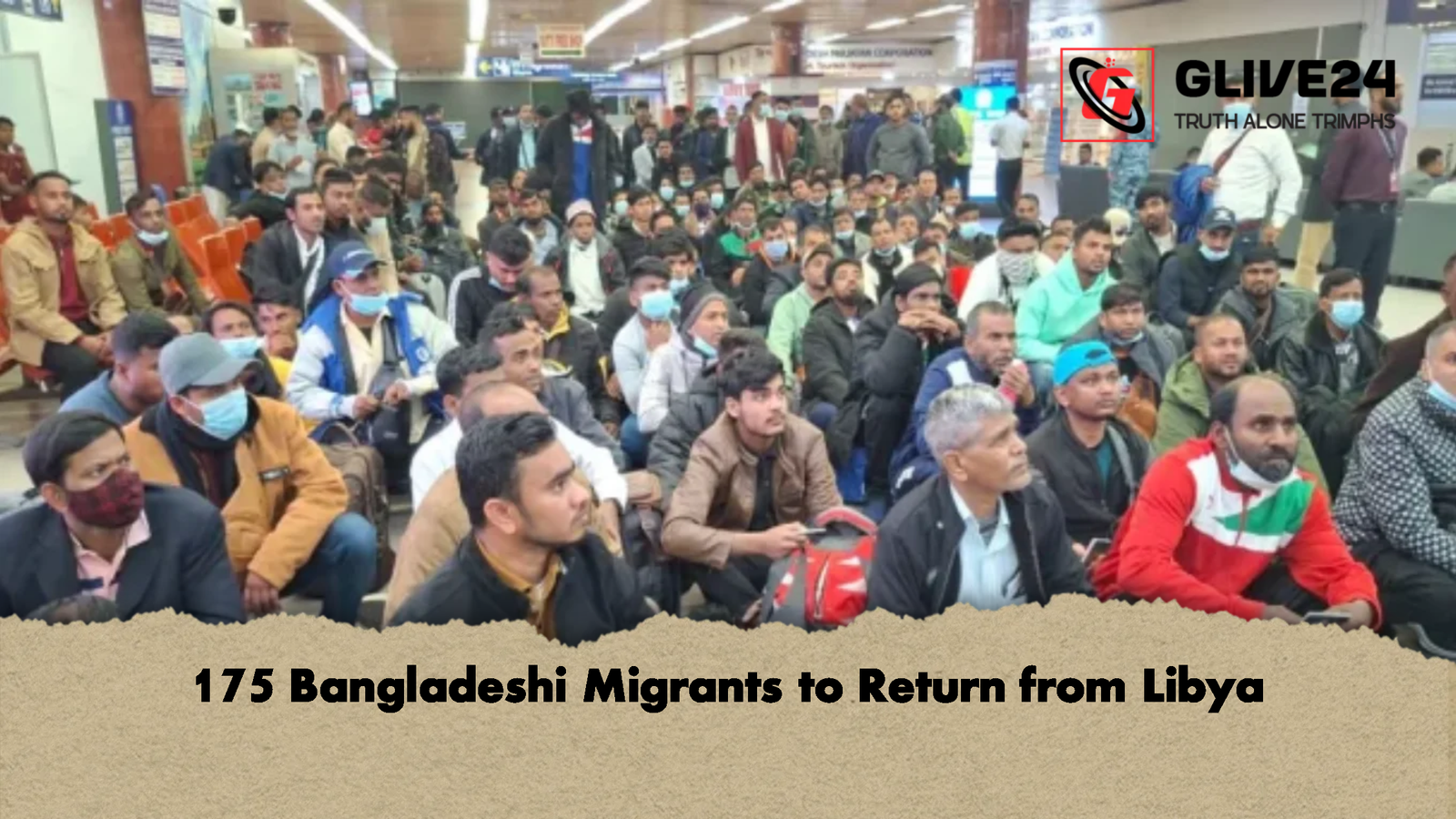
A total of 175 Bangladeshi nationals are scheduled to return to Bangladesh on Wednesday from Libya, in a coordinated humanitarian repatriation effort organised by the Embassy of Bangladesh in Tripoli in collaboration with the International Organization for Migration (IOM). The returnees will travel aboard a Burak Air flight and are expected to arrive in Dhaka on the same day.
According to the Bangladeshi Embassy in Libya, all 175 individuals had been held in different detention facilities across the country following irregular migration attempts. The group includes 113 migrants from the Tajoura Detention Centre in Tripoli and 62 from the Ganfuda Detention Centre in Benghazi. Among them, at least 14 individuals are reported to have been suffering from various health-related complications, requiring additional attention during the repatriation process.
Table of Contents
Distribution of returnees by detention facility
| Detention Facility | Location | Number of Migrants |
|---|---|---|
| Tajoura Detention Centre | Tripoli | 113 |
| Ganfuda Detention Centre | Benghazi | 62 |
| Total | — | 175 |
The repatriation operation has been carried out under the direct supervision of Bangladeshi diplomatic officials stationed in Libya, in close coordination with Libyan authorities and the IOM. Bangladesh’s Ambassador to Libya, Major General Md Habib Ullah, was present at Mitiga International Airport in Tripoli, where he monitored the departure process and personally bid farewell to migrants leaving from the Tajoura facility. Embassy officials, including First Secretary (Labour) Md Russell Mia, also took part in overseeing the operation.
During the proceedings, the Ambassador expressed appreciation to the Libyan authorities and the IOM for their continued cooperation in facilitating the safe and orderly return of Bangladeshi nationals detained across multiple centres. He underscored the importance of sustained international collaboration in addressing the humanitarian dimensions of irregular migration.
Harrowing accounts from returnees
While interacting with the migrants prior to departure, the Ambassador heard first-hand accounts of severe hardship endured during their stay in Libya. Many of the returnees reported that they had travelled through irregular migration routes, often facilitated by traffickers and unregulated intermediaries.
Several individuals alleged that, upon arrival, they were subjected to exploitation by organised trafficking networks. These accounts included reports of physical abuse, confinement under inhumane conditions, and extortion in the form of ransom demands for release. Others described acute shortages of food and drinking water, lack of access to medical care, and prolonged periods of uncertainty within detention environments.
In addition to physical suffering, many migrants spoke of devastating financial losses incurred during their migration journeys. Some claimed they had sold family land and other assets in Bangladesh to finance travel arrangements, with total costs in several cases reportedly approaching half a million Bangladeshi taka. The emotional strain of these testimonies created a visibly distressing atmosphere during the farewell interaction at the airport.
Policy message: warning against irregular migration
Addressing the group, Ambassador Md Habib Ullah urged the returnees to view their survival and return as an opportunity to rebuild their lives. Referring to recent incidents of maritime disasters involving irregular migration routes, he stressed that returning alive, despite adversity, should not be taken for granted.
He strongly discouraged future attempts to migrate through unsafe or unofficial channels, urging individuals to rely exclusively on legal and government-approved migration pathways. He also encouraged returnees to share their lived experiences within their communities in Bangladesh to help raise awareness of the dangers associated with human trafficking networks and irregular migration routes.
The Ambassador further emphasised that irregular migration not only causes severe personal and financial harm but also has wider social and national consequences, including increased vulnerability to exploitation and loss of productive labour force. He advised prospective migrants to verify job offers carefully, avoid fraudulent brokers, and seek official guidance before undertaking any overseas employment plans.
Reintegration and future support
The Ambassador also encouraged returnees to make use of available reintegration programmes offered by government and non-governmental organisations. These initiatives are designed to support livelihood recovery, vocational training, and employment opportunities for returning migrants, enabling them to rebuild stable and self-reliant lives in Bangladesh.
Continued repatriation efforts
The Embassy of Bangladesh in Libya confirmed that it remains actively engaged in facilitating the voluntary return of Bangladeshi nationals detained across various centres in the country. These operations are being conducted in close coordination with the Government of Libya, the International Organization for Migration, and other relevant international partners.
Officials reaffirmed their commitment to ensuring the safe, dignified, and orderly return of vulnerable migrants, while simultaneously strengthening awareness campaigns aimed at discouraging irregular migration and preventing exploitation by trafficking networks in the future.