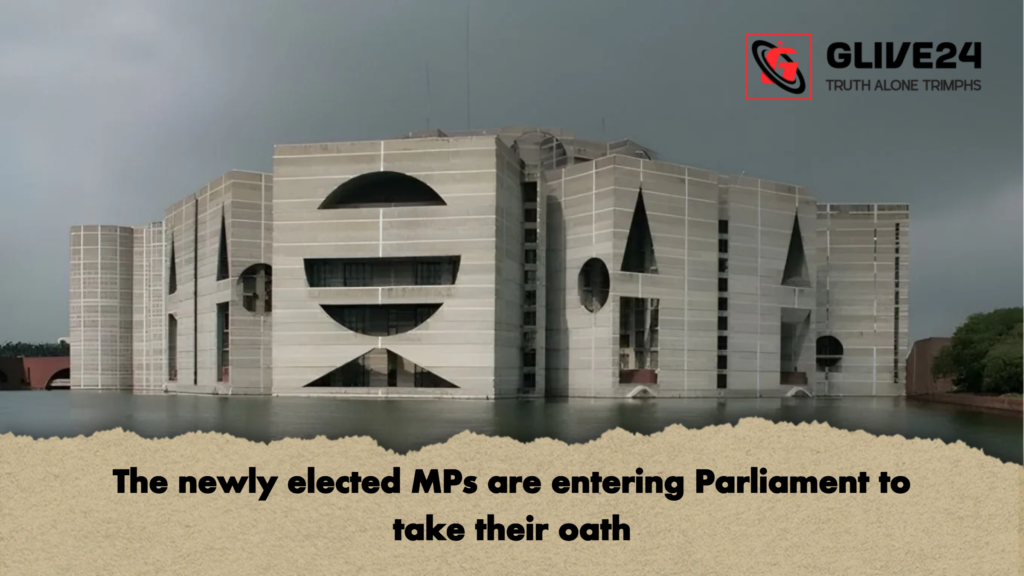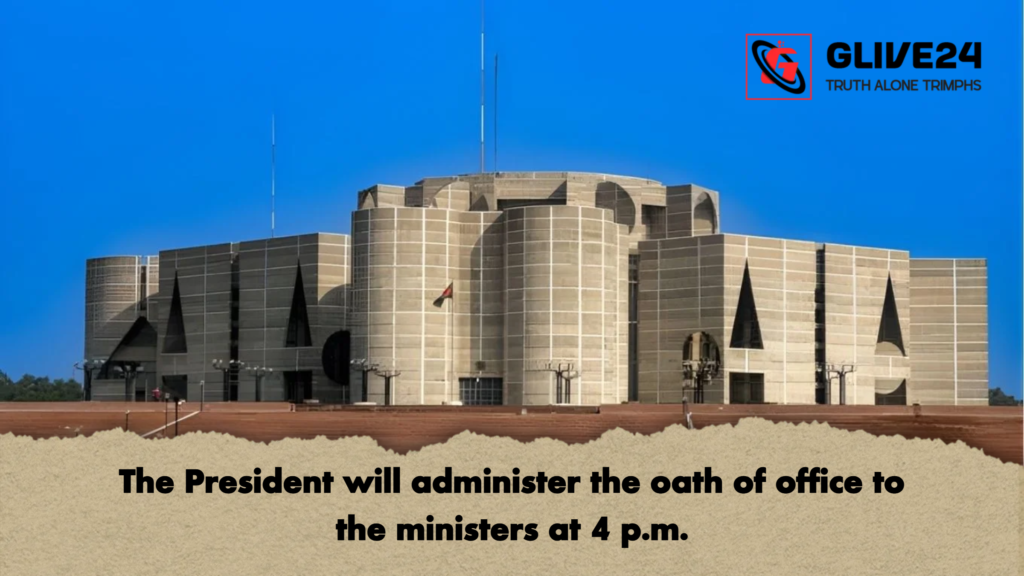
President Md. Shahabuddin will administer the oath of office to the newly appointed members of the cabinet this Tuesday afternoon. The ceremony is scheduled to take place at 4:00 PM in the South Plaza of the National Parliament building.
According to Kaniz Mawla, Secretary of the National Parliament Secretariat, the oath-taking of the new cabinet members will follow the morning’s swearing-in ceremony for the newly elected Members of Parliament (MPs).
Preparations for this significant event began on Saturday, just two days after the 13th parliamentary elections, with both the Cabinet Division and the Parliament Secretariat coordinating the arrangements.
As per constitutional procedure, newly elected MPs must take their oath within three days of the publication of the official gazette. On Friday night, the Election Commission published the gazette for 297 out of 299 parliamentary seats.
Following the MPs’ oath-taking, the parliamentary board of the Bangladesh Nationalist Party (BNP) – which has secured a majority – will convene to elect their parliamentary leader. The selected leader will then formally meet with the President, confirm the party’s absolute majority in Parliament, and submit a request for appointment as Prime Minister.
In his role as Head of State, President Md. Shahabuddin will first administer the oath to the Prime Minister, followed by ministers, state ministers, and deputy ministers.
The 13th parliamentary elections saw a decisive victory for the BNP, led by Tarique Rahman, winning 209 out of 299 seats and securing an absolute majority. The Jamaat-e-Islami party emerged as the principal opposition with 68 seats, while the remaining seats were claimed by other parties and independent candidates.
Parliamentary Election Results – 13th Parliament
| Party | Seats Won | Status |
|---|---|---|
| Bangladesh Nationalist Party (BNP) | 209 | Ruling party (absolute majority) |
| Jamaat-e-Islami | 68 | Main opposition |
| Others & Independents | 22 | Minor representation |
| Total | 299 | — |
This cabinet formation marks a critical phase in Bangladesh’s political calendar, ensuring that the new government can swiftly commence its legislative agenda. The structured swearing-in of the Prime Minister followed by ministers reflects constitutional protocols and is expected to reinforce governance stability.