
Khabor Wala Desk
Published: 19th February 2026, 5:47 AM
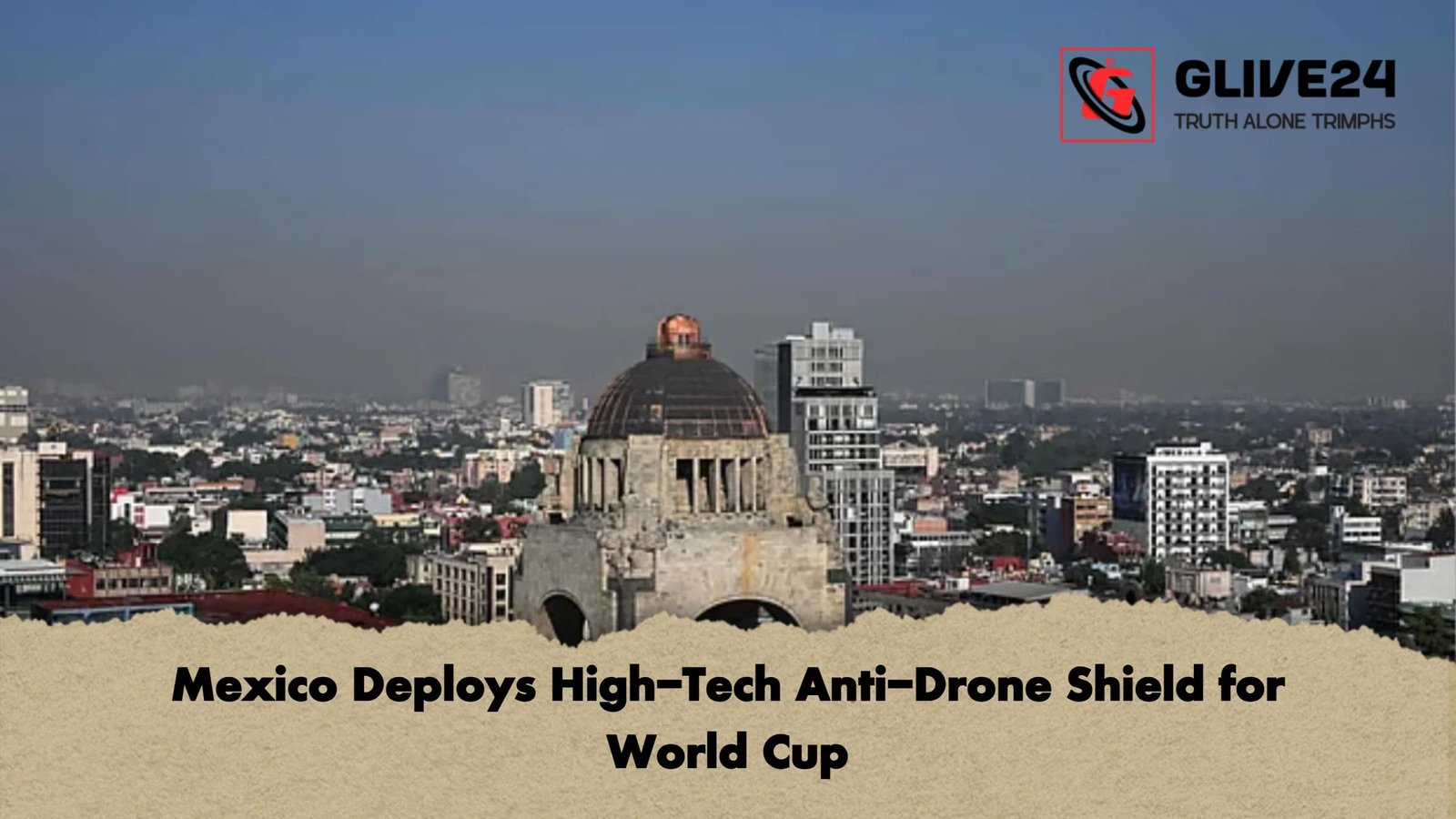
As the countdown to the FIFA World Cup 2026 enters its final four months, the Mexican military has taken a proactive and formidable stance to secure its airspace. In a decisive show of force, the armed forces showcased state-of-the-art “anti-drone” technology during drills at a military base in Mexico City this week. These exercises are part of a broader strategy to eliminate any potential aerial threats from unauthorised unmanned aerial vehicles (UAVs) looming over tournament stadiums and public gatherings.
The upcoming World Cup, scheduled to run from 11 June to 19 July 2026, is a historic tri-nation collaboration between Mexico, the United States, and Canada. While the tournament features 104 matches in total, Mexico will host 13 pivotal fixtures. The Secretariat of National Defence (SEDENA) is leaving nothing to chance, weaving a sophisticated security web across the three host cities.
| Host City | Venue | Matches Allocated | Capacity |
| Mexico City | Estadio Azteca | 5 (inc. Opening Match) | 87,000+ |
| Guadalajara | Estadio Akron | 4 | 48,000+ |
| Monterrey | Estadio BBVA | 4 | 53,500+ |
The urgency of these military manoeuvres is driven by a sobering reality: in Mexico, drones are no longer merely tools for cinematography, but have been repurposed as lethal weapons. For the past five years, powerful drug cartels—including the Sinaloa Cartel, the Jalisco New Generation Cartel (CJNG), and La Familia Michoacana—have used off-the-shelf drones to drop improvised explosive devices (IEDs) on rivals and civilians alike.
A chilling incident last October, where a drone-mounted bomb was dropped on a prosecutor’s office in Tijuana, served as a catalyst for these enhanced protocols. Captain José Alfredo Lara, a specialist military engineer, told AFP that the goal is to create an “invisible wall” around high-density zones, such as the official “Fan Fests,” to ensure that global football fans remain insulated from such dark innovations.
The Mexican army’s counter-UAV strategy employs a two-tiered technological approach:
Semi-Mobile Interception Systems: These stationary units will be strategically positioned around stadiums to create an invisible electronic perimeter. Any unauthorised drone crossing this boundary will immediately have its internal systems compromised, rendering it useless.
Portable “Jamming Guns”: Individual soldiers will be equipped with handheld devices that resemble futuristic rifles. These portable systems allow operators to “aim” at a target drone, severing the link between the aircraft and its pilot. Once the signal is disrupted, the drone loses control and typically enters a fail-safe landing mode or crashes.
By deploying these advanced measures, the Mexican government aims to ensure that the 2026 World Cup remains a celebration of sport, shielding the prestige of the event from the evolving threats of modern technology.



Comments