
Khabor Wala Desk
Published: 20th February 2026, 5:15 AM
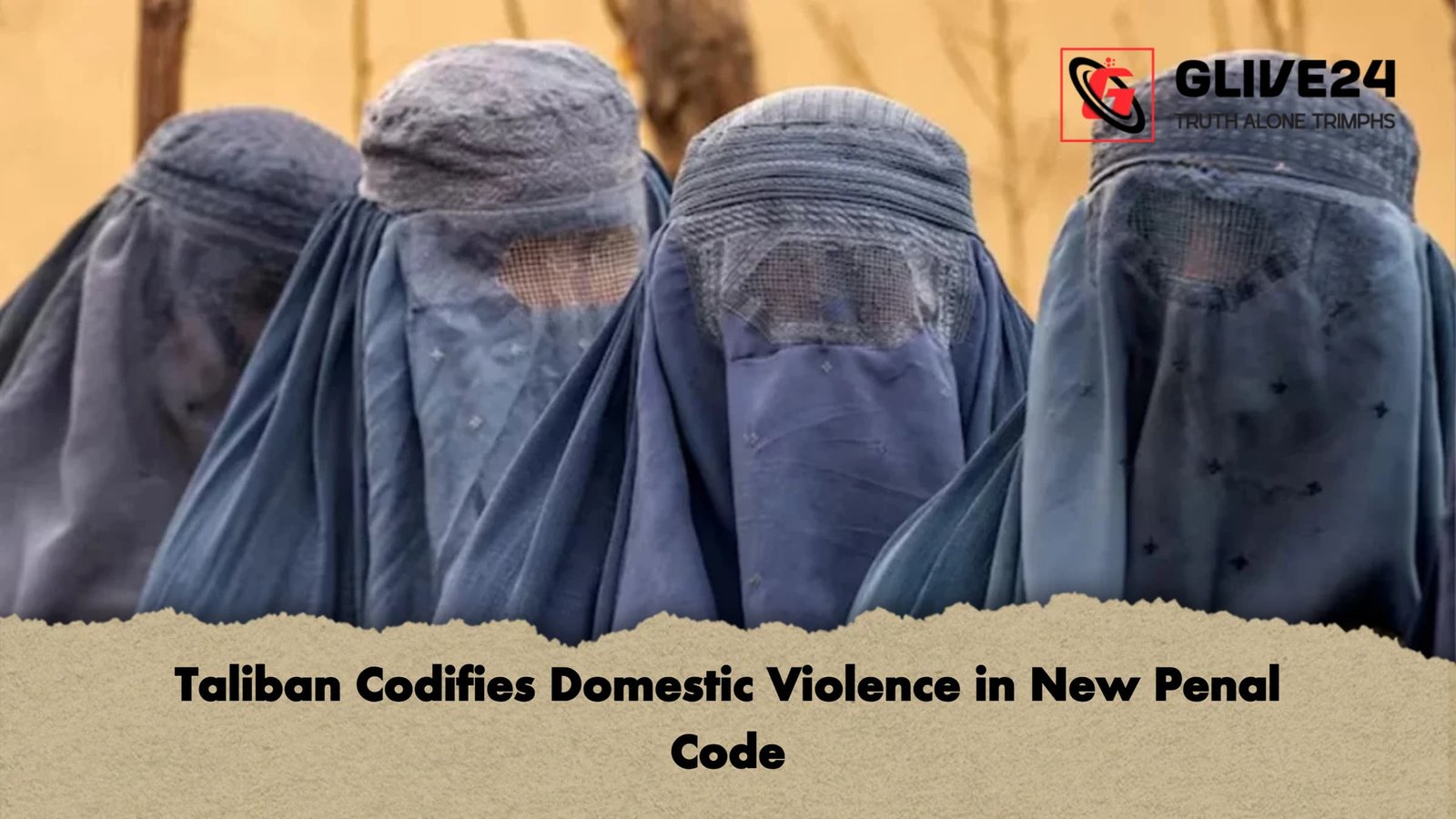
In a chilling escalation of systemic gender oppression, the Taliban administration in Afghanistan has formalised a new 90-page penal code that effectively legalises domestic violence. According to a report by The Independent, the decree—personally ratified by the Taliban’s supreme leader, Hibatullah Akhundzada—grants husbands the explicit authority to physically “punish” their wives and children, provided the assault does not result in broken bones or severe visible wounding.
The document, titled The Mahakumu Jazai Usulnama (Rules of Criminal Procedure for Courts), marks a definitive shift from the informal brutality previously observed to a state-sanctioned framework of violence.
Table of Contents
The new law establishes a macabre threshold for what constitutes a crime within the home. A husband only faces legal repercussions if he uses “excessive force” that results in a fracture or a wound deemed “visible” by the state’s narrow definitions. Even then, the burden of proof rests entirely on the victim.
For a woman to secure a conviction, she must navigate a judicial system designed to fail her. The code stipulates that a victim may only show her injuries to a judge while remaining fully veiled in a hijab. Crucially, she must be accompanied to court by her husband—the very individual accused of the assault—or another adult male guardian (mahram).
Beyond the codification of domestic abuse, the 90-page manifesto introduces a medieval-style social hierarchy. The penal code explicitly differentiates between “free persons” and “slaves,” prescribing varying degrees of punishment based on this status. Furthermore, Afghan society has been formally divided into four distinct classes, where an individual’s social standing determines the severity of their sentence rather than the nature of the crime itself.
| Social Tier | Class Designation | Impact on Judicial Sentencing |
| Tier 1 | Ulama (Religious Scholars) | Highest immunity; most lenient sentencing. |
| Tier 2 | Ashraf (Elite/Noble) | Significant social protections and privileges. |
| Tier 3 | Middle Class | Standard application of the Usulnama. |
| Tier 4 | Lower Class / “Slaves” | Subject to the harshest physical and carceral penalties. |
The decree also criminalises basic female autonomy. A married woman who visits a relative’s house without her husband’s express permission now faces a prison sentence of up to three months. This effectively places every Afghan woman under a form of permanent house arrest, contingent upon the whim of her male relatives.
If a husband is found guilty of exceeding the “permissible” level of violence—such as breaking his wife’s arm—the maximum penalty is a mere 15 days in prison. This stands in stark contrast to the life-altering punishments meted out to women for minor “moral” infractions.
This legislative development confirms the international community’s worst fears: the Taliban are not merely returning to their 1990s-era policies but are meticulously documenting a new, tiered system of apartheid that erases the fundamental human rights of half the population.




Comments