
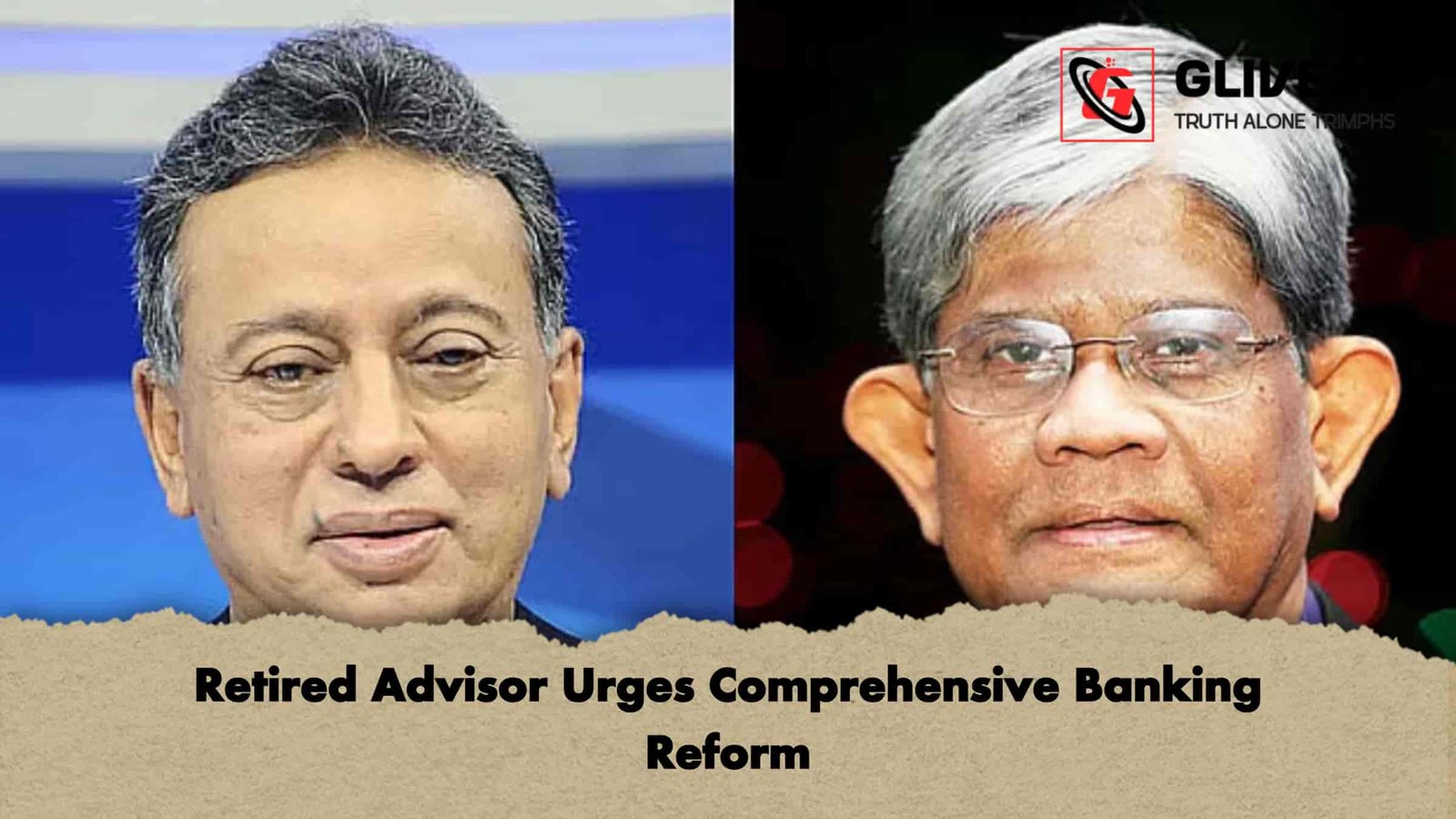
Retired economic adviser Salehuddin Ahmed has released a detailed recommendation note for his successor, offering extensive guidance on reforming the nation’s financial sector. The note’s central proposal calls for the establishment of an independent regulatory authority, which would oversee banks and financial institutions while remaining entirely separate from the central bank’s core policymaking functions.
Ahmed argued that this structural reform would reduce conflicts of interest, enhance institutional transparency and accountability, and strengthen the overall financial system. Currently, the central bank holds dual responsibilities: it formulates monetary policy while simultaneously supervising commercial banks and other financial institutions. Experts have long warned that combining policymaking and regulatory powers within a single entity can compromise both effectiveness and impartiality.
In response, Ahmed proposed creating a specialised supervisory authority focused solely on oversight. This separation would allow the central bank to dedicate its full attention to its primary duties, including controlling inflation, implementing monetary policy, and maintaining financial stability. He also noted that the country’s relatively large number of banks places additional strain on the central bank, making the separation of supervisory functions essential.
International Approaches to Bank Supervision
Ahmed’s note includes a comparative table highlighting bank supervision frameworks in selected countries:
| Country | Supervisory Structure |
|---|---|
| United States | Independent regulatory authority in operation |
| United Kingdom | Independent regulator in function |
| Japan | Separate supervisory authority exists |
| India | Central bank also supervises |
| Philippines | Supervision under central bank |
The note also recommends establishing a bank resolution authority, a deposit insurance corporation, and separate legislation for Islamic banking. These measures aim to facilitate the restructuring of weak banks, protect depositors’ interests, and increase transparency in Shariah-compliant banking.
Prioritising Economic Stability
Ahmed identified several immediate priorities for the government:
Increase revenue collection
Maintain market-based exchange rates
Focus on high-priority development projects
Exercise caution with high-interest borrowing
Restructure subsidised salaries and reduce waste
He highlighted that inflation accumulated over the past decade has reached approximately 111 per cent, creating the need for a revised salary structure to preserve public servants’ living standards. He also emphasised the importance of coordinated fiscal and monetary policies.
Regarding revenue administration, Ahmed noted widespread tax avoidance, excessive exemptions, and inadequate digital infrastructure for income tax and value-added tax collection. He recommended leveraging technology to enhance fairness, transparency, and accountability in tax administration.
In conclusion, Ahmed asserted that sustainable economic recovery is impossible without structural reform. His recommendations are expected to serve as a critical roadmap for policymaking in the upcoming government.