Dhaka, Sunday, 22 February 2026:
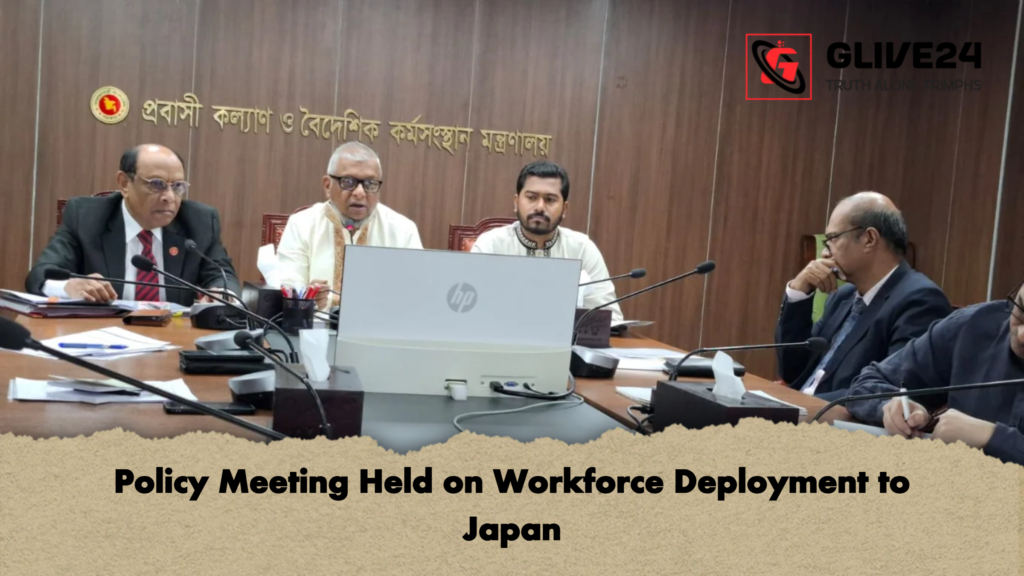
Bangladesh has intensified its efforts to expand labour migration to Japan, as part of a broader strategy to transform its workforce and tap into emerging global employment opportunities. A high-level meeting held at the Ministry of Expatriates’ Welfare and Overseas Employment on Sunday focused on aligning national workforce development initiatives with Japan’s growing labour demand.
The meeting was chaired by Senior Secretary Dr Nayeamat Ullah Bhuiyan and attended by Expatriates’ Welfare and Overseas Employment Minister Ariful Haque Chowdhury MP and State Minister Md Nurul Haque MP, alongside senior officials from relevant departments and agencies.
This session followed a key policy meeting held on 21 February under the leadership of Prime Minister Sheikh Hasina, where priorities such as employment generation, expansion of training infrastructure, and the development of a modern, skills-oriented education system were discussed. During that meeting, the Prime Minister reportedly expressed strong interest in increasing the number of Bangladeshi workers in Japan, recognising the country’s acute demographic challenges.
Japan is projected to face a shortage of approximately 11 million workers by 2040 due to its ageing population and declining birth rate. In contrast, Bangladesh currently has a surplus of around 2.3 million young workers. The government is therefore seeking to convert this demographic advantage into economic gain by equipping workers with the skills required for overseas employment, particularly in advanced economies.
Officials at the meeting emphasised that Bangladesh must move beyond its traditional role as a supplier of unskilled labour and instead focus on exporting skilled and semi-skilled workers. This shift is considered essential to remain competitive in the global labour market and to secure higher wages and better working conditions for migrant workers.
To support this transition, the number of Technical Training Centres (TTCs) offering Japan-focused training has been increased from 33 to 53. These centres provide trade-specific training aligned with Japanese labour market needs, along with Japanese language education. However, a shortage of qualified language instructors remains a major obstacle. The meeting discussed measures to recruit and train more Japanese language teachers to meet growing demand.
In addition to government-run institutions, approximately 200 private training centres and recruiting agencies are expected to contribute to workforce preparation and overseas placement. Greater collaboration between public and private stakeholders was highlighted as a key factor for success.
Key Workforce Development Indicators
| Aspect | Current Status | Planned Action |
|---|---|---|
| Youth labour surplus | 2.3 million | Convert into skilled workforce |
| Japan’s labour demand by 2040 | 11 million | Targeted workforce supply |
| Technical Training Centres | 53 centres | Further expansion and improvement |
| Private training centres | প্রায় 200 | Enhanced collaboration |
| Language training | Limited instructors | Increase teacher recruitment |
The meeting also focused on developing a strategic roadmap to ensure Bangladesh can access Japan’s labour market ahead of competing countries. Some action plans were formulated, which will be implemented in phases to create a comprehensive national framework.
Officials have been assigned specific responsibilities, and a detailed action plan is expected to be submitted to the Prime Minister within seven days. A follow-up meeting will be held within two working days to review progress and ensure timely implementation.
Furthermore, a stakeholder consultation involving trainers, students, recruiting agencies, and other relevant parties is scheduled to take place shortly. Based on their input, a set of consolidated recommendations will be prepared and submitted to the government to ensure effective implementation of the national agenda.
Concluding the meeting, the ministers called on all officials to carry out their responsibility with sincerity and efficiency, stressing that Bangladesh has a significant opportunity to establish a strong and sustainable presence in Japan’s evolving labour market.