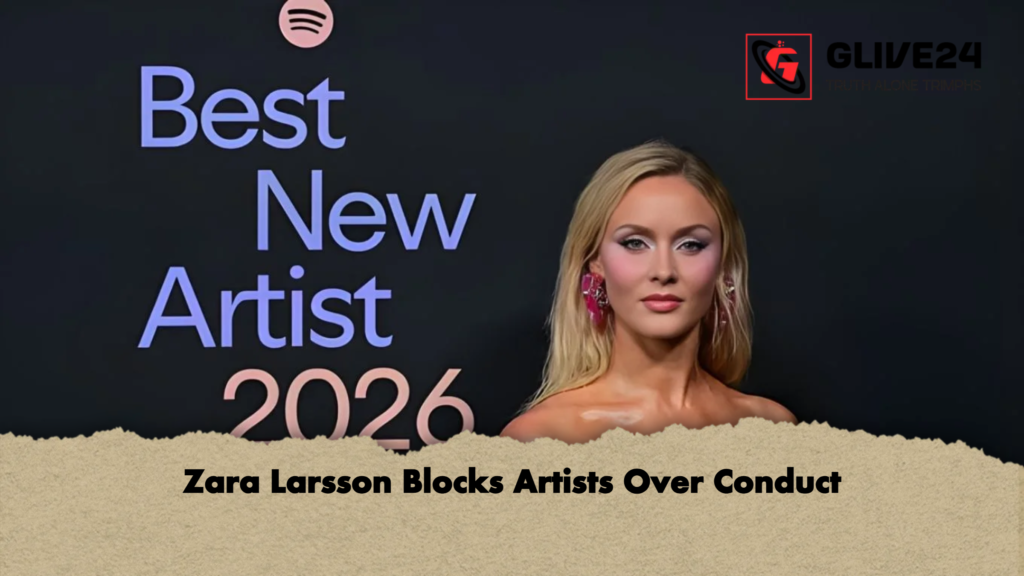
Dubai: Swedish pop sensation Zara Larsson recently opened up about her personal music preferences, revealing that she actively blocks certain artists from her Spotify playlists. Larsson is set to headline the opening concert of the Etihad Airways Abu Dhabi Grand Prix in December 2026, bringing her global hit-making energy to one of motorsport’s most prestigious events.
In a short video interview published by Cosmopolitan, Larsson was asked which artists she refuses to include in her playlists. She responded candidly, stating that some artists are deliberately blocked from her Spotify account due to their problematic behaviour.
“I have many artists whose music I’ve blocked on Spotify because of their behaviour. For example, you will never find Chris Brown on my playlist,” she said.
Chris Brown, a multi-platinum R&B artist, has had a career marked by both commercial success and legal controversies. The most notable incident occurred in 2009, when he pleaded guilty to felony assault after an altercation with singer Rihanna. He received probation and community service, sparking long-standing debates in the music industry regarding personal accountability and the separation—or lack thereof—between an artist’s work and personal conduct. Despite these controversies, Brown has continued to release music and maintain a substantial global fan base.
Larsson, however, emphasised that her decision to block certain artists is strictly a matter of personal listening preference rather than a public judgement. She did not elaborate further during the Cosmopolitan interview.
The table below summarises the known artists Larsson has blocked and the reasons behind her decision:
| Artist Name | Main Controversy / Reason | Spotify Status |
|---|---|---|
| Chris Brown | Domestic violence, 2009 | Blocked |
| Other Unknown | Alleged behavioural issues | Blocked |
Larsson’s remarks have ignited significant discussion on social media. Some commentators have applauded her stance, arguing that listeners should consider an artist’s personal conduct when curating their playlists. Others contend that art should be evaluated independently of the artist’s private life.
By openly stating her position, Larsson underscores a moral perspective that personal behaviour is as significant as artistic output. Her approach not only reflects individual preference but also delivers a broader social message regarding accountability and the responsibilities of public figures in the music industry.