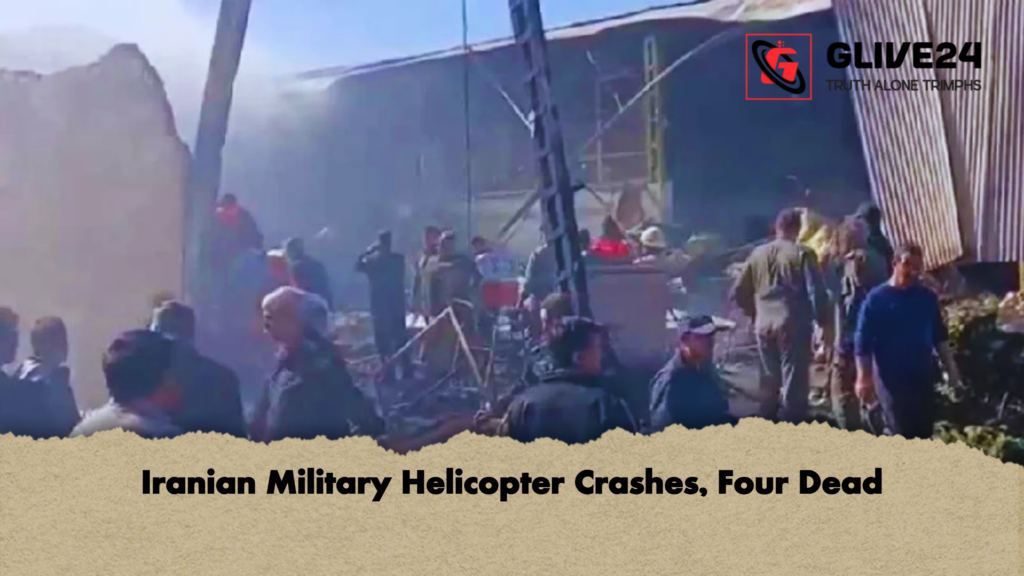
A military helicopter crashed in central Iran on Tuesday morning, 24 February, claiming the lives of four people, including two military pilots and two civilian traders. The incident occurred in the bustling fruit market of Dorcheh, a city hosting one of the nation’s largest air force bases, according to state media.
Footage broadcast by state television, cited by Qatari outlet Al Jazeera, showed the wreckage of the helicopter scattered across the market, with firefighters and rescue teams working to extinguish the ensuing blaze. Preliminary reports suggest that a technical malfunction may have caused the helicopter to crash.
The Iranian Air Force Training Centre confirmed the identities of the deceased pilots as Colonel Hamed Sarvajad, the commander, and Major Mojtaba Kiani, the co-pilot. At the time of the crash, two local traders were attending to their shops in the market and were killed instantly when the helicopter struck the area. Authorities reported that the helicopter caught fire immediately upon impact.
The Iranian military has launched a formal investigation to determine the precise cause of the crash. Simultaneously, Asadollah Zafari, head of the local judiciary, has initiated a separate inquiry and dispatched an investigative team to the site.
Key Details of the Dorcheh Helicopter Crash
| Aspect | Information |
|---|---|
| Location | Dorcheh, Central Iran |
| Date & Time | 24 February 2026, Morning |
| Casualties | 4 (2 military personnel, 2 civilians) |
| Pilot Identities | Colonel Hamed Sarvajad, Major Mojtaba Kiani |
| Suspected Cause | Technical malfunction (under investigation) |
| Investigation | Iranian Air Force & local judiciary |
This latest tragedy follows a similar accident just one week ago in Hamadan Province, western Iran. A U.S.-made F-4 Phantom II jet, operated by the Iranian Air Force, crashed during a training exercise. One pilot died, while the other ejected safely. Preliminary assessments also cited technical failure as a probable cause, and investigations remain ongoing.
Iran’s efforts to modernise both its military and civilian aviation fleets have long been hindered by prolonged U.S. and Western sanctions. While the country has purchased a limited number of Russian aircraft and sought to acquire advanced Su-35 fighter jets, deliveries have yet to be completed.
Analysts note that these incidents highlight the ongoing technical and operational challenges facing Iran’s ageing air fleet. The helicopter crash also comes amid heightened tensions between the United States and Iran, alongside renewed rounds of nuclear negotiations, adding a layer of geopolitical concern to an already tragic event.