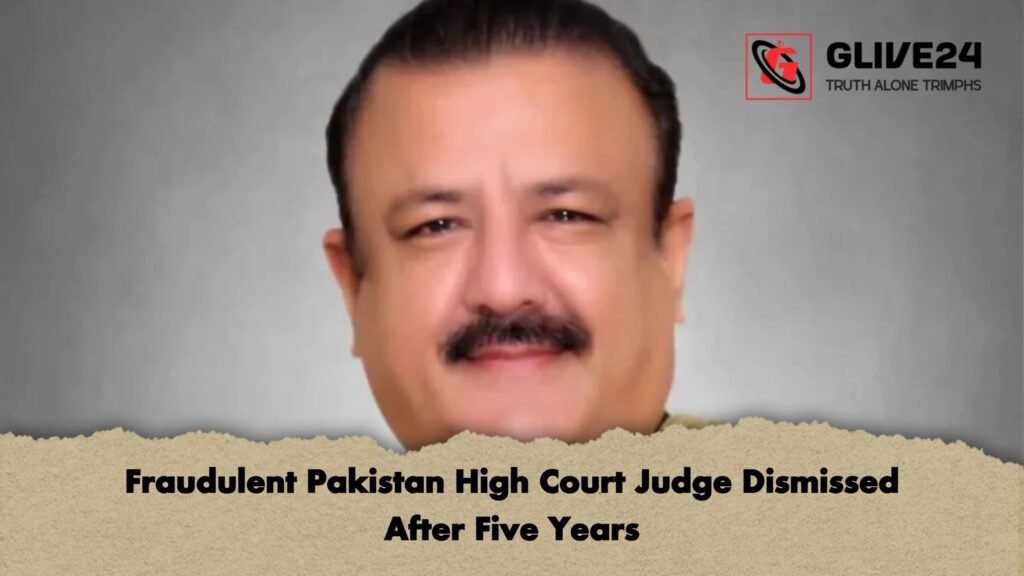
In what is being described as one of the most audacious and humiliating scandals in the history of the Pakistani judiciary, a sitting judge of the Islamabad High Court (IHC) has been stripped of his position after it was revealed he had presided over the bench for five years without a valid law degree. On Monday, the IHC delivered a landmark 116-page verdict, formally dismissing Tariq Mahmood Jahangiri and exposing a decade-long web of academic fabrication.
Table of Contents
A Career Built on Deceit
The controversy surrounding Jahangiri’s credentials suggests a systematic manipulation of the educational system. According to records provided by the Registrar of the University of Karachi, Jahangiri’s entire academic history was mired in forgery. The court’s findings revealed that as far back as 1988, he attempted to sit for examinations using a fraudulent enrolment number. Upon being caught cheating, the university imposed a three-year ban on him.
Rather than serving his penance, Jahangiri allegedly doubled down on his deception. The following year, he reportedly usurped the enrolment details of another student named “Imtiaz Ahmed” to reappear for exams under the name “Tariq Jahangiri.” Furthermore, the Principal of the Government Islamia Law College testified that Jahangiri was never formally enrolled as a student at the institution.
Judicial Evasion and Final Verdict
Appointed to the high office in December 2020, Jahangiri handed down numerous judgements before suspicions regarding his qualifications gained traction. Although his judicial powers were suspended in September last year, Monday’s ruling serves as the final nail in the coffin for his career.
The court noted that Jahangiri was given multiple opportunities to present original documentation and a written defence. Instead, he employed what the bench described as “chicanery” to stall proceedings—demanding a full-bench hearing, calling for the Chief Justice’s resignation, and citing pending litigation in the Sindh High Court as an excuse for indefinite delays.
Key Timeline of the Jahangiri Scandal
| Event | Date / Period |
| Initial Academic Fraud | 1988 (Caught cheating & banned for 3 years) |
| Identity Theft Accusation | 1989 (Used “Imtiaz Ahmed’s” enrolment) |
| High Court Appointment | December 2020 |
| Judicial Activities Suspended | September 2025 |
| Final Dismissal & Verdict | Monday, 23 February 2026 |
| Verdict Length | 116 Pages |
Implications for the Judiciary
The IHC bench was unequivocal in its condemnation, stating that the burden of proof lay squarely on Jahangiri to validate his credentials. Failing to do so, the court concluded that he was a “gross fraudster” and legally unfit to hold a judicial post.
The scandal has prompted a national debate regarding the vetting processes for high-ranking judicial appointments. Legal experts are now questioning the status of the hundreds of verdicts Jahangiri delivered during his five-year tenure, as his appointment has effectively been declared void ab initio (invalid from the beginning).