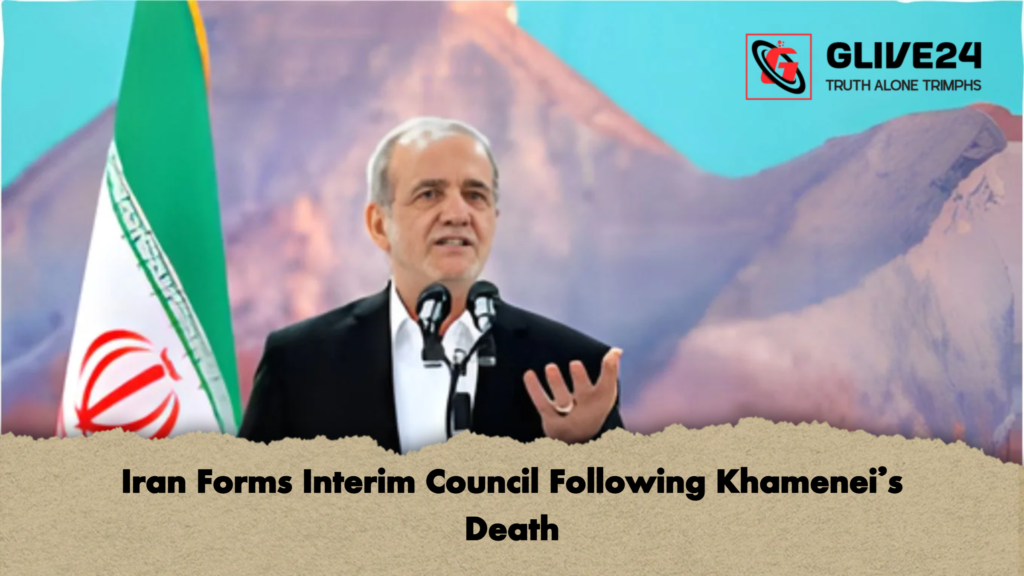
Iran’s government has officially confirmed that Supreme Leader Ayatollah Ali Khamenei was killed in a joint United States and Israeli strike. The announcement was made public on Sunday morning via Iranian state media, sending shockwaves through the nation and the broader Middle East.
In the wake of Khamenei’s unexpected death, the Iranian administration has established a three-member interim council tasked with maintaining governance and overseeing state functions until a new Supreme Leader is selected. The council’s formation reflects the urgent need to stabilise the country amid ongoing security threats and international tension.
Table of Contents
Interim Council Members
State television and media outlets have identified the members of the interim council as follows:
| Position | Name | Role and Responsibilities |
|---|---|---|
| President | Masoud Pejeshkian | Supervises state administrative operations and coordinates government functions |
| Head of Judiciary | Gholam Hossein Mohseni Ejei | Oversees judicial affairs and ensures adherence to the constitution |
| Guardian Council Faqih | — | Supervises the application and review of religious laws and legal provisions |
According to Iran’s constitution, upon the death of the Supreme Leader, the Assembly of Leadership Experts—a body of senior religious authorities—must convene to appoint a successor. This process will determine Khamenei’s heir and ensure continuity of leadership.
Historical Context
Khamenei became Iran’s second Supreme Leader following the 1979 Islamic Revolution, after serving in various political and religious capacities. His sudden death marks a critical turning point in Iranian history, creating both administrative and political uncertainty.
Security and Operational Challenges
While the interim council is now in place, experts warn that ongoing attacks by the United States and Israel could hinder their ability to meet and make critical decisions. Ensuring border and urban security is essential; without it, administrative and political measures may face significant disruption.
Iranian analysts emphasise that the three-member council will play a pivotal role in maintaining order and overseeing essential governance during this transitional period. They are expected to manage key policy, security, and administrative duties until a permanent Supreme Leader is appointed.
Broader Implications
This development has immediate implications for Iran’s domestic political stability and the security dynamics of the Middle East. International observers and neighbouring countries are closely monitoring the situation, recognising that Iran’s internal leadership transition could influence regional security and diplomatic relations. Analysts predict that the decisions of the interim council will shape both national policy and international engagement in the coming weeks.