
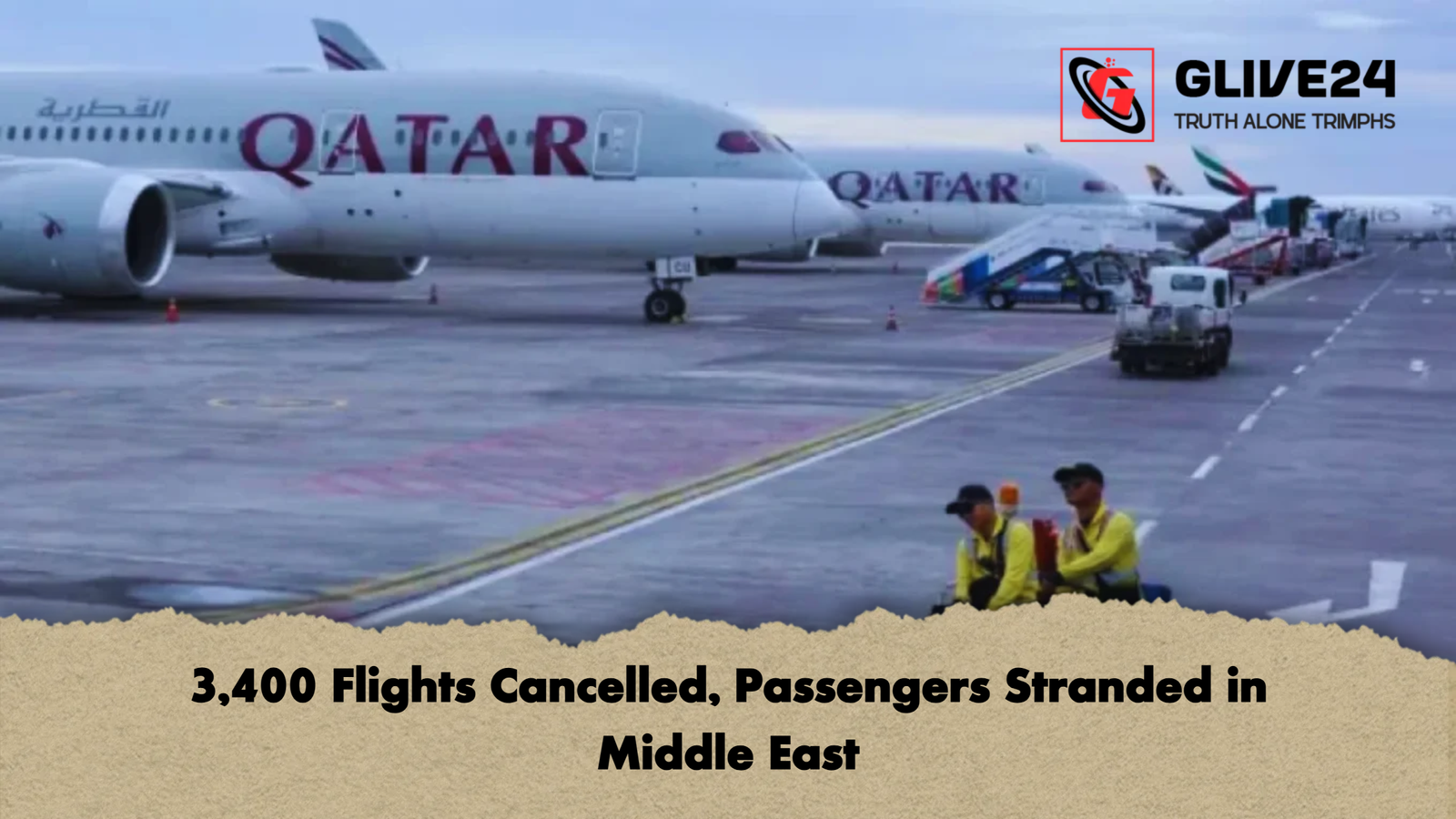
The Middle East has been thrown into chaos following retaliatory missile strikes by Iran in response to a joint United States–Israel operation. The escalating conflict has prompted the closure of airspace across the Gulf region, resulting in the cancellation of over 3,400 flights in just the first few days of hostilities. Approximately 300,000 passengers are now stranded across the region, unable to continue their journeys.
Major airports in Dubai, Abu Dhabi, Doha, and Sharjah have suspended operations, a move that has rippled across global air travel networks. According to a report from Qatar-based media on Monday (2 March), the airspace restrictions have caused unprecedented disruption for both regional and international travel.
Flight-tracking data indicates that more than 3,400 flights have been cancelled since the onset of the crisis. The affected airports include: Dubai International Airport, Abu Dhabi International Airport, Hamad International Airport in Doha, and Sharjah International Airport. In total, six to seven major airports in the Gulf region have temporarily ceased operations.
The closure of these critical air hubs has had far-reaching consequences for international connectivity. Middle Eastern airports serve as vital transit points linking Europe, Asia, and Africa. With these hubs offline, the disruption has produced a “domino effect” on global flight schedules, affecting passengers worldwide.
Stranded travellers have taken to social media to document their plight. At Dubai, Abu Dhabi, and Doha airports, passengers report long queues to rebook flights, secure hotel vouchers, and access assistance. Many have been forced to sleep inside terminals as uncertainty over flight resumption continues. Airline officials have warned that unless the airspace reopens and hostilities subside, thousands of travellers will remain trapped.
The table below summarises the main airports affected and the estimated number of stranded passengers:
| Airport | Country | Cancelled Flights | Estimated Stranded Passengers |
|---|---|---|---|
| Dubai International Airport | UAE | 1,200+ | 120,000+ |
| Abu Dhabi International Airport | UAE | 800+ | 80,000+ |
| Hamad International Airport | Qatar | 700+ | 65,000+ |
| Sharjah International Airport | UAE | 400+ | 35,000+ |
| Other regional airports | UAE, Qatar, Kuwait | 300+ | 30,000+ |
Airline authorities are advising travellers to remain patient and monitor updates closely. Governments, including the United Kingdom, are dispatching teams to assist their nationals stranded in the Gulf. Analysts warn that the longer the airspace remains closed, the more prolonged and widespread the impact will be on international travel and commerce.
Passengers caught in this disruption face an uncertain period ahead, with flight resumption heavily dependent on diplomatic developments and the de-escalation of military tensions in the region.