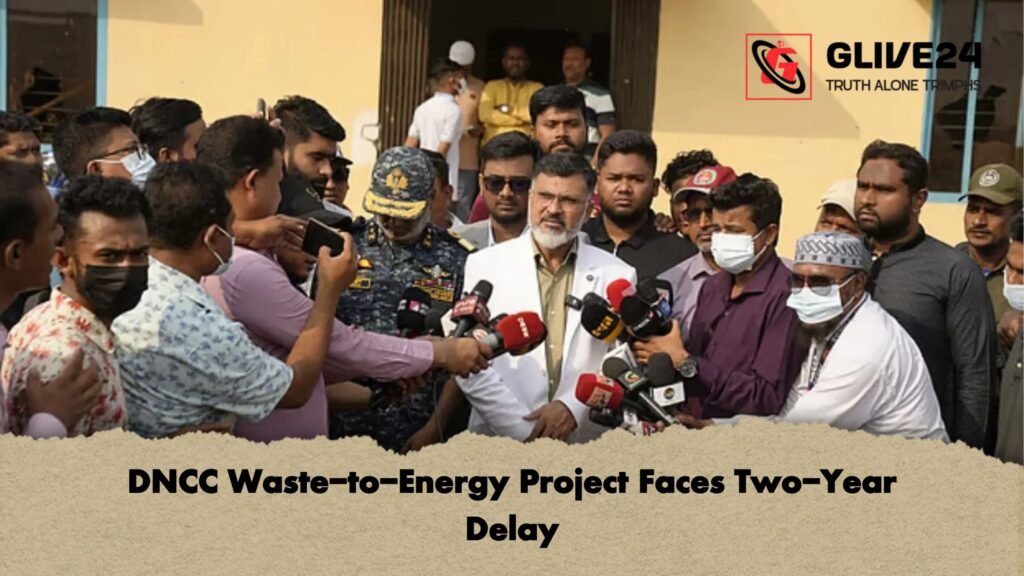
The ambition to transform the mounting waste of Dhaka North City Corporation (DNCC) into a sustainable energy source has hit a significant bureaucratic bottleneck. According to the newly appointed DNCC Administrator, Mahmudul Hasan, the commencement of the long-awaited waste-to-energy power plant at Aminbazar is currently stalled due to the absence of a final environmental clearance from the Department of Environment (DoE).
During a high-level inspection of the Aminbazar landfill on Tuesday, the Administrator informed journalists that even after receiving the green light from the DoE, it would realistically take between 18 to 24 months to complete the infrastructure and transition into full-scale electricity production.
Table of Contents
Environmental Hurdles and Technical Standoff
The project, which aims to alleviate the capital’s waste crisis while contributing to the national grid, has faced scrutiny under the current interim government. While preliminary approvals were granted previously, the DoE has reportedly expressed concerns regarding the thermal impact and emission standards of the waste incineration process.
Administrator Mahmudul Hasan emphasized his commitment to resolving these technical disputes. “We are initiating immediate coordination with the Department of Environment to clarify technical presentations and submit the necessary documentation. Our goal is to demonstrate that the technology employed will be both efficient and ecologically sound,” he stated.
The Growing Crisis at Aminbazar
The necessity for this plant is underscored by the dire situation at the Aminbazar landfill. Originally spanning 52 acres and later expanded to 102 acres, the site has reached a critical breaking point. The height of the accumulated waste has surpassed 80 feet—equivalent to a seven-storey building—far exceeding the safe limit of 50-60 feet.
The overflow has not only encroached upon private lands but has also led to severe environmental degradation. Toxic leachate is contaminating nearby agricultural fields and water bodies, while spontaneous combustion of methane gas creates clouds of hazardous smoke. Local residents of Kunda village recently staged a protest, frustrated by the persistent stench and health risks, which tragically resulted in some damage to landfill equipment and office windows.
Project Specifications and Capacity
Under the “Aminbazar Landfill Expansion and Modernization Project (1st Revised),” the facility is designed to process 3,000 metric tonnes of waste daily. With a total budget of 1,272 crore BDT, the plant is expected to generate 42.5 MW of electricity per hour using four specialized turbines.
Project Overview at a Glance:
| Feature | Details |
| Total Land Area | 102 Acres (30 Acres dedicated to the plant) |
| Daily Waste Requirement | 3,000 Metric Tonnes |
| Projected Power Output | 42.5 Megawatts (MW) per hour |
| Number of Turbines | 4 Units |
| Total Estimated Cost | 1,272 Crore BDT |
| Current Status | Pending Final Environmental Clearance |
| Estimated Completion | 18–24 months post-approval |
Conclusion
The delay in the waste-to-energy project represents more than just a missed deadline for the energy sector; it is a deepening environmental crisis for the residents of Dhaka. As the landfill continues to grow vertically and horizontally, the pressure on the DNCC to secure environmental clearance and begin construction has never been higher. For now, the city’s waste remains a mounting challenge rather than the resource it was promised to be.