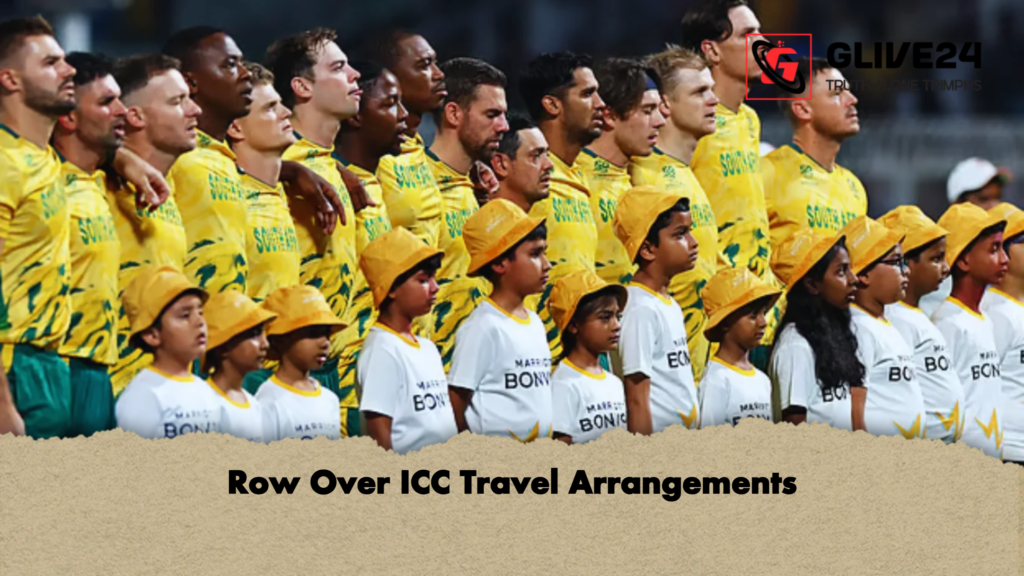
Controversy has emerged during the closing stages of the ICC Men’s T20 World Cup, with South Africa and the West Indies expressing frustration over what they perceive as unequal treatment in travel arrangements organised by the International Cricket Council (ICC). The dispute centres on the decision to arrange an earlier chartered flight for England, despite the team being eliminated later in the tournament than the two aggrieved sides.
The West Indies were knocked out of the competition on 1 March, followed by South Africa on 4 March. England, however, exited later after losing their semi-final to India on 5 March. Yet, in a move that has sparked widespread criticism, England departed India on a chartered flight on 7 March—before the other two teams that had been eliminated earlier.
The issue has been further complicated by disruptions to international air travel caused by geopolitical tensions in the Middle East. Following attacks on Iran by the United States and Israel, several countries imposed restrictions on the use of regional airspace. These measures have forced airlines to reroute flights, causing delays and logistical difficulties for teams attempting to return home after participating in the tournament hosted in India and Sri Lanka.
As a result, several national sides have faced travel uncertainty. Zimbabwe, for example, had to remain in India for several days after being eliminated from the Super Eight stage before finally securing flights home.
According to reports by ESPNcricinfo, the ICC arranged a chartered flight for England, enabling the side led by Harry Brook to depart India on Saturday, 7 March. Meanwhile, South Africa and the West Indies were expected to leave a day later, on 8 March, after waiting several days for confirmation of their travel arrangements.
The situation prompted South African batter David Miller to publicly question the ICC’s handling of the matter. In an Instagram comment responding to a post by Cricinfo, Miller wrote that it was “interesting” England had been able to fly home on a chartered aircraft despite being eliminated later than both South Africa and the West Indies, who were still waiting in Kolkata for clarity regarding their own departures.
West Indies head coach Darren Sammy appeared to support Miller’s criticism. Replying to the same comment thread, Sammy quipped that Miller should “say it a little louder so those at the back can hear.”
Miller later intensified his criticism while tagging Sammy, stating that the ICC had been able to arrange a charter flight for England quickly, while the West Indies had waited seven days and South Africa four days for similar arrangements.
South Africa’s wicketkeeper-batter Quinton de Kock echoed the sentiment in an Instagram story, claiming that neither team had received clear communication from the governing body. He suggested the situation highlighted how certain teams appeared to wield greater influence than others.
Former England captain Michael Vaughan also weighed in on the debate through social media. Writing on X, Vaughan noted that England had exited the tournament on Thursday and already returned home, whereas the West Indies—eliminated the previous Sunday—remained stranded in Kolkata. South Africa, he added, faced a similar predicament.
Vaughan argued that such disparities raised questions about the balance of power within international cricket administration and insisted that all participating teams should be treated equally regardless of their influence within the sport’s governing structures.
The timeline of eliminations and departures illustrates the source of the dispute:
| Team | Date Eliminated | Departure from India | Waiting Time |
|---|---|---|---|
| West Indies | 1 March | Expected 8 March | About 7 days |
| South Africa | 4 March | Expected 8 March | About 4 days |
| England | 5 March | 7 March (charter flight) | About 2 days |
The episode has triggered extensive discussion across social media platforms, with fans and analysts questioning whether the ICC’s logistical decisions were fair and transparent. While travel complications arising from geopolitical tensions may have contributed to the delays, critics argue that clearer communication and equitable planning would have prevented the controversy.
For many observers, the incident has once again highlighted the ongoing debate about influence and equality within global cricket governance—an issue that continues to surface whenever administrative decisions appear to favour certain nations over others.