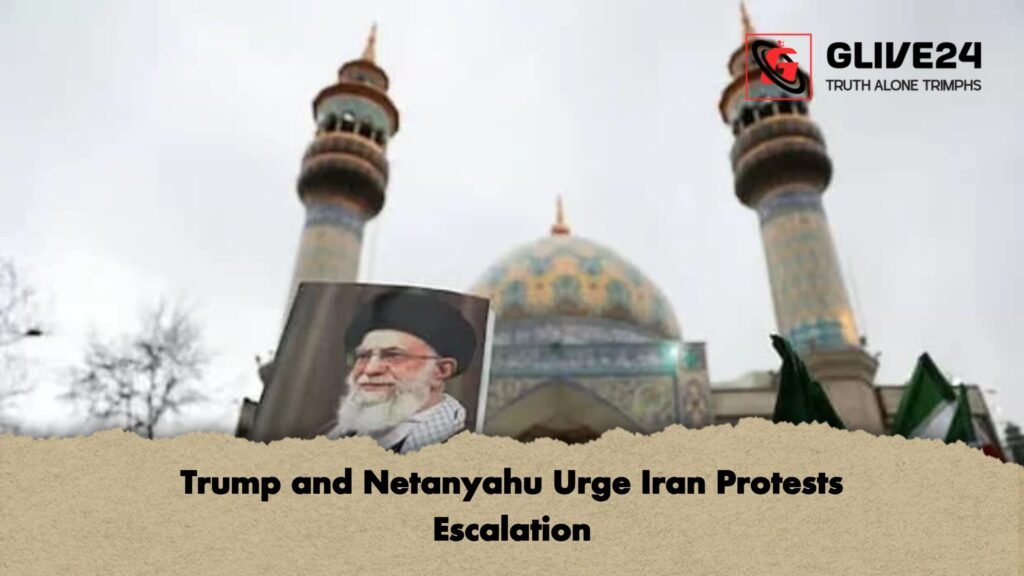
Tensions in the Middle East have escalated sharply, as the longstanding rivalry between Iran and the United States–Israel alliance reaches new heights. Domestic unrest within Iran, combined with mounting international pressure, has rendered the country’s political future increasingly uncertain. Recently, US President Donald Trump and Israeli Prime Minister Benjamin Netanyahu publicly called on the Iranian populace to engage in anti-government demonstrations and challenge the ruling system—an intervention that has provoked widespread controversy both locally and internationally.
Trump, through repeated posts on the social media platform Truth Social, has described Iranian protesters as “patriotic” citizens and urged them to continue their movement while asserting influence over government institutions. He warned that those involved in killings or oppression would pay a “heavy price” and threatened to implement severe measures against the Iranian government should violence persist.
These calls have emerged against the backdrop of Iran’s ongoing protests, which initially arose in response to rising living costs and perceived political injustice. The demonstrations quickly spread nationwide, reflecting broader dissatisfaction among citizens. Analysts note that trust in political Islam is declining, particularly among the younger generation, who increasingly seek to separate religion from governance while pursuing greater personal freedom and economic opportunity.
Prime Minister Netanyahu also addressed the Iranian public, asserting that the present moment presents a “unique opportunity” to enact government change. He indicated that the United States and Israel are facilitating conditions under which Iranians might challenge the authority of their ruling establishment.
This international messaging coincides with an increasingly complex political and economic crisis in Iran. The country faces compounded challenges from both internal instability and external pressure. Recent military operations involving US–Israeli collaboration reportedly included targeted strikes, and claims of the death of Iran’s Supreme Leader, Ayatollah Ali Khamenei, have further intensified tensions.
The table below summarises key aspects of the evolving situation:
| Issue | Recent Developments |
|---|---|
| Origin of Protests | Public demonstrations over rising living costs |
| Trump’s Call | Encouragement for citizens to join anti-government movement |
| Netanyahu’s Message | Urging Iranians to seize opportunity for leadership change |
| International Pressure | US–Israeli military actions and reports of leadership death |
| Domestic Strain | Economic crisis and growing political dissatisfaction |
Experts warn that external calls for protest and political pressure may further fuel anti-government sentiment within Iran. However, they also caution that such dynamics carry the risk of heightened political instability and potential violence. In this context, the international community’s engagement through diplomatic initiatives, careful observation, and conflict mitigation measures is deemed crucial. Security forces remain on high alert, and the role of international observers is expected to be pivotal in preventing escalation and maintaining regional stability.