
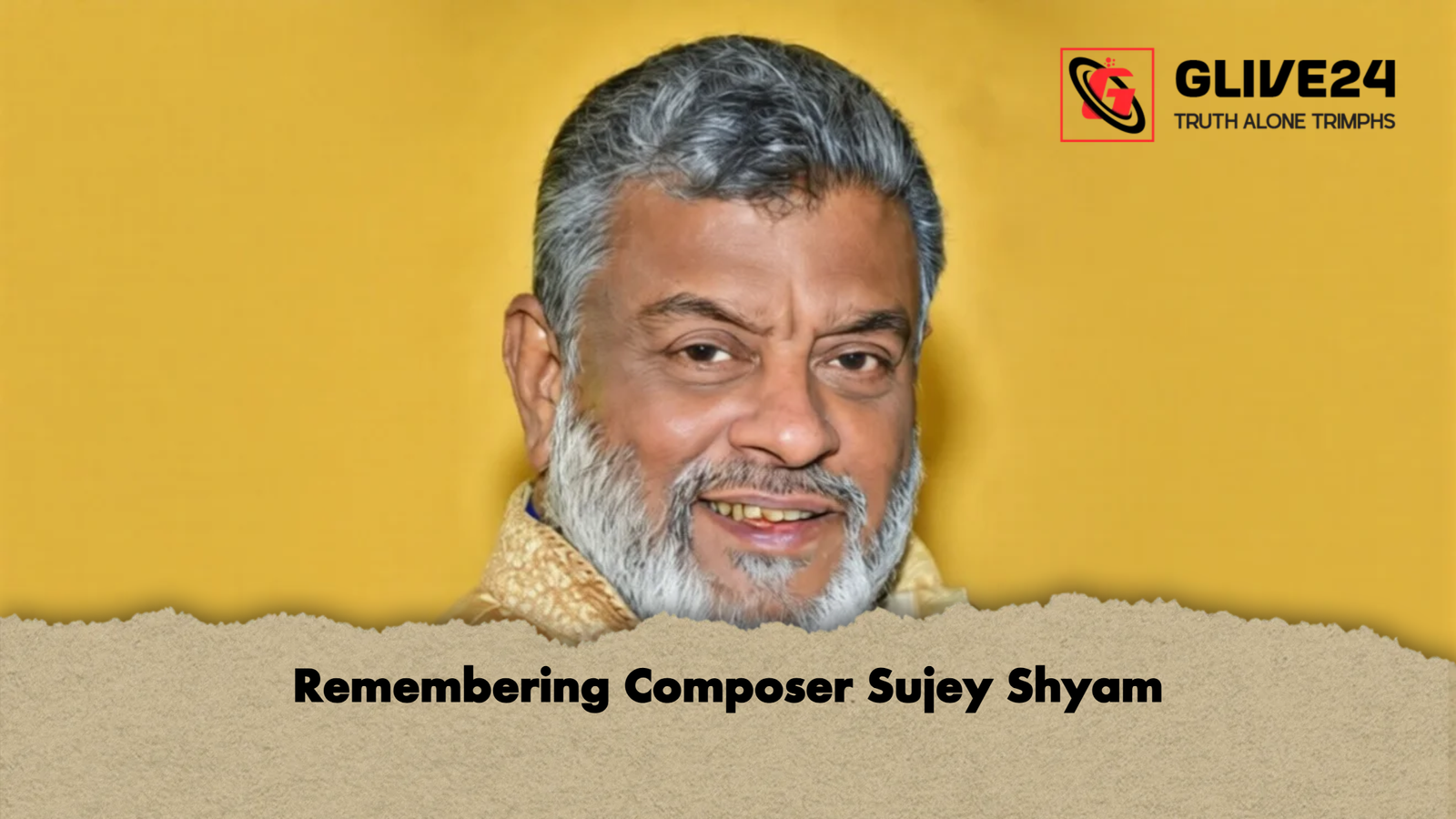
Bangladesh remembers the remarkable legacy of Sujey Shyam, a celebrated composer, freedom fighter, and cultural voice of the Liberation War. Known as a “word soldier” of the historic Swadhin Bangla Betar Kendra, he played a crucial role in shaping the musical spirit of Bangladesh through his compositions, patriotic songs, and film scores. His work stands as a unique blend of melody, artistic creativity, and deep patriotism.
Sujey Shyam was born on 14 March 1946 in Sylhet, a region long known for its rich cultural and musical traditions. From an early age he demonstrated a profound passion for music. Encouraged by his environment and his own natural creativity, he gradually developed a distinctive musical style that would later influence Bangladesh’s film industry and patriotic music repertoire.
His professional journey in film music began in 1969 when he started working alongside composer Raja Hossain. Together they formed the well-known musical partnership “Raja–Shyam”. During the 1970s and 1980s the duo became widely recognised in Bangladesh’s film industry, composing music for nearly twenty-five films. Their work contributed significantly to the golden era of Bangladeshi cinema music.
Some of their notable collaborative projects are shown below:
| Film Title | Period | Significance |
|---|---|---|
| Surjogrohon | 1970s | Won the Bachsas Film Award for music direction |
| Surjo Songram | 1970s | Known for its patriotic musical tone |
| Bhul Jokhon Bhanglo | 1980s | Popular film soundtrack among audiences |
Among these works, Surjogrohon earned particular acclaim and brought Sujey Shyam the Bachsas Film Award for his outstanding music direction.
During the 1971 Liberation War, Sujey Shyam joined the historic Swadhin Bangla Betar Kendra, the underground radio station that served as a cultural and motivational platform for the freedom movement. As a musical contributor and vocal participant, he helped broadcast inspiring songs that strengthened the morale of both freedom fighters and civilians. These songs carried messages of courage, resistance, and hope, becoming an integral part of Bangladesh’s liberation history.
In 1986 he began working independently as a music director with the film Boloban, directed by Abdul Latif Bachchu. This marked the beginning of a new phase in his career. Over the following years he composed music for numerous films, developing a signature style that blended classical elements, folk influences, and modern orchestration.
One of the most significant achievements of his later career came in the early twenty-first century with the film Hason Raja, based on the life of the legendary mystic Baul saint Hason Raja. His musical direction for the film earned him his first National Film Award. At the special request of filmmaker Chashi Nazrul Islam, Sujey Shyam also lent his own voice to one of the songs in the film.
In 2006 he contributed to preserving the musical heritage of the Liberation War by directing the album Songs of Swadhin Bangla Betar. The collection included 46 songs originally broadcast by Bangladesh Betar during the war in 1971, helping introduce a new generation to the music that inspired a nation’s struggle for independence.
Later in his career he also composed music for Liberation War-based films such as Ekattorer Khudiram and Ekattorer Ma Jononi in 2014, which received critical appreciation for their patriotic themes.
For his immense contribution to Bangladesh’s music and culture, Sujey Shyam received several prestigious honours, including the Ekushey Padak, one of the country’s highest civilian awards, and the Shilpakala Padak. He was also recognised in the National Film Awards, including a nomination in 2021 for Best Composer and Music Director.
Sujey Shyam passed away on the morning of 18 October 2024. Yet his music continues to resonate across generations. His melodies, shaped by the spirit of freedom and cultural pride, remain an enduring part of Bangladesh’s artistic heritage.
The nation remembers him with deep respect and gratitude for a lifetime devoted to music, creativity, and the ideals of independence.