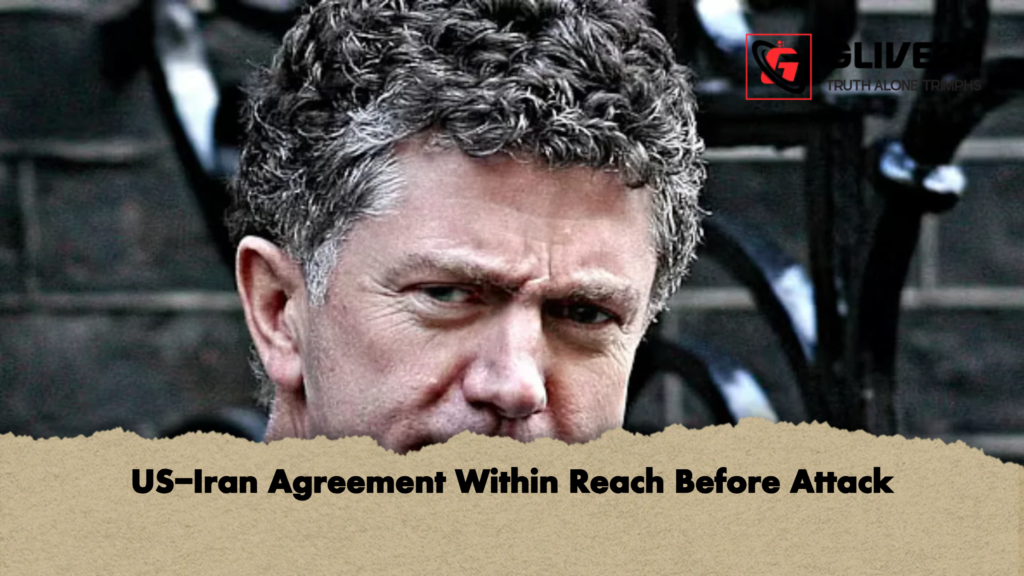
Jonathan Powell, the United Kingdom’s National Security Adviser, played a central role in the final rounds of US-Iran negotiations over Tehran’s nuclear programme. According to Powell, the proposals presented by Iran were such that a comprehensive agreement could have been reached, potentially averting military conflict.
The Geneva talks, held in late February, were showing signs of progress. Powell described Iran’s proposals as “remarkable,” with one key element allowing the United States to participate in a civilian nuclear programme in Iran in the future. However, just two days after the conclusion of these discussions, and before the next technical meeting in Vienna could take place, the United States and Israel launched an attack on Iran.
Key Participants in Geneva Talks
| Participant | Role | Notable Contribution |
|---|---|---|
| Jonathan Powell | UK National Security Adviser, Mediator | Led UK delegation, assessed Iran’s proposals, brought independent expert team |
| Jared Kushner | Senior US Representative, Trump’s son-in-law | Claimed “deep knowledge” of issues; later left talks |
| Steve Witkoff | US Special Envoy | Provided statements on Iran’s nuclear programme, many later found inaccurate |
| Rafael Grossi | IAEA Director General | Provided technical assistance, though not a lead negotiator |
| Badr bin Hamad al-Busaidi | Omani Foreign Minister | Regional mediator overseeing dialogue |
Powell attended the discussions at the residence of Oman’s ambassador in Geneva, highlighting the importance of his presence given concerns about the technical expertise of the US delegation. While Kushner and Witkoff relied on Grossi for technical insight, Powell brought his own specialist team to ensure accurate evaluation of Iran’s proposals.
These proposals included reducing Iran’s stockpile of 440 kg of highly enriched uranium under IAEA supervision, suspending its domestic enrichment programme for three to five years, and committing not to develop future high-enriched uranium stocks. In return, Iran expected relief from approximately 80% of economic sanctions, including frozen assets in Qatar.
Although a final agreement was not concluded, Powell and the UK delegation believed that the path to a diplomatic solution remained viable. The next phase of talks was scheduled for 2 March in Vienna, but the planned dialogue was pre-empted by military action from the US and Israel.
The UK Government viewed the attack as both premature and illegal, emphasising that diplomatic channels had not been exhausted and that there was no imminent evidence of missile attacks or nuclear weapon development in Iran. The Downing Street declined to comment on Powell’s personal assessment, but Foreign Secretary Yvette Cooper confirmed that the UK consistently supported a diplomatic solution.
Powell’s involvement reflected decades of experience, including his tenure as Chief of Staff to Tony Blair, and his presence underscored the seriousness of UK engagement in the negotiations. Experts and regional diplomats agree that the proposals on the table represented a significant step towards a lasting agreement.
In retrospect, the Geneva talks illustrated that a negotiated settlement was within reach, and the premature military intervention closed off a path that might have prevented conflict, demonstrating the crucial role of careful diplomacy in international security.