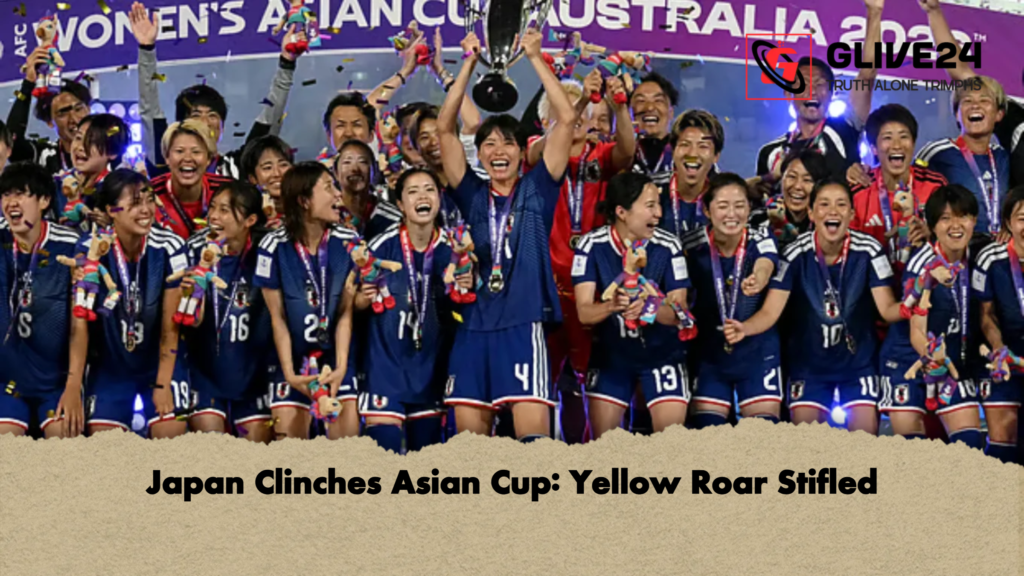
Sydney’s Olympic Park, iconic since the 2000 Games, erupted once more as the city played host to the eagerly awaited 21st Women’s Asian Cup final. The stadium, awash with the golden sea of home supporters, witnessed a dramatic spectacle as Japan emerged victorious, silencing the hosts 1–0 to lift the continental crown.
The 80,000-capacity venue was packed to the rafters. Fans streamed in from across the city, from suburban Mintō to the heart of Sydney, filling trains and platforms with vibrant yellow jerseys. Even the commuter carriages seemed transformed into a moving sea of fans. Families, couples, and children shared the palpable excitement as they made their way to the stadium. At the gates, the atmosphere hinted at more than a match—it was a festival of sport, culture, and community. While approximately 95% of spectators cheered for Australia, a noticeable contingent of Japanese supporters in blue added contrast to the crowd. The pre-match cultural programme amplified the anticipation, elevating the excitement to a near-electrifying level.
Historically, Japan entered the final with an impressive record: 2011 World Cup champions, 2015 runners-up, and winners of the 2014 and 2018 Women’s Asian Cups. Australia, the hosts, were 2023 World Cup semi-finalists and 2010 Asian Cup champions. While history favoured Japan, the match promised a clash of styles: Japan’s precise passing against Australia’s strength and pace.
Australia’s women, nicknamed the Matildas, rallied under the leadership of 32-year-old captain Sam Kerr, with over 135 international caps and a prominent career at Chelsea. Defensively, veteran Alanna Kennedy, with 145 caps, anchored the team. From kick-off, both sides traded dynamic attacks, each probing for an opening.
The decisive moment came in the 17th minute. Japanese forward Mika Hamano unleashed a stunning long-range strike from outside the box, deceiving Australia’s goalkeeper and sending the ball into the far corner. Hamano, who plays for Tottenham Hotspur, triggered an ecstatic eruption from the blue-clad supporters. This solitary goal determined the outcome, giving Japan its third Women’s Asian Cup title.
| Team | Asian Cup Titles | Final Wins vs Opponent | Key Players |
|---|---|---|---|
| Japan | 2014, 2018, 2022 | Australia 1–0 (x3) | Mika Hamano, Ayaka Yamashita |
| Australia | 2010 | Japan 0–1 (x3) | Sam Kerr, Alanna Kennedy |
Australia pressed hard in the second half but could not breach Japan’s resolute defence. Goalkeeper Ayaka Yamashita epitomised composure and consistency, executing crucial saves that secured victory. Opportunities from Caitlin Foord and Arsenal striker attempts went awry, proving costly for the hosts. Japan’s campaign had been formidable: a 17-goal haul in group stages, including an 11–0 win over India, followed by a 4–1 semi-final triumph over South Korea. Australia had reached the final after defeating North Korea (2–1) and defending champions China (2–1).
Under Danish coach Nils Nielsen, the Japanese squad remained unbeaten throughout the tournament, blending tactical discipline, technical precision, and clinical execution. Midfield control by Yui Hasegawa and attacking fluency from Hamano were central to their success, with Yamashita’s saves ensuring the team’s defensive solidity. Japan and Australia had previously met in the 2014 and 2018 finals, both ending 1–0 to Japan—a historical repetition that extended Australia’s final frustrations.
As South Korean referee Kim Yoo whistled the final whistle, Australian players sank to the turf in heartbreak, while Japan’s team celebrated exuberantly. Despite one team lifting the trophy, the night at Olympic Park reaffirmed the joy and universality of football. The festival of football coincided with Eid celebrations, allowing Bangladeshi expatriates in Sydney to witness the thrilling finale, gaining firsthand experience of Asia’s premier women’s football stage.
In summary, Japan’s triumph demonstrated precision, resilience, and tactical mastery, while Australia’s valiant effort highlighted the competitive spirit of the Matildas. The Asian Cup returned home to Japan, silencing the golden roar of Sydney in a celebration of skill, strategy, and sport.