
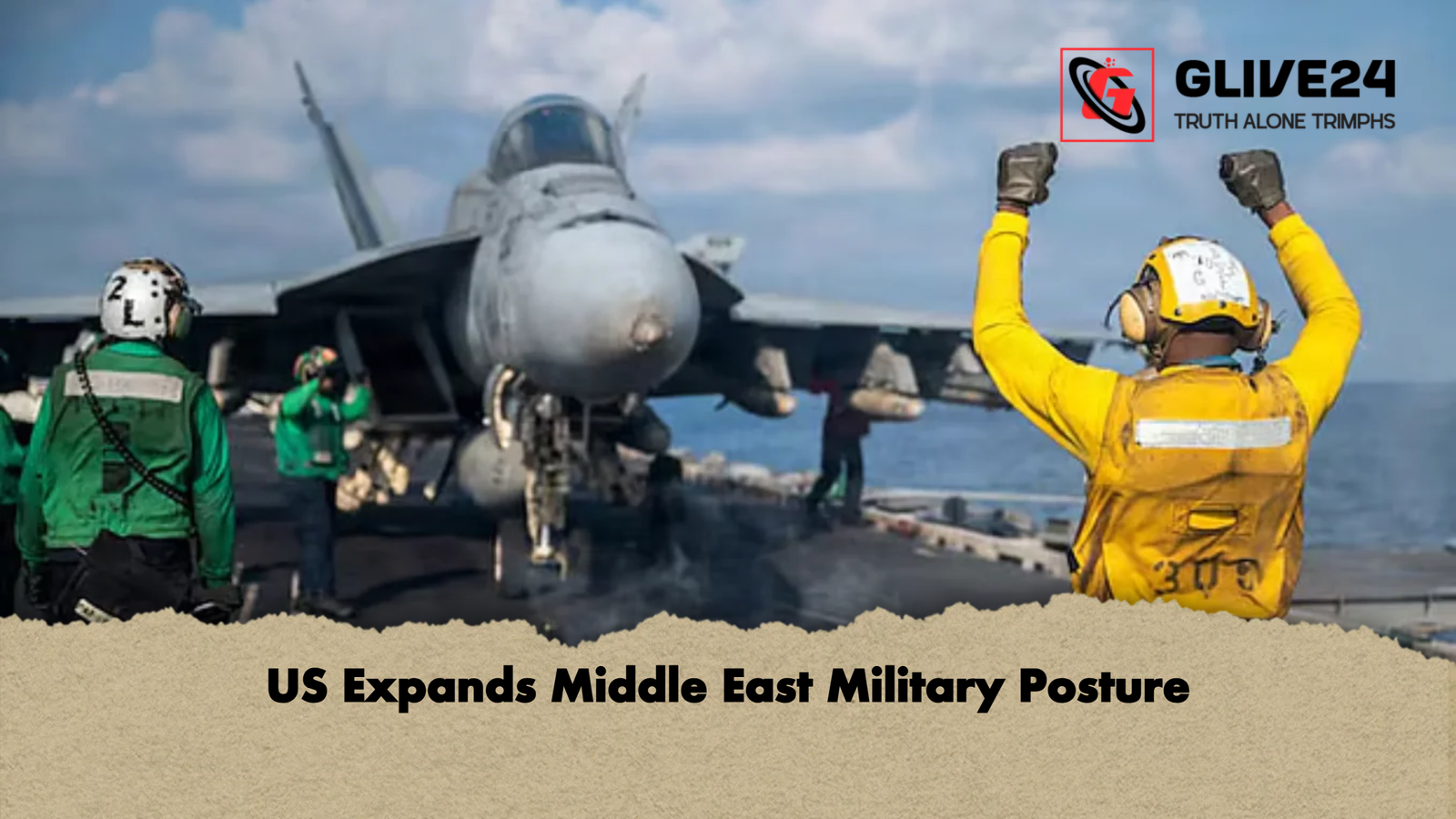
The United States is preparing to deploy amphibious warships and several thousand additional troops to the Middle East amid escalating tensions linked to the ongoing conflict with Iran, according to three American officials cited by Reuters. The move signals a significant reinforcement of US military readiness in a region already hosting substantial American forces.
Officials emphasised that no final decision has been taken deploying ground troops directly into Iran. Instead, the current strategy appears focused on enhancing operational flexibility and ensuring preparedness for a range of contingencies. The reinforcements are intended to strengthen the US military’s ability to respond swiftly to emerging threats, rather than to signal an immediate escalation to full-scale ground warfare.
At the centre of the deployment is the amphibious assault ship USS Boxer, accompanied by a Marine Expeditionary Unit (MEU) and supporting naval vessels. As previously reported by Reuters, such units are highly versatile, capable of conducting air strikes from sea, launching amphibious landings, and carrying out rapid-response missions in crisis zones.
The timing of this development is notable. It comes as the administration of President Donald Trump weighs options to intensify its military posture in the region. However, Trump struck a cautious tone in remarks to journalists, stating that he was not currently sending troops anywhere—while also adding that, if he did, he would not necessarily disclose it publicly.
Sources speaking on condition of anonymity indicated that the precise role of the additional troops remains unclear. One official noted that the deployment began approximately three weeks ahead of schedule, with forces departing from the US West Coast earlier than initially planned. Neither the White House nor the Pentagon has issued an official statement regarding the operation.
Currently, the United States maintains around 50,000 troops across the Middle East. The new deployment is expected to increase that number and bring the total number of Marine Expeditionary Units in the region to two. Each MEU typically comprises around 2,500 Marines, trained for a wide spectrum of missions, including amphibious assaults, humanitarian operations, and limited ground engagements.
Below is a snapshot of the evolving US military presence:
| Category | Current Status | After Reinforcement |
|---|---|---|
| Total US Troops | almost 50,000 | A few thousand will increase |
| Marine Expeditionary Units | 1 | 2 |
| Personnel per MEU | ~2,500 | Unchanged |
| Naval Asset | Limited presence | USS Boxer deployment |
Strategically, the deployment is closely tied to safeguarding vital maritime routes, particularly the Strait of Hormuz, through which a significant portion of the world’s oil supply passes. Earlier reporting by Reuters suggested that US planners are considering options such as positioning forces along Iran’s coastline and potentially deploying troops to Kharg Island. This island is critical to Iran’s energy infrastructure, handling roughly 90 per cent of the country’s oil exports.
Despite the military rationale, the political risks are considerable. Public support within the United States for a broader war with Iran remains limited. A recent Reuters/Ipsos poll found that about 65 per cent of Americans believe Trump may authorise a large-scale ground war in Iran, yet only 7 per cent support such a move.
This divergence between perceived intent and public approval underscores the delicate balance facing the administration. While Washington seeks to maintain strategic dominance and protect key interests in the Gulf, it must also navigate domestic political constraints and the risk of a wider regional escalation.