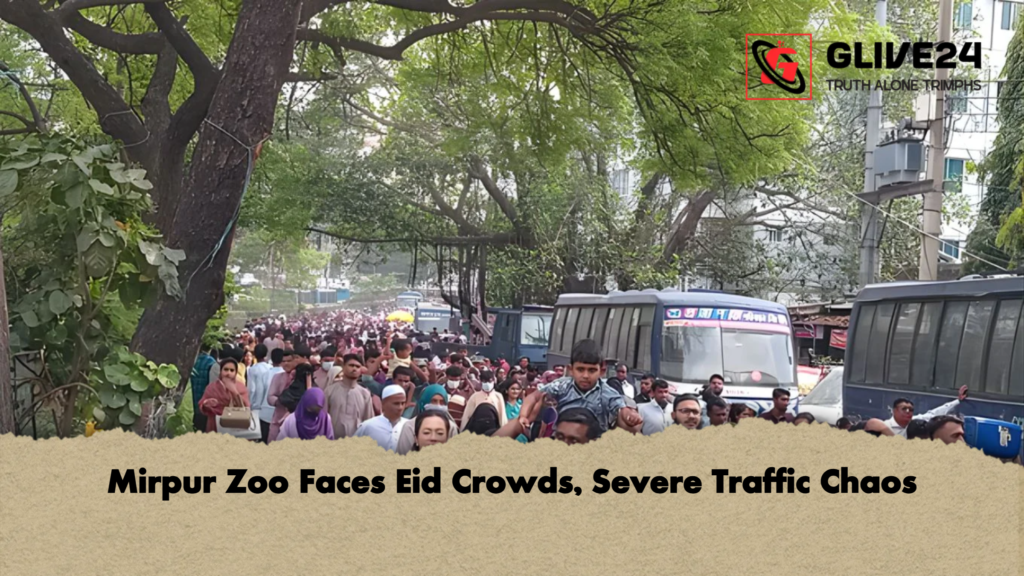
On the second day of Eid, the National Zoo in Mirpur, Dhaka, became the epicentre of severe congestion and public inconvenience, as throngs of visitors descended upon the popular attraction. Observers on Sunday afternoon reported that traffic around the zoo came to a near standstill, forcing many families to abandon their vehicles and proceed on foot or wait interminably for rickshaws and buses.
Traffic Gridlock Around the Zoo
A short distance from Mirpur’s Sony Cinema Hall No. 1 towards the zoo, roads were virtually immobilised due to heavy traffic. Visitors stranded in cars and auto-rickshaws were compelled to leave their vehicles and walk the remainder of the route. Particularly, near the Rainkhola intersection, authorities were regulating vehicle flow, resulting in pedestrians covering nearly a kilometre on foot to reach the zoo entrance.
The situation was equally challenging for those leaving the zoo, as the scarcity of vehicles meant they too had to walk substantial distances to reach their destinations. This congestion disproportionately affected children, the elderly, and families with young members, amplifying the stress and discomfort of the outing.
Visitor Experiences
| Name | Departure Point | Inconvenience Experienced | Comments |
|---|---|---|---|
| Md. Al Amin | Ashulia | Walked with family | “Traffic began almost immediately after leaving Sony Cinema Hall, so we walked with the family.” |
| Md. Hosain | Jatrabari | No available vehicles; rickshaw overcharged | “Exiting the zoo, we couldn’t find a vehicle and had to walk with the family.” |
| Rokeya Akter | Jatrabari | Fatigue from walking | “Better traffic and crowd management could have prevented such difficulties.” |
Analysis
The influx of visitors, combined with limited traffic capacity, has rendered the area around the National Zoo extremely stressful, particularly during peak festive periods such as Eid. The absence of adequate parking facilities, proper road safety measures, and systematic traffic control exacerbates the problem, leaving families to navigate congested streets on foot.
Authorities, including zoo management and city traffic officials, face a pressing need to implement effective crowd and traffic management strategies. Measures such as designated parking zones, temporary pedestrian pathways, and coordinated vehicle flow could greatly enhance visitor experience and ensure safety for all.
In conclusion, the chaotic scenes at Mirpur Zoo during Eid highlight the urgent necessity for proactive planning to handle seasonal visitor surges. Without substantial intervention, both public safety and visitor satisfaction remain at risk during peak holiday periods.