
Khabor Wala Desk
Published: 22nd March 2026, 4:16 PM
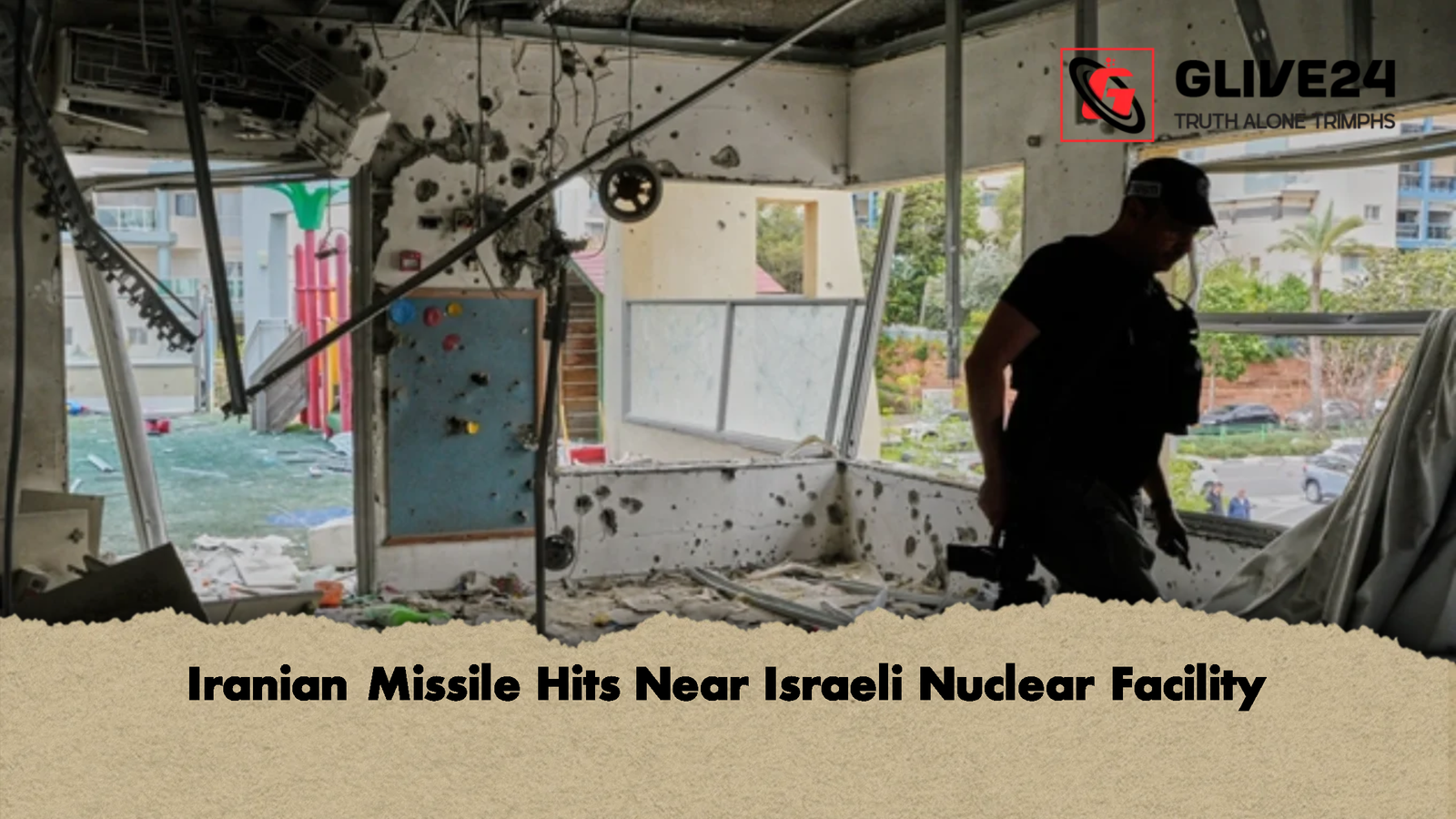
A missile launched by Iran struck near a nuclear installation in southern Israel’s Dimona city on Saturday, injuring dozens but causing no reported damage to the facility itself, according to international monitoring agencies. The International Atomic Energy Agency (IAEA) confirmed that it has observed no abnormal radiation levels at the Shimon Peres Negev Nuclear Research Centre, situated approximately eight miles (13 km) from the impact site.
Iranian state media reported that the strike was in retaliation for a previous attack on its Natanz nuclear facility, reflecting a cycle of escalating tit-for-tat military actions in the region. IAEA Director General Rafael Grossi emphasised the need for “maximum military restraint, particularly around nuclear installations,” highlighting the severe risks of targeting such sensitive sites.
Israeli emergency services treated 40 people following the Dimona strike, most with minor injuries, although a ten-year-old child was reported in critical condition. In a separate attack on the nearby city of Arad, 68 people received medical attention, with 10 in serious condition and 47 sustaining minor injuries.
Paramedic Yakir Talcar described the scene in Arad as “extremely horrific,” noting the broad spectrum of injuries. Investigators are examining how the missiles breached Israel’s air defence systems, which deployed interceptors in both Dimona and Arad. Despite these measures, several ballistic missiles carrying substantial warheads successfully struck their targets.
| Location | Target Facility | Distance from Strike | Casualties | Air Defence Outcome |
|---|---|---|---|---|
| Dimona | Shimon Peres Negev Nuclear Research Centre | 8 miles / 13 km | 40 injured (mostly minor) | Interceptors failed; direct hits |
| Arad | Residential/Urban Areas | N/A | 68 injured (10 serious) | Interceptors deployed |
The Dimona facility, officially a nuclear research centre, is widely believed by international observers to be Israel’s primary nuclear weapons site. Israel, recognised as the Middle East’s only nuclear power, treats any missile threat near this location with the utmost seriousness. The United States and Israel have consistently prioritised neutralising potential Iranian nuclear capabilities, making the region highly sensitive to escalatory attacks.
Iran’s Atomic Energy Organisation characterised the Natanz strike, which provoked the Dimona retaliation, as a violation of the Nuclear Non-Proliferation Treaty. It stressed that no radioactive release occurred and local residents faced no immediate danger.
The area has seen multiple strikes in recent months, including US-Israeli operations on 28 February and a 12-day escalation in June that targeted Natanz. Israeli defence officials, when asked about the latest developments at Natanz, stated they had no confirmed reports of new attacks there.
The missile strikes near Dimona underscore the volatile security environment in the Middle East, particularly around nuclear facilities, and highlight the ongoing global concerns regarding civilian safety, critical infrastructure, and the risks of regional escalation.



Comments