Khabor Wala Desk
Published: 23rd March 2026, 12:29 AM
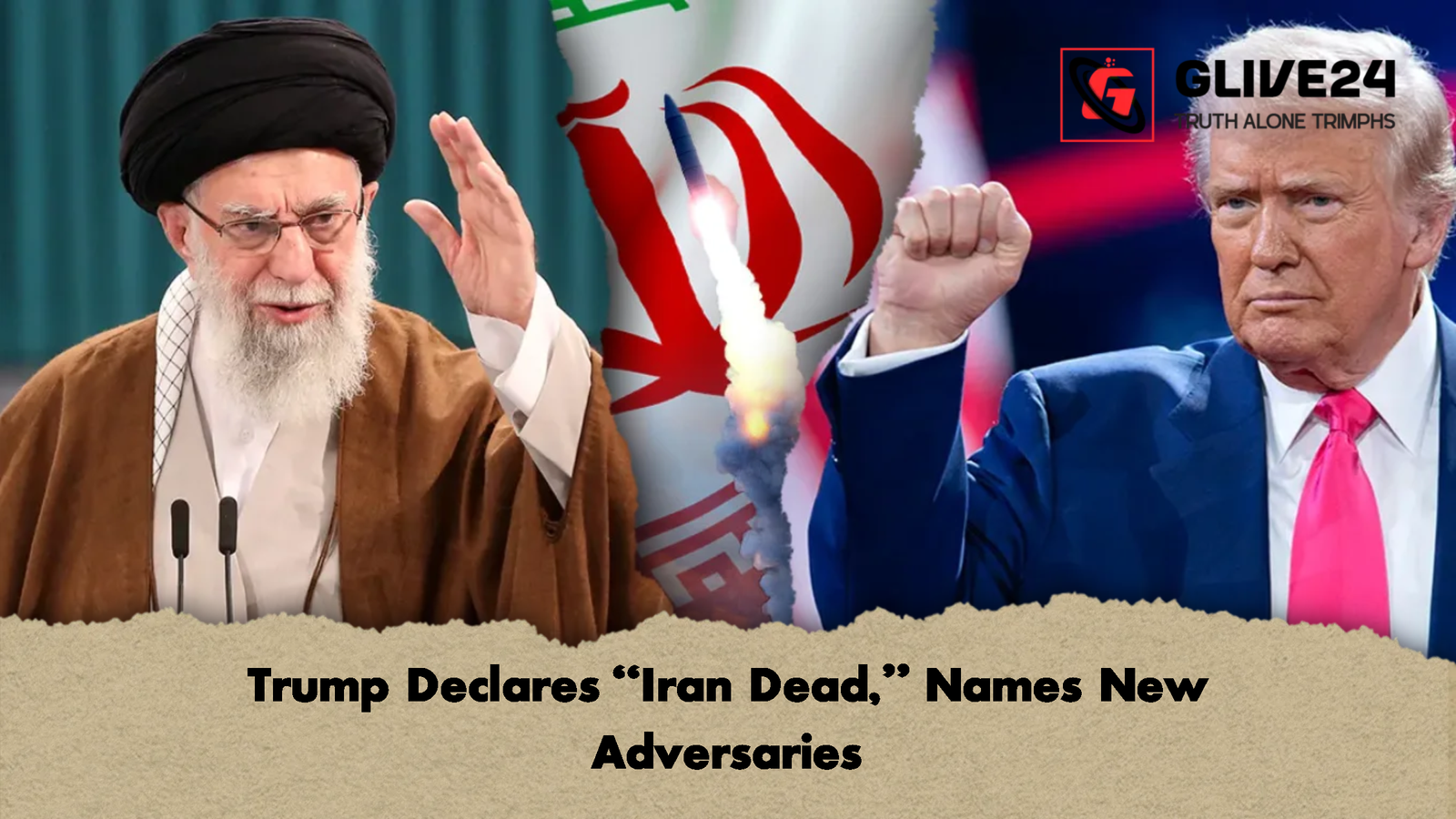
Tensions in the Middle East remain dangerously high as former U.S. President Donald Trump issued provocative statements against Iran on Sunday, declaring the country “dead” and simultaneously identifying a new set of political adversaries within the United States.
Table of Contents
Trump addressed his followers on the social media platform Truth Social, stating:
“With Iran dead, America’s greatest enemy is now the radical left—the utterly unfit Democratic Party!”
He also issued a stark ultimatum to Tehran concerning the Strait of Hormuz, a critical maritime chokepoint through which roughly 20 percent of the world’s oil and gas shipments pass. In his post, Trump warned:
“From this moment, Iran has exactly 48 hours to fully open the Strait of Hormuz without threats, or the United States will strike and destroy their various power plants. We will begin with the largest! Thank you for taking this seriously.”
His language underlined the high-stakes nature of U.S.–Iran tensions, signalling the possibility of military action if Iran does not comply.
Iranian representative Ali Mousavi, speaking through the International Maritime Organization, clarified that foreign vessels may traverse the Strait of Hormuz but must coordinate with the Iranian government for security purposes.
Citing Mehr News Agency, Al Jazeera reported Mousavi as saying:
“This cooperation is essential to maintain stability in this strategic waterway. However, the Strait will remain closed to countries considered Iran’s enemies.”
This response underscores Iran’s intent to maintain selective access, heightening geopolitical friction in one of the world’s most strategically vital maritime routes.
Trump’s ultimatum comes amid both domestic and international pressures, as the unannounced Iranian blockade has contributed to a sharp rise in global oil prices. The Strait of Hormuz, a vital artery for nearly one-fifth of global oil and gas supply, makes any disruption a significant concern for energy markets and shipping lanes.
| Issue | Detail |
|---|---|
| Strait of Hormuz | 20% of global oil & gas passes through; strategic chokepoint |
| Trump’s Ultimatum | Iran has 48 hours to reopen without threats or face attacks on power plants |
| New U.S. Adversaries | Radical left and Democratic Party named as principal enemies |
| Iranian Position | Coordination required for safe passage; closed to perceived enemies |
| Economic Impact | Surge in global oil prices; potential disruption of international trade |
The escalating rhetoric reflects both geopolitical and domestic dynamics: Trump positions Iran as the focal point of U.S. foreign policy while linking internal political opposition as a broader “enemy.” Energy markets, international shipping firms, and maritime authorities are closely monitoring the situation due to the Strait’s strategic significance.
Analysts warn that miscalculations by either side could have far-reaching consequences for regional security, global trade, and energy stability. Any military action or blockade could trigger supply disruptions, rapidly escalating tensions in an already volatile region.


Comments