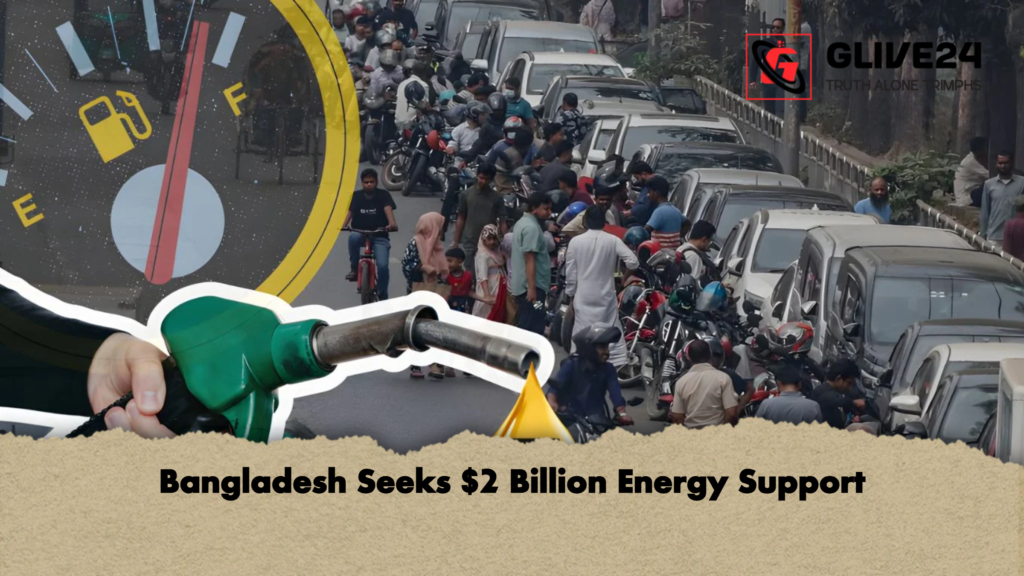
The ongoing conflict in the Middle East has exacerbated volatility in global energy markets, prompting Bangladesh to urgently seek foreign assistance to stabilise both its fuel supply and broader economy. The government, led by Prime Minister Tarique Rahman, has reportedly devised plans to secure over $2 billion in international funding.
Bangladesh relies heavily on imports to meet its energy demands, with approximately 95 per cent of its oil and liquefied natural gas (LNG) sourced from abroad. Rising prices and supply disruptions in international markets have compelled the government to implement a fuel rationing scheme in recent months. This restriction was partially relaxed during the Eid al-Fitr holiday to accommodate increased domestic consumption.
Rashed Al Mahmud Titumir, Economic and Planning Advisor to the Prime Minister, confirmed that Bangladesh is engaging with multiple multilateral institutions, including the Asian Development Bank (ADB), the World Bank, the International Islamic Trade Finance Corporation (ITFC), and the Asian Infrastructure Investment Bank (AIIB).
“Positive signals are emerging regarding support for the energy sector,” Mr Titumir stated. “This assistance will help accelerate economic growth while ensuring energy security.” He added that the government expects approximately $1.3 billion from the International Monetary Fund (IMF), $500 million in budget support from the ADB, and a further potential allocation of $250–500 million in additional funding.
The advisor also noted that IMF representatives are currently in Bangladesh, and there is optimism that the funds may be released during the current fiscal year rather than the originally planned timeline of July.
To mitigate dependency on Middle Eastern supplies, the government is also exploring fuel procurement from the United States, Southeast Asia, and Nigeria. A key priority is to shield domestic consumers from the full impact of global price surges.
The table below summarises potential multilateral assistance:
| Donor Institution | Potential Funding (Million USD) | Notes |
|---|---|---|
| IMF | 1,300 | Aim for disbursement in current fiscal year |
| ADB | 500 | Budget support; additional $250–500 potential |
| World Bank | Under discussion | Financing plan in progress |
| ITFC | Under discussion | Islamic trade finance |
| AIIB | Under discussion | Infrastructure investment support |
Mr Titumir emphasised, “Our priority is to maintain uninterrupted financial flows in the energy sector. Multilateral assistance is being prioritised over private-sector loans.”
In summary, Bangladesh is increasingly reliant on multilateral funding to navigate the uncertainty of global energy markets. Strategic measures are being implemented to stabilise fuel supplies while insulating ordinary citizens from price shocks, reflecting a proactive approach to energy security and economic stability.