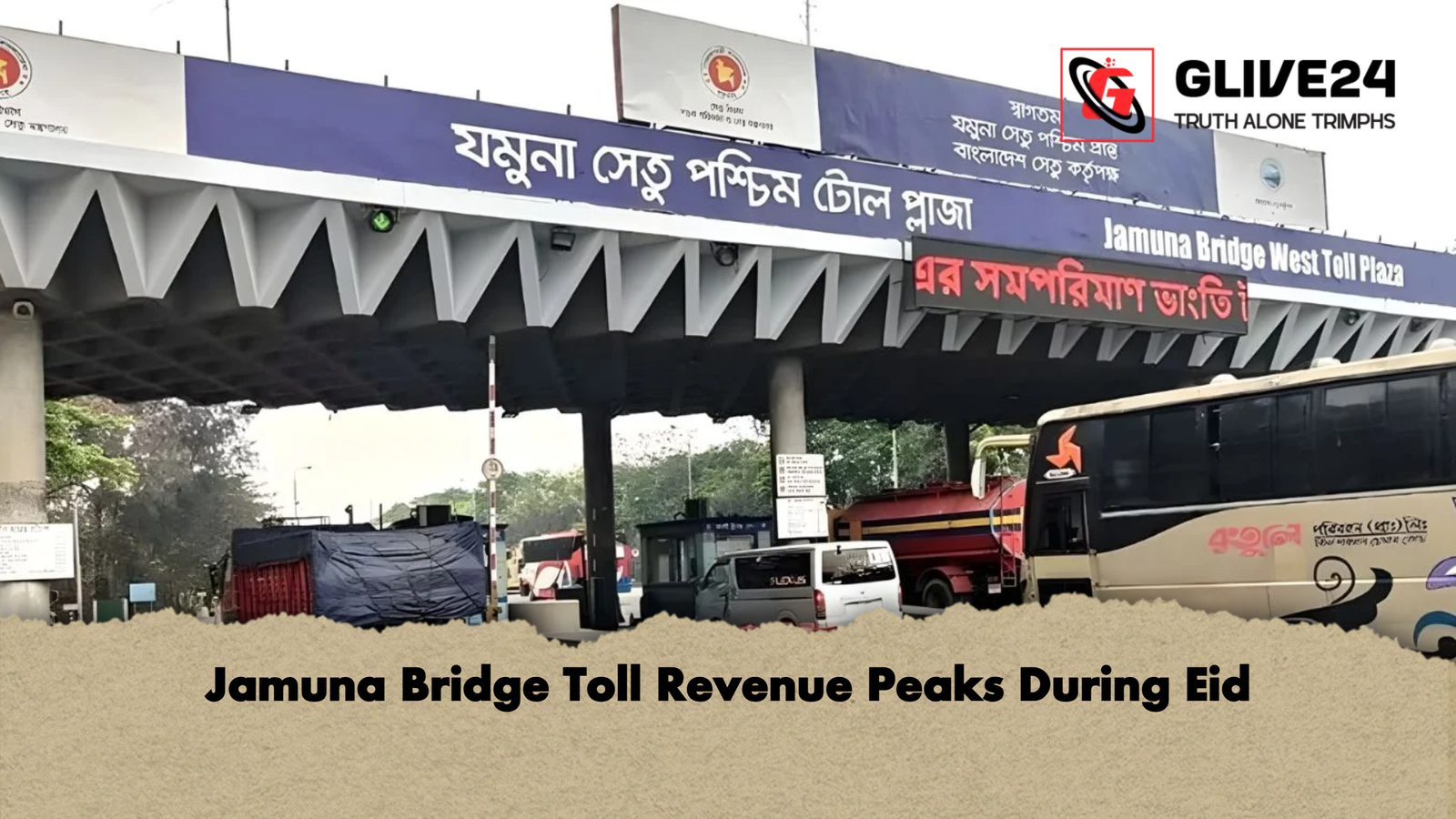
During the continuous Eid-ul-Fitr holiday, Jamuna Bridge experienced a significant surge in vehicular traffic, reflecting the traditional festive rush. Between 16 and 23 March, a total of 2,54,175 vehicles crossed the bridge, generating Tk 17.65 crore in toll revenue. This marks a notable increase compared to the previous year, underlining the bridge’s continuing role as a crucial transport and economic artery.
Traffic patterns during festive periods typically see a doubling—or even more—of usual vehicle movement. This year was no exception, with substantial flows observed across all days. To manage toll collection efficiently, a total of 18 booths were operational, including four dedicated motorcycle booths positioned separately on both sides.
Daily Vehicle Crossings and Toll Collection
| Date | Vehicles Crossed | Toll Revenue (Tk) |
|---|---|---|
| 16 March | 35,658 | 2,94,70,700 |
| 17 March | 46,900 | 3,49,83,650 |
| 18 March | 51,592 | 3,51,73,650 |
| 19 March | 45,633 | 3,29,82,000 |
| 20 March | 16,961 | 1,23,65,450 |
| 21 March | 13,910 | 61,03,300 |
| 22 March | 18,337 | 1,04,57,950 |
| 23 March | 25,146 | 1,45,28,250 |
| Total | 2,54,175 | 17,65,62,800 |
According to Syed Riaz Uddin, Executive Engineer of Jamuna Bridge, “During Eid, many people travelled to their hometowns to celebrate with family. Except for the day before Eid, traffic congestion was minimal. All toll booths operated smoothly, and travellers were able to cross the bridge without significant delays.”
Analysis of the data indicates that 18 March saw the highest volume of traffic, with 51,592 vehicles passing through, corresponding to the peak toll collection. Conversely, 21 March recorded the lowest traffic, with only 13,910 vehicles, resulting in the minimum toll revenue of the period.
These figures underscore Jamuna Bridge’s strategic significance in national connectivity and economic activity, particularly during festive periods when movement intensifies. The bridge not only facilitates efficient travel but also contributes substantially to government revenue, reaffirming its status as a vital infrastructural asset in Bangladesh.