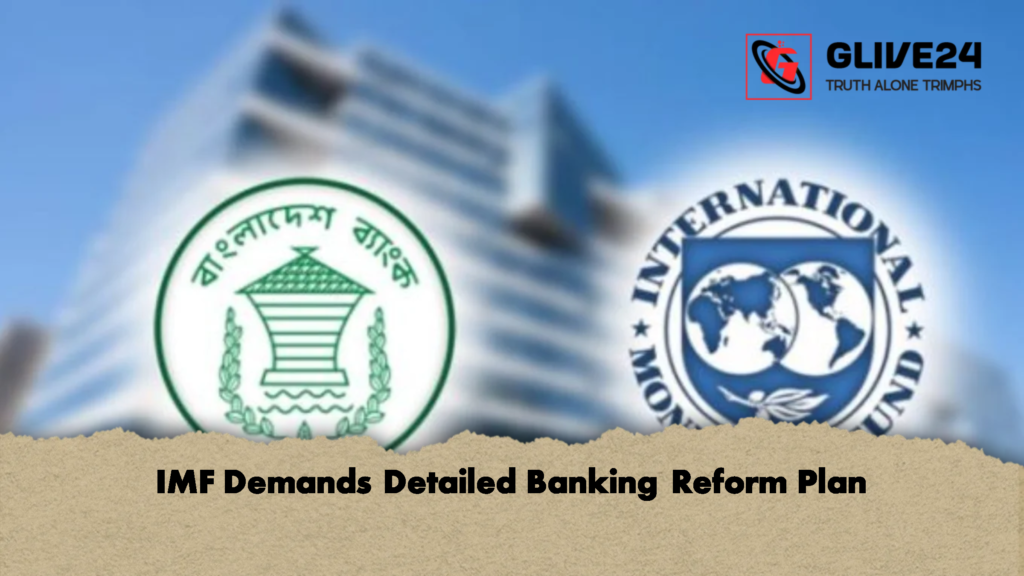
The International Monetary Fund (IMF) has urged Bangladesh to develop a clear, time-bound roadmap aimed at strengthening transparency, improving loan management, and accelerating structural reforms within its banking sector. The global lender has formally requested Bangladesh Bank to submit a written and comprehensive action plan, underscoring the need for measurable progress and sustained policy discipline.
The call for a structured roadmap was made during a high-level meeting held on Wednesday, 25 March, between a visiting IMF delegation and the Governor of Bangladesh Bank. The delegation was led by Krishna Srinivasan, Director of the IMF’s Asia and Pacific Department. Discussions centred on the ongoing financial sector reforms, key macroeconomic indicators, and Bangladesh’s future policy direction.
While the IMF acknowledged the progress achieved so far, it emphasised that reforms must now be implemented within a clearly defined and time-bound framework. Particular focus was placed on three core areas: enhancing transparency within the banking system, strengthening loan classification and recovery mechanisms, and advancing policy reforms to reinforce institutional governance and oversight. The IMF stressed that a formal roadmap would ensure accountability, consistency, and effective monitoring of reforms.
Officials further noted that once the roadmap is finalised, it will serve as a strategic guide for the financial sector, aligning policy measures with long-term economic stability. The IMF also indicated that successful implementation would lead to improved transparency, stronger accountability mechanisms, and more efficient loan management practices across the banking system.
The meeting also reviewed Bangladesh’s progress in managing its external sector, particularly in building foreign exchange reserves and transitioning towards a more market-driven exchange rate mechanism. These developments were viewed positively, with emphasis on recent policy steps aimed at stabilising the foreign exchange market and maintaining balance in external transactions.
A structured overview of the IMF’s reform priorities is presented below:
| Reform Area | IMF Recommendation | Expected Outcome |
|---|---|---|
| Banking Transparency | Greater disclosure and accountability | Improved governance and public confidence |
| Loan Management | Stronger oversight and monitoring | Reduction in non-performing loans |
| Policy Reforms | Clear, time-bound implementation framework | Consistent and measurable reform progress |
| Exchange Rate Policy | Movement towards market-based system | Enhanced currency stability |
| Reserve Management | Strengthened reserve-building measures | Greater resilience of external sector |
On the issue of financial assistance, Bangladesh Bank’s Assistant Spokesperson and Director, Mohammad Shahriar Siddiqui, stated that the release of the next tranche of IMF funding will be determined following the Fund’s Spring Meetings scheduled for April. A subsequent review mission is expected to visit Bangladesh to assess the country’s economic performance and progress on reforms. The final decision regarding the next instalment will depend on the outcome of this evaluation.
The IMF and World Bank Spring Meetings are set to take place in Washington from 13 to 18 April. Bangladesh is expected to be represented by a high-level delegation, including the Finance Minister, Amir Khasru Mahmud Chowdhury, along with senior officials from the Ministry of Finance and the Governor of Bangladesh Bank.
Bangladesh’s current IMF-supported programme, valued at 4.7 billion US dollars, commenced on 30 January 2023. Under the interim administration led by Professor Muhammad Yunus, the programme was expanded by an additional 800 million US dollars in June last year, bringing the total to 5.5 billion US dollars. To date, Bangladesh has received 3.64 billion US dollars across five instalments, with 1.86 billion US dollars yet to be disbursed. Although the sixth tranche was expected in December, its release was postponed.
Since the formation of the new government, economic reform has remained a key priority, with ongoing engagement maintained with the IMF. The recent discussions are widely viewed as both a courtesy engagement and a technical dialogue, aimed at ensuring continuity in reform efforts and programme implementation.
Overall, while the IMF’s assessment reflects cautious optimism regarding Bangladesh’s economic trajectory, the path ahead depends heavily on the country’s ability to sustain reform momentum. The timely preparation and effective implementation of a comprehensive banking sector roadmap will be crucial in unlocking future financial support and securing long-term macroeconomic stability.