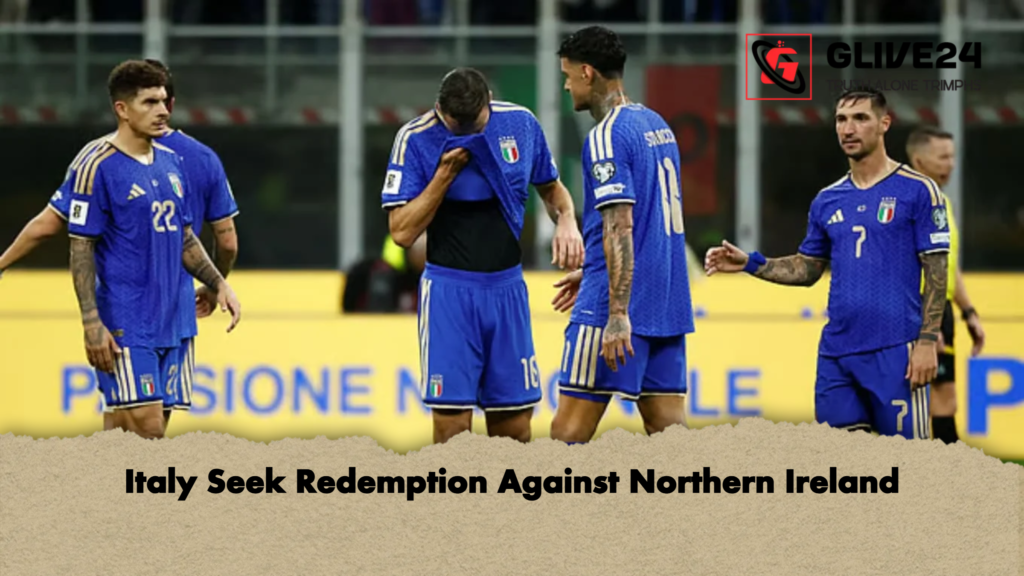
From Belfast to Bergamo, nearly seven decades have passed—yet history has an uncanny way of circling back. Italy now find themselves once again confronting Northern Ireland national football team, the so-called “Green and White Army”, in a decisive encounter that could shape their footballing future.
For Italy national football team, the stakes could hardly be higher. Under the stewardship of Gennaro Gattuso, the Azzurri must not only win this crucial play-off match but also progress through the final hurdle if they are to secure qualification for the 2026 FIFA World Cup. Failure would mark an unprecedented third consecutive absence from the tournament, following disappointments in 2018 and 2022.
Although the context differs—this time a knockout tie on home soil rather than a group-stage decider away—the psychological weight of history looms large. The shadow of 1958, often referred to as the “Belfast tragedy”, still lingers in Italian football folklore.
The Foni Era and Tactical Constraints
Following Italy’s early exit from the 1954 World Cup, Alfredo Foni was appointed manager. Renowned for leading Inter Milan to consecutive league titles, Foni introduced the defensive “catenaccio” system at international level. Built on a sweeper and a compact back line, the strategy prioritised defensive solidity and swift counter-attacks.
However, Italy’s tactical discipline was undermined by a lack of clinical forwards. To compensate, Foni turned to “oriundi”—foreign-born players of Italian descent such as Juan Alberto Schiaffino, Alcides Ghiggia, and Omar Sívori. By then, many were past their peak, limiting their effectiveness.
1958 Qualification Campaign: A Collapse Unfolds
Italy’s qualification campaign for the 1958 World Cup in Sweden began with promise but quickly unravelled.
| Match | Result | Venue |
|---|---|---|
| Italy vs Northern Ireland | 1–0 win | Rome |
| Italy vs Yugoslavia | 1–6 loss | Away |
| Italy vs Portugal | 0–3 loss | Lisbon |
Injuries, inconsistency, and tactical rigidity pushed Italy to the brink, leaving them with a must-avoid defeat scenario in Belfast.
The “Battle of Belfast”
On 4 December 1957, chaos reigned. Dense fog prevented Hungarian referee István Zsolt from reaching Belfast. Although FIFA intended to postpone the fixture, local pressure resulted in an unofficial match being played.
What followed was anything but friendly. Spectators invaded the pitch, and Italian players were subjected to intimidation and violence. Radio commentator Nicolò Carosio reportedly described scenes of panic as players struggled to remain safe. Remarkably, Northern Ireland captain Danny Blanchflower intervened, instructing his teammates to escort Italian players to safety.
The match ended 2–2, but as it was unofficial, it carried no competitive value.
The Decisive Defeat
The official replay, held in January 1958 under grim weather conditions, proved catastrophic. Heavy rain, freezing temperatures, and a muddy pitch neutralised Italy’s technical play.
Despite deploying an attacking trio including Ghiggia and Dino da Costa, Italy fell 2–0 behind within 30 minutes. Although Da Costa pulled one goal back, Ghiggia’s dismissal reduced Italy to ten men. The match ended 2–1, sealing Italy’s elimination.
For the first time, the two-time world champions failed to qualify for a World Cup.
That same year, Brazil national football team triumphed in Sweden, introducing the world to a 17-year-old Pelé. Italy, meanwhile, watched from afar.
Fallout and Lasting Impact
The defeat triggered widespread criticism across Italian media. Administrative upheaval followed, with federation officials dismissed, the squad dismantled, and Foni’s tenure abruptly ended. For several players, international careers concluded that day.
Present-Day Reckoning
Now, 68 years on, Italy face Northern Ireland once more—this time in Bergamo. The parallels are impossible to ignore. Another failure would deepen an already troubling era for one of football’s most decorated nations.
Yet football, like history, allows for redemption. The question remains: will Italy finally exorcise the ghosts of Belfast, or will history once again cast a long and unforgiving shadow?