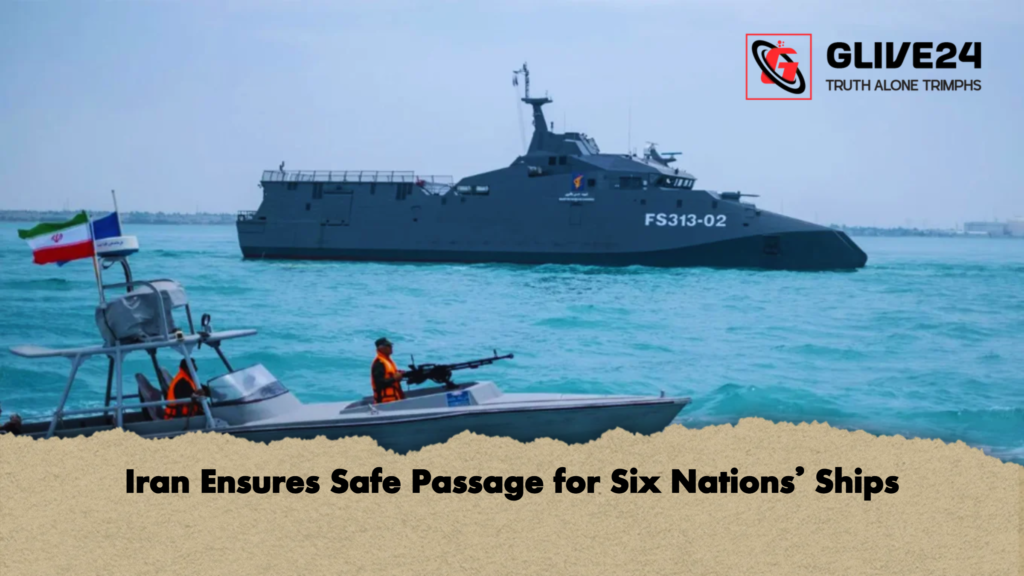
Amid escalating tensions in the Middle East, Iran has confirmed that it will allow safe navigation through the strategically vital Strait of Hormuz for selected “friendly” nations, including Bangladesh. This assurance comes despite widespread Western media reports suggesting a complete blockade of the waterway.
In an interview with state television, Iranian Foreign Minister Abbas Araghchi stated that the Strait is not entirely closed. “Several shipowners and countries have contacted us requesting safe passage. For those we consider friends, or for other reasons we approve, our armed forces are ensuring secure routes,” he said.
According to Reuters, Araghchi identified China, Russia, Pakistan, Iraq, India, and Bangladesh as countries granted safe passage. He added, “As reported, China, Russia, Pakistan, Iraq, and India—India recently had two ships transit safely. A few other nations, including Bangladesh, have coordinated with us. This will continue even after the conflict.”
However, Araghchi emphasised that adversarial or opposing nations will not have access. “We are in a state of war. This region has effectively become a battlefield. There is no reason to allow ships from hostile countries or their allies to transit,” he said. He explicitly mentioned that vessels from the United States, Israel, and certain Gulf states involved in the conflict would be denied passage.
Earlier this week, Iran blocked a Pakistan-bound container ship from traversing the Strait. The vessel, ‘SELEN’, travelling from Sharjah in the United Arab Emirates to Karachi, was forced to return due to lack of authorisation, according to the Islamic Revolutionary Guard Corps.
Iran has reinforced control over the Strait using drones and missiles in response to attacks by the United States and Israel. With nearly one-fifth of the world’s oil and liquefied natural gas passing through this corridor, these developments have significant implications for global energy supply, raising concerns about fuel shortages, rising transport costs, and disruptions to supply chains.
Shipping data indicates a drastic reduction in traffic. According to the maritime platform Lloyd’s List, the Strait normally sees around 120 vessels daily. Between 1–25 March 2026, only 155 vessels passed through—representing a 95% decline compared to usual traffic, according to analysis by Kpler. Of these, 99 were oil and gas carriers, mostly heading eastward, while only two ships navigated westward on 25 March.
| Date Range | Total Vessels | Oil & Gas Carriers | Eastbound | Westbound |
|---|---|---|---|---|
| 1–25 March 2026 | 155 | 99 | 97 | 2 |
| Average Daily Flow | ~120/day | – | – | – |
Iran’s move to secure selective safe passage reflects its strategic intent: maintaining influence over a critical chokepoint while accommodating allied nations’ commercial and energy interests. For Bangladesh and five other countries, the Strait of Hormuz remains a reliable gateway amidst a highly volatile regional environment.
This careful balance underscores the geopolitical significance of the Strait and its central role in global energy security, even as military tensions continue to disrupt conventional maritime traffic.