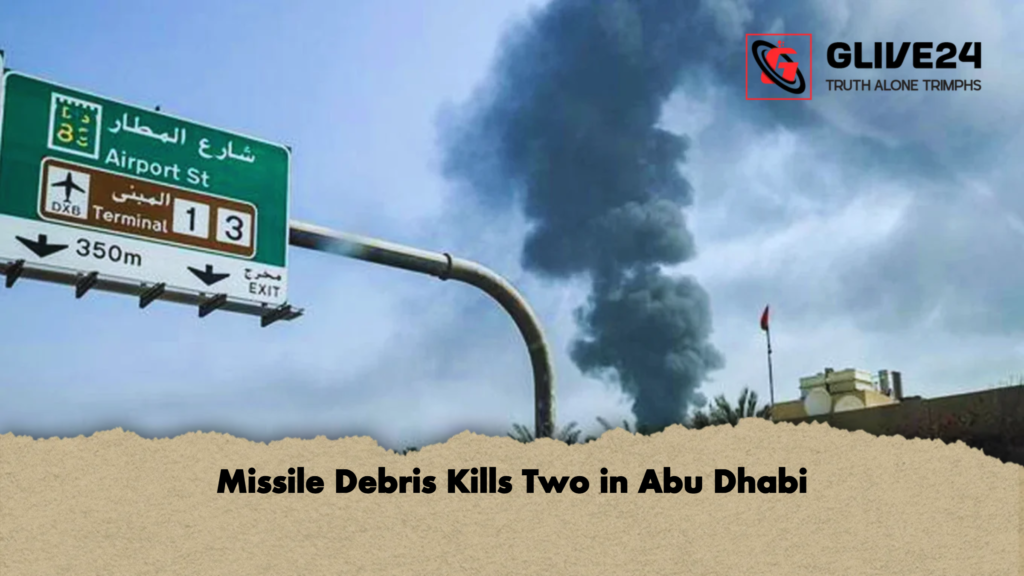
In a tragic incident on Thursday, two people were killed and three others injured in Abu Dhabi, the capital of the United Arab Emirates, after debris from an intercepted ballistic missile fell onto a city street. The Abu Dhabi Media Office confirmed the casualties.
According to an official statement, the UAE’s air defence system successfully neutralised the incoming ballistic missile. However, fragments from the intercepted missile landed on Suwayhan Street, resulting in fatalities and injuries. Several vehicles in the vicinity were also damaged, adding to the disruption. The identities of the deceased remain undisclosed, while the injured are receiving medical treatment and are reported to be in stable condition.
Casualties and Damage Overview
| Category | Number | Notes |
|---|---|---|
| Fatalities | 2 | Identities unknown |
| Injured | 3 | Hospitalised, stable condition |
| Damaged vehicles | Multiple | Partial or total damage |
The incident occurs amid heightened tensions in the Middle East. Since 28 February, following a joint US-Israel offensive against Iran, regional authorities have maintained elevated alert levels. Reports indicate that over 1,340 people, including Iran’s former Supreme Leader Ali Khamenei, have been killed in the ongoing hostilities.
In retaliation, Iran has launched a series of drone and missile attacks targeting Israel, Jordan, Iraq, and other Gulf nations. American military installations have also been affected. These strikes have caused both human casualties and infrastructural damage, while also disrupting oil trade and aviation routes, with wider repercussions for global markets.
Regional Impact Summary
| Target Region | Type of Attack | Impact |
|---|---|---|
| Abu Dhabi, UAE | Missile debris | 2 killed, 3 injured, vehicles damaged |
| Iraq & Jordan | Drone and missile strikes | Infrastructure damage, heightened security alerts |
| Global trade | Oil & aviation | Supply disruptions, price volatility |
Analysts warn that, despite sophisticated air defence systems, intercepted missile fragments can still pose significant risks to urban populations. The Abu Dhabi authorities have intensified emergency response measures, ensuring rapid medical attention for the injured and reinforcing city-wide security protocols.
This latest incident underscores the fragility of civilian safety in conflict-affected regions and the broader economic and geopolitical ramifications of ongoing Middle East hostilities. International observers have urged all parties to exercise restraint and pursue diplomatic avenues to de-escalate tensions, stressing the urgent need to protect civilians and maintain regional stability.