
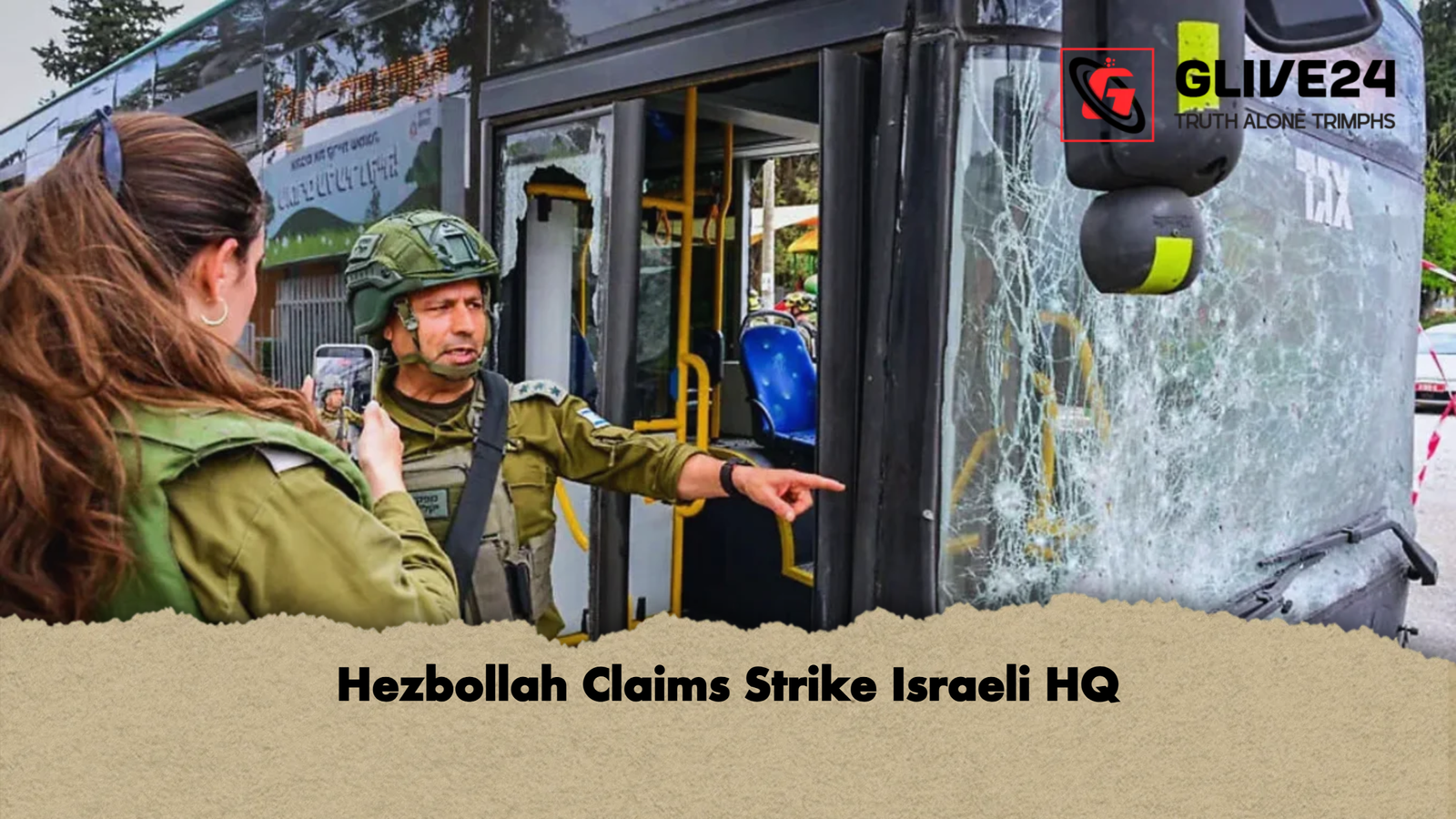
Hezbollah has claimed responsibility for a series of coordinated attacks targeting Israeli military facilities, including the headquarters of the Israel Defense Forces in Tel Aviv, amid escalating cross-border hostilities between Lebanon and Israel. The claims come at a time of intensified fighting along the southern Lebanon front, where both sides have reported continued exchanges of fire and ground engagements.
According to statements attributed to the Lebanese armed group, Hezbollah launched multiple “specialised missiles” aimed at the Kirya complex in central Tel Aviv. The site is widely recognised as a major Israeli military and governmental hub, housing the Israel Defense Forces’ headquarters alongside other key defence and administrative offices. Hezbollah further asserted that a separate strike was directed at an Israeli military intelligence installation located north of Tel Aviv, although these claims have not been independently verified.
Israeli authorities have not yet issued an immediate official response confirming or denying the reported strikes. As is often the case in such rapidly evolving conflict situations, access to independently verified information remains limited, and accounts from both sides differ significantly.
In parallel, Hezbollah reported that its fighters have been engaged in direct ground clashes with Israeli forces in southern Lebanon. The group stated that its units confronted advancing Israeli troops in multiple locations, particularly in the Qantara area, where it also claimed to have targeted an Israeli Merkava main battle tank with a guided missile. The extent of any damage or casualties has not been confirmed by independent sources.
The latest developments underscore the widening scope of the confrontation, which now appears to encompass both cross-border missile exchanges and close-range ground engagements. The situation has heightened concerns over the potential for further escalation along the Lebanon-Israel frontier, a region that has experienced repeated cycles of conflict in recent years.
Military analysts note that the simultaneous claims of long-range strikes on strategic urban military infrastructure and tactical engagements along the border reflect an increasingly complex battlefield dynamic. However, they also caution that information emerging from active conflict zones is often difficult to verify in real time, particularly when it is issued by the involved parties themselves.
Reported Incidents Summary
| Type of Incident | Location | Claimed Target | Reported Actor |
|---|---|---|---|
| Missile strike | Kirya complex, central Tel Aviv | IDF headquarters and government offices | Hezbollah |
| Missile strike | North of Tel Aviv | Military intelligence facility | Hezbollah |
| Ground engagement | Southern Lebanon (multiple sites) | Advancing Israeli ground forces | Hezbollah fighters |
| Anti-tank strike | Qantara area, southern Lebanon | Merkava main battle tank | Hezbollah |
The evolving confrontation continues to draw international attention, as fears grow that sustained exchanges could further destabilise an already fragile regional security environment. For now, both sides remain engaged in competing narratives, with independent verification of battlefield developments remaining limited.