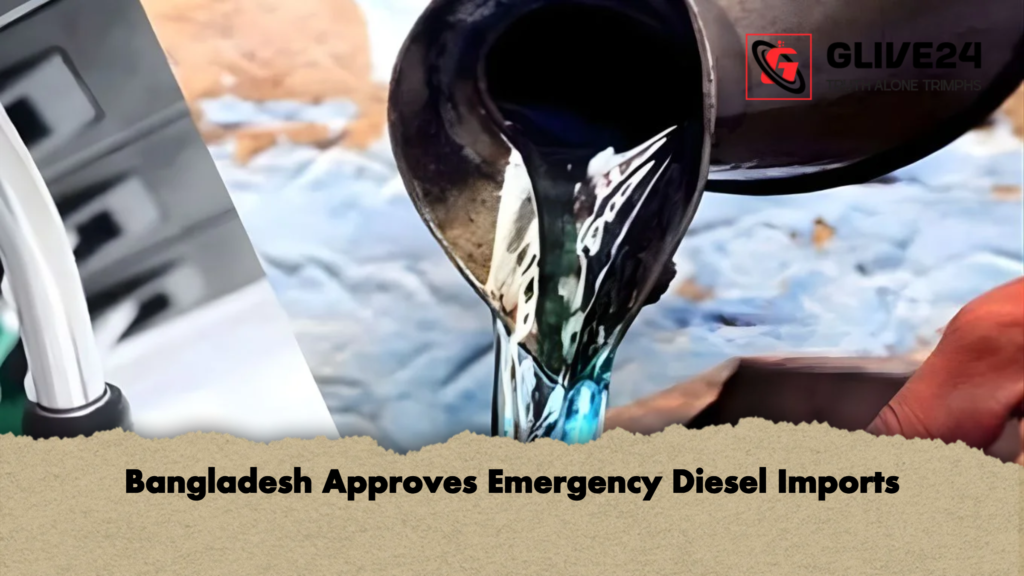
In response to rising geopolitical tensions involving Iran, the United States, and Israel, Bangladesh has moved to mitigate the risk of a potential domestic energy shortfall by approving the emergency import of 300,000 metric tonnes of diesel. The decision is aimed at ensuring uninterrupted fuel supply across key sectors, including electricity generation, transportation, agriculture, and industry.
The approval was granted during the 29th meeting of the Economic Affairs Cabinet Committee for the 2025–26 fiscal year and the sixth meeting of 2026, held virtually via the Zoom platform. The session was chaired by the convener of the committee, finance and planning minister Amir Khosru Mahmud Chowdhury.
According to a statement issued by the Ministry of Finance, the decision followed two separate proposals submitted by the Energy and Mineral Resources Division. The government opted for a direct procurement mechanism from the international market, bypassing the conventional open tender process, in order to expedite delivery and stabilise domestic supply conditions.
Officials noted that the urgency of the situation required swift action, as global oil markets remain highly volatile, with fluctuating prices and uncertain supply chains driven by ongoing international tensions.
Supply Arrangement
The approved diesel import is divided between two international suppliers, both tasked with delivering fuel that meets specified quality standards, including low-sulphur and Euro-compliant grades suitable for domestic consumption.
| Supplier | Quantity | Fuel Specification |
|---|---|---|
| AP Energy Investments Limited | 100,000 metric tonnes | Low-sulphur high-grade diesel |
| Superstar International (Group) Limited | 200,000 metric tonnes | Euro-standard refined diesel |
Energy analysts have welcomed the move as a precautionary step to strengthen energy security amid global uncertainty. They emphasised that maintaining adequate fuel reserves is essential for preventing disruptions in power generation, irrigation systems, and transport networks, particularly during periods of external market instability.
However, some experts have cautioned that large-scale emergency imports could place additional pressure on public finances if international fuel prices remain elevated. They also noted that subsidy management and budgetary allocations may require careful monitoring in the coming fiscal cycle.
Government sources further indicated that alongside imports, efforts are underway to reinforce national fuel storage capacity and improve distribution efficiency. This is intended to ensure that imported diesel can be deployed quickly and effectively across priority sectors.
Overall, the decision reflects a strategic policy response to global energy market uncertainty, with authorities prioritising short-term supply stability while balancing longer-term fiscal and economic considerations.