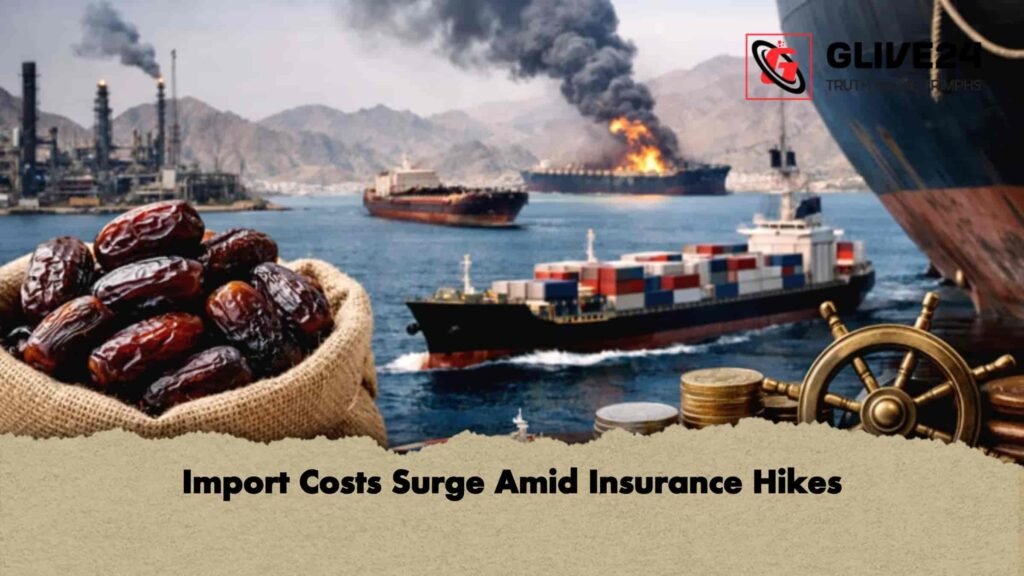
Rising tensions surrounding the strategically vital Hormuz Strait are beginning to affect Bangladesh’s imports of energy and essential food products, including dates. Despite recent government measures to lower import duties, market prices have not decreased as expected due to supply disruptions, higher shipping costs, and increased insurance premiums.
NDTV reports that in April 2026, the Bangladesh government submitted a list of six vessels to Iran for transit through the Hormuz Strait. Of these, five are scheduled to transport liquefied natural gas (LNG) from Qatar, while one will carry crude oil from Saudi Arabia. Iran has assured Bangladesh, considered a “friendly nation,” of secure passage for these ships. However, vessels must provide advance details to Iranian authorities to benefit from this assurance.
Shipping and insurance experts note that geopolitical instability in the Middle East has prompted the addition of “war risk premiums” to maritime insurance, substantially raising costs.
Importers indicate that Bangladesh has already seen an 18–22% increase in import costs for fuel and other essential commodities during the first quarter of 2026. Rising insurance premiums and transport expenses are directly translating into higher retail prices.
To alleviate the pressure on consumers, the government recently reduced the customs duty on date imports from 25% to 15% and lowered the advance income tax from 10% to 5%. Despite these policy adjustments, supply shortages continue to limit their impact. Delays at the Chittagong port and global supply chain disruptions have slowed the arrival of date shipments. A vessel carrying dates from Iraq suffered an accident, further exacerbating supply constraints.
Wholesale prices of Iraqi dates have consequently risen from 150 taka per kilogram to between 180 and 185 taka.
| Item | Previous Price | Current Price | Customs Duty | Advance Income Tax |
|---|---|---|---|---|
| Iraqi Dates | 150 Taka/kg | 180–185 Taka/kg | 15% | 5% |
| LNG Imports | – | – | – | – |
| Crude Oil Imports | – | – | – | – |
Analysts warn that if instability in the Hormuz Strait persists, the effects on Bangladesh’s economy could deepen. Higher energy and transport costs may contribute to inflation in essential commodities, while increased import expenditure could strain foreign currency reserves. Disruptions in LNG supply could also impact electricity generation, creating risks for industrial production.
Although policy measures such as reduced duties aim to mitigate the pressure, experts stress that unless supply chains normalise and security in the Hormuz Strait improves, Bangladesh may face sustained increases in import costs and consumer prices.