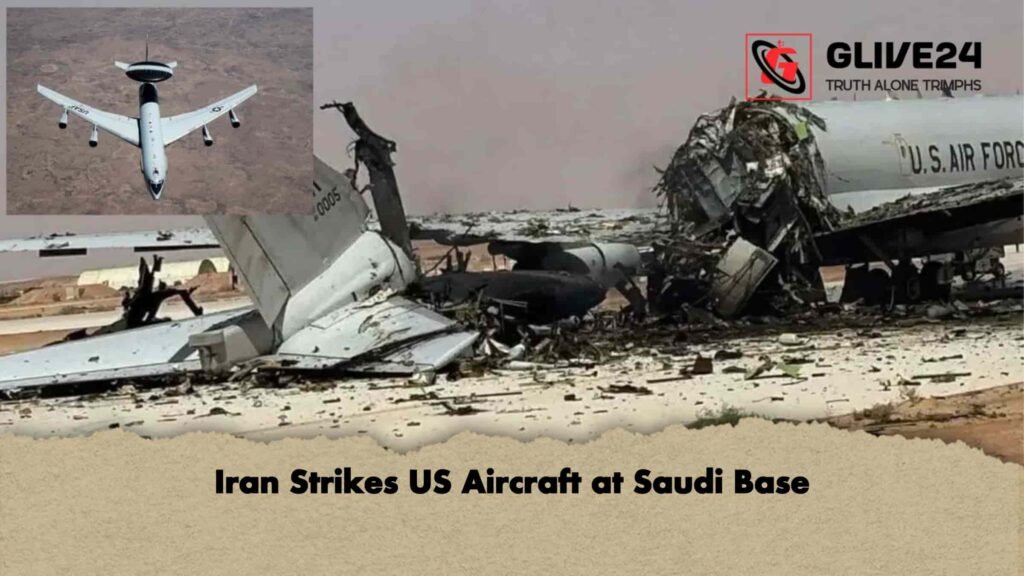
A major escalation in Gulf tensions occurred on 27 March 2026 when an Iranian missile and drone assault on Prince Sultan Air Base in Saudi Arabia destroyed a United States Air Force Boeing E‑3 Sentry early warning aircraft. The strike also damaged multiple aerial refuelling tankers and wounded at least 12 US personnel, two of whom were reported in serious condition.
The E‑3 Sentry, an integral component of America’s airborne warning and control system (AWACS), is tasked with long‑range detection of aircraft, missiles, and other aerial threats, while coordinating air operations across vast distances. Its loss represents a significant blow to US operational surveillance capability in the region, particularly given the Air Force’s limited fleet of these specialised aircraft.
Strategic Role of the E‑3 Sentry
The US Air Force currently operates roughly 16 E‑3 Sentries, down from a Cold War-era peak of around 30. Equipped with advanced radar and command systems, these aircraft provide commanders with a comprehensive aerial picture, facilitating rapid decision-making during both defensive and offensive operations.
Replacing a destroyed E‑3 is a costly and complex task. The Boeing E‑7 Wedgetail, the closest modern equivalent, costs over $700 million per unit and is subject to procurement delays and budget constraints, limiting rapid fleet replenishment.
Iranian Strikes on Saudi Military Installations
This attack is the latest in a series of Iranian missile and drone strikes targeting Saudi military infrastructure since late February 2026. Incidents have included assaults on air bases, oil facilities, and diplomatic sites, with many intercepted by Saudi air defences.
| Date | Target | Outcome |
|---|---|---|
| 28 Feb 2026 | Prince Sultan Air Base | Explosions reported; no confirmed major damage |
| 1 Mar 2026 | Prince Sultan / other bases | Missile attacks intercepted; one US casualty reported later |
| 3 Mar 2026 | US Embassy, Riyadh | UAV attack caused minor damage |
| 12–27 Mar 2026 | Prince Sultan Air Base | Multiple strikes; aircraft damaged; US casualties reported |
| 27 Mar 2026 | Prince Sultan Air Base | E‑3 Sentry destroyed; tankers damaged; 12 US personnel wounded |
Operational and Strategic Consequences
The destruction of a strategic early warning aircraft complicates coalition surveillance and command capabilities in an already tense theatre. With only a limited AWACS fleet and costly modern replacements, US military planners face immediate challenges in maintaining air control and situational awareness across the Gulf.
Analysts suggest the attack may signal a deliberate escalation, with potential future strikes targeting remaining surveillance and refuelling assets. The incident underscores the growing risk to US and allied forces in the region, highlighting both the operational vulnerability and the strategic stakes in ongoing Gulf confrontations.