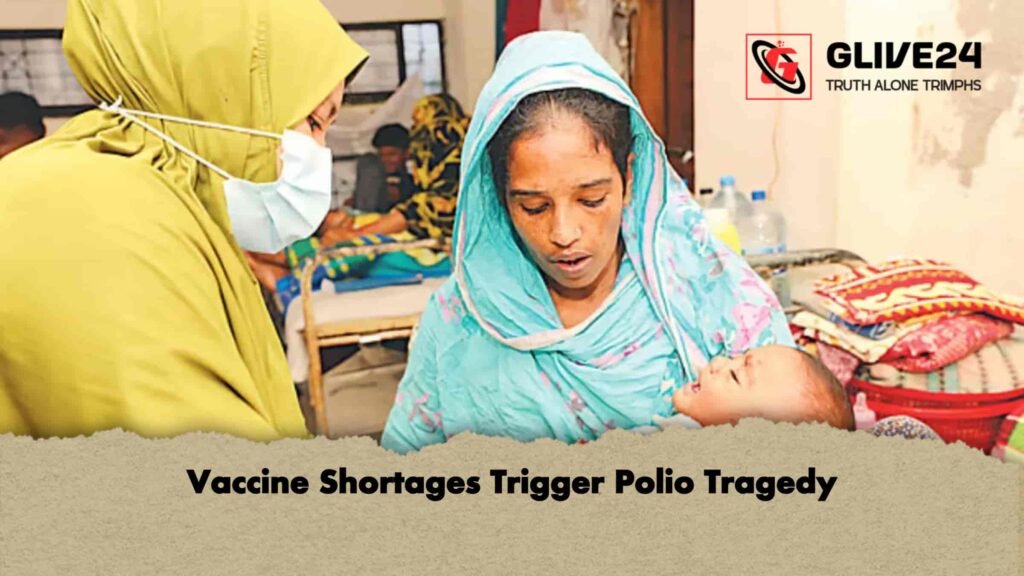
Bangladesh is confronting a severe public health challenge as central medical stores report that vaccines for ten major diseases are completely out of stock. This critical shortage coincides with a surge in polio-related child fatalities, with 41 deaths reported across the country this month alone, according to government hospitals and the Expanded Programme on Immunisation (EPI).
Officials attribute the crisis to delays and complications in vaccine procurement. Combined with field-level obstacles such as staffing deficits and unequal distribution, many children and mothers are unable to receive essential vaccinations. As a result, children are dying from preventable polio, and other infectious diseases are increasingly at risk of spreading.
Bangladesh has historically been celebrated for its vaccination achievements. Regular immunisation programmes have successfully eliminated polio and rubella, while hepatitis remains under control. The government had aimed to eradicate polio entirely by December 2025. However, administrative lapses and logistical shortcomings have now placed these successes in jeopardy.
Health Minister Sardar Md. Shahawat Hossain confirmed at a Dhaka press briefing that polio vaccines had not been administered for eight years, and stressed that funds have already been allocated: “We have set aside 6.04 billion taka for vaccine procurement and will ensure timely distribution.” Critical care units, including ventilators in paediatric infectious disease hospitals, have been prepared to treat affected children, with additional readiness at Dhaka Medical College Hospital, Shahid Suhrawardy Children’s Hospital, and regional centres in Manikganj and northern districts.
Current Vaccine Stock Status
EPI officials report the following central store inventory:
| Vaccine | Disease Prevented | Current Stock | Expected Availability |
|---|---|---|---|
| BCG | Tuberculosis | 0 | Pending Procurement |
| Penta | Diphtheria, Pertussis, Tetanus, Hib, Hepatitis B | 0 | Pending Procurement |
| bOPV | Polio | 0 | Pending Procurement |
| IPV | Polio | Stock until June | June 2026 |
| PCV | Pneumonia | 0 | Pending Procurement |
| MR | Measles & Rubella | 0 | Pending Procurement |
| Td | Tetanus & Diphtheria (women) | 0 | Pending Procurement |
| TCV | Typhoid | Stock until June | June 2026 |
| HPV | Cervical Cancer (adolescent girls) | Stock until December | Dec 2026 |
The EPI delivers vaccines through routine immunisation programmes year-round and via short-term national campaigns targeting children who missed earlier doses. Donor organisations, NGOs, and government teams support these campaigns, alongside Vitamin A distribution. Despite these efforts, post-COVID vaccination dropouts and uneven urban coverage have left many children vulnerable.
Causes of the Crisis
Previously, vaccines were procured under the Health, Population and Nutrition Sector Programme (HPNSP), supported by UNICEF and Gavi. In August 2025, an interim government suspended the operational plan without adequate preparation, delaying approvals, appointments, and fund disbursement. Changes in the Directorate General of Health leadership further slowed procurement, contributing to current shortages.
Staff shortages compound the problem. Of Bangladesh’s 64 districts, only 27 have sufficient health assistants; the remaining 37 districts face critical understaffing, with 45% of field positions vacant. Approximately 150,000 vaccination centres nationwide rely on these workers. Strikes and unpaid wages among support staff have disrupted vaccine delivery further.
Rising Child Fatalities
The human toll is mounting. Between Saturday and Sunday, Mymensingh Medical College Hospital reported two additional polio deaths, raising its monthly total to five. Dhaka’s Mohakhali Infectious Disease Hospital recorded 19 deaths, Rajshahi Medical College 12, and Chapainawabganj three. A child from Shariatpur also died at a Dhaka facility. In total, 41 children have died from polio this month, representing the highest monthly toll in recent years.
Public health expert Abu Jamil Faisal described the situation as “deeply alarming” and urged an immediate investigation to determine why vaccines ran out and why children died, emphasising that such systemic failures must not continue.